At the very top of Honshu, a tuna can be too small to be famous. The fishing port of Oma, on the Shimokita Peninsula, lands Pacific bluefin from the fast water of the Tsugaru Strait — and only the fish over thirty kilos may carry the port's trademarked name. It gives Aomori, whose two stories so far are both glass and lacquer, its first food story in this collection.
The port at the top of Honshu
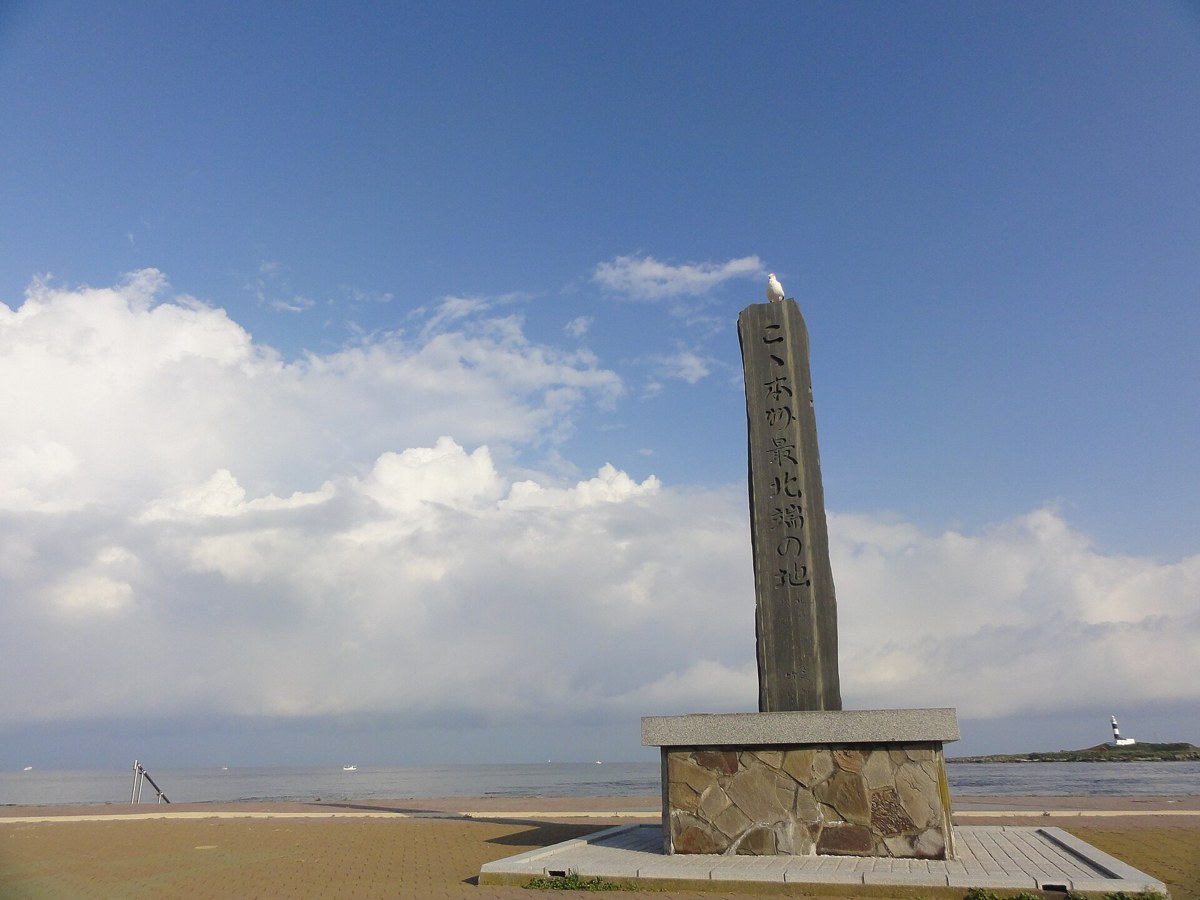
Oma Town sits at the northernmost tip of Honshu, on the Shimokita Peninsula in Aomori Prefecture. From Cape Omazaki, the island of Hokkaido lies about seventeen and a half kilometres across the Tsugaru Strait — close enough to read — and the strait between runs fast, which is the first fact of the fishery: bluefin that pass through that current are kept hard and lean by the swimming, and the big, fat fish come in as the water cools from autumn into winter.
The town's scale is the second fact. This is one small port with one famous product, marked above the harbour by a monument of a tuna arched over a hand-line. The Tsugaru Kaikyo Ferry links Oma with Hakodate in about ninety minutes, the shortest sea route between Honshu and Hokkaido — the fish's hometown is remote, but it is not unreachable, and in season the rest houses and restaurants around the cape trade on exactly one word: maguro.
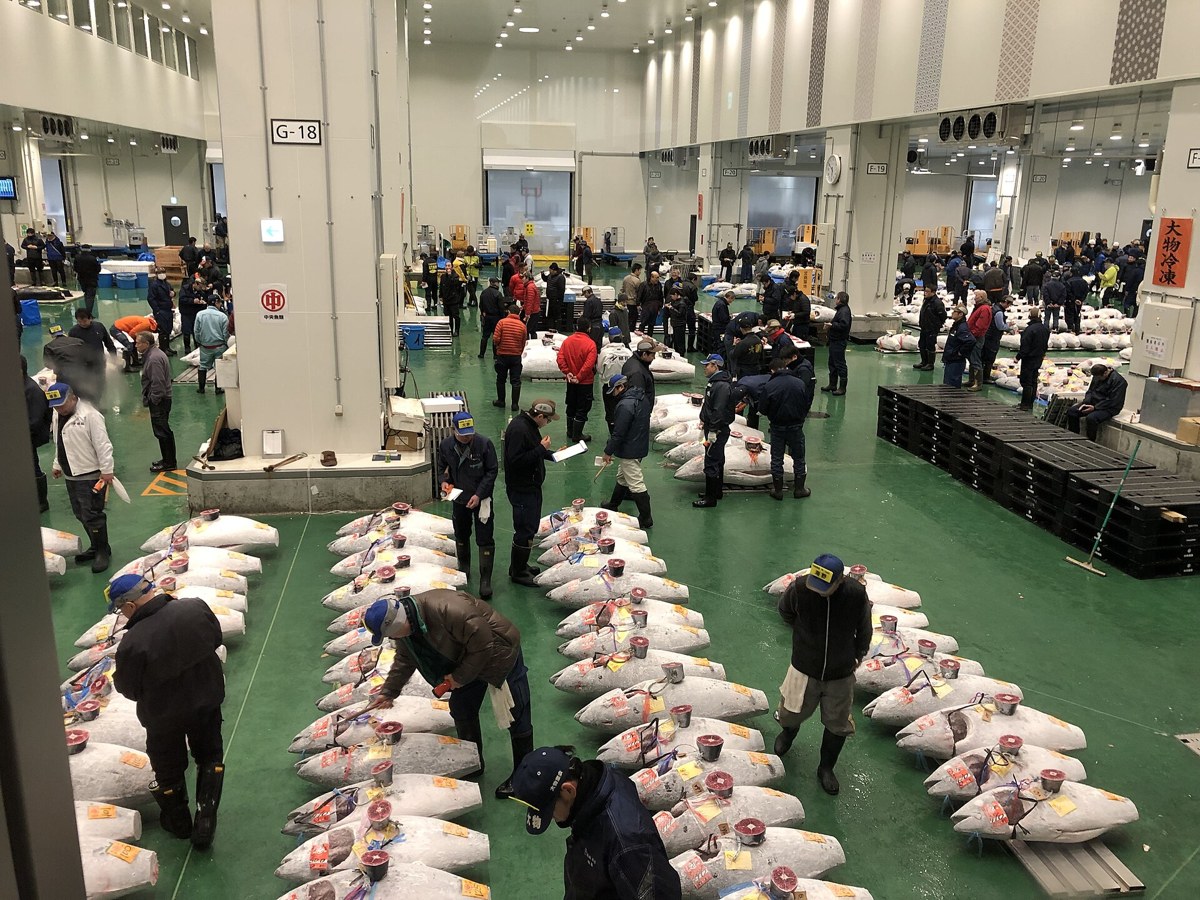
A trademark, a weight bar and a numbered sticker
In 2007 the Oma Fisheries Co-operative registered the name Oma Maguro as a regional collective trademark, fixing the brand to one port rather than leaving it open to any boat that wanted it. The brand has a rule a child can check: only tuna weighing more than thirty kilograms receive the official Oma Tuna label. A qualifying fish leaves the port with a numbered sticker on its cheek, so the brand travels with the fish and the fish can be traced back to the port that landed it.
The fishing itself is deliberately inefficient, in two shifts. By day the boats work by pole-and-line — ippon-zuri, one fish at a time, fought on a single line — and by night they longline. Nothing about the method scales, and that is rather the point: a fish taken one at a time arrives unmarked by nets and unstressed by a crowded hold. The season runs from around August into January, and outside that stretch the brand stickers are scarce.
Five hundred and ten million yen, then ¥598 a piece
On 5 January 2026, at Toyosu Market's first auction of the year, a 243-kilogram bluefin caught off Oma sold for 510.3 million yen — about 3.2 million dollars — to Kiyomura, the company behind the Sushizanmai sushi chain. It was a new record, soundly beating the previous high of 333.6 million yen set in 2019, which was also an Oma fish; the sale was later recognised by Guinness World Records as the most expensive tuna ever sold at auction. First-auction prices are ceremony, not commerce, and this page records them as such.
The honest price is the one that followed. The record fish was cut at Sushizanmai's main shop and served at its restaurants nationwide from the same day at the chain's regular prices: 398 yen for a lean piece, 498 for medium fatty and 598 for the prized fatty otoro, before tax. That is the Oma tuna economy in one line — a fish can be worth half a billion yen at dawn and five hundred yen a piece by lunch, and both numbers are true.
How to meet the fish at home
To eat Oma tuna where it is landed, go in season — August to January, with the fattest fish as winter comes on — and eat in Oma itself, where the cape's restaurants serve the local catch and the monument and the northernmost-point marker make the geography part of the meal. The ferry from Hakodate is the scenic route in; the bus from Mutsu, down the coast road, is the patient one, and its timetable, not any opening hour, shapes the day.
Away from Aomori, the check is the label. Genuine branded fish carries the co-operative's name and the numbered sticker system behind it; a menu that says only 'tuna' is making no claim at all. And hold the brand to its own standard: over thirty kilos, landed at Oma, in season. A fish that meets all three is the black diamond of the Tsugaru Strait; a fish that meets none is just dinner.
Sources — checked 10 November 2026
- The Asahi Shimbun: Single tuna lands over 500 million yen at first auction of 2026
- Field Notes Japan: Oma Tuna, Omazaki
- The Chef's Dojo: Oma Tuna — famous bluefin tuna from Oma Town
- Food in Japan: Ooma Tuna
- Kyodo via Nordot: Guinness record for most expensive tuna at auction
Original prose and official links only; no source text or maker media reproduced. Photos are credited Creative Commons works, not product photographs.
Editorial review 2026-11-10