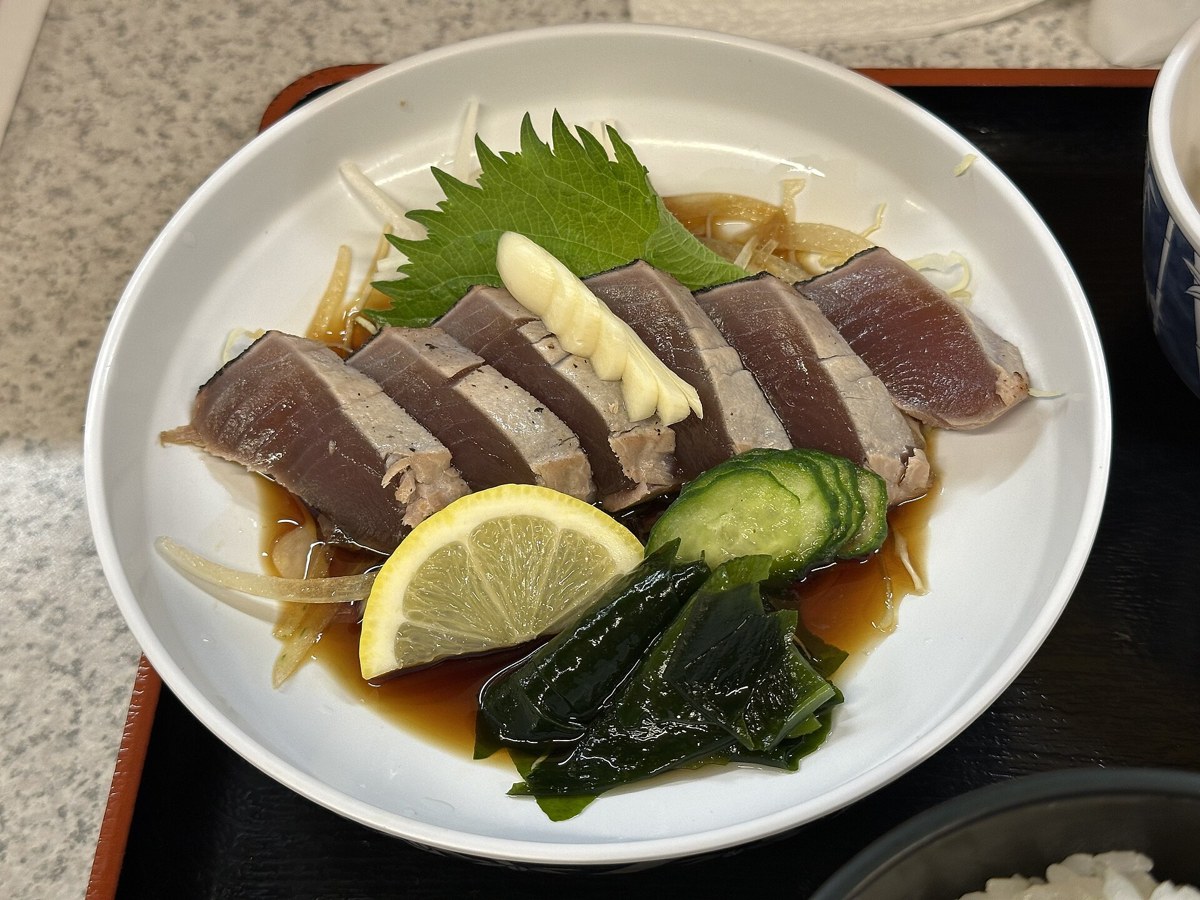
The fire lasts seconds and the fish stays raw — that is the whole technique, and Kochi has built its food identity on it. Katsuo no tataki takes a thick fillet of bonito, holds it over a roaring fire of rice straw until about a millimetre of the surface chars and smokes, then slices it thick and buries it in garlic, ginger and green onion. Kochi eats more bonito than anywhere in Japan, sears it over straw in front of you at Hirome Market, and charges ¥800 to ¥1,500 a plate.
Warayaki: a straw fire at full roar
Rice straw burns absurdly hot and fast — the guides put the flame at well over 800 degrees — which is precisely the point. A fillet on a skewer or grid gets a few seconds per side: the surface crisps, smokes and colours while the interior stays cool and rare, a gradient no pan or gas burner reproduces. The method is called warayaki, straw-grilling, and at Kochi's market stalls and specialist counters it is done in the open, in view, to order.
The word tataki itself points at the seasoning, not the fire — from tataku, to pound: salt and garlic worked into the seared surface by hand. Kochi's own style, shio-tataki, trusts that pairing alone — salt, garlic, smoke — where the rest of Japan usually reaches for ponzu. Order it the Kochi way first; the fish can carry it.
Two bonitos a year
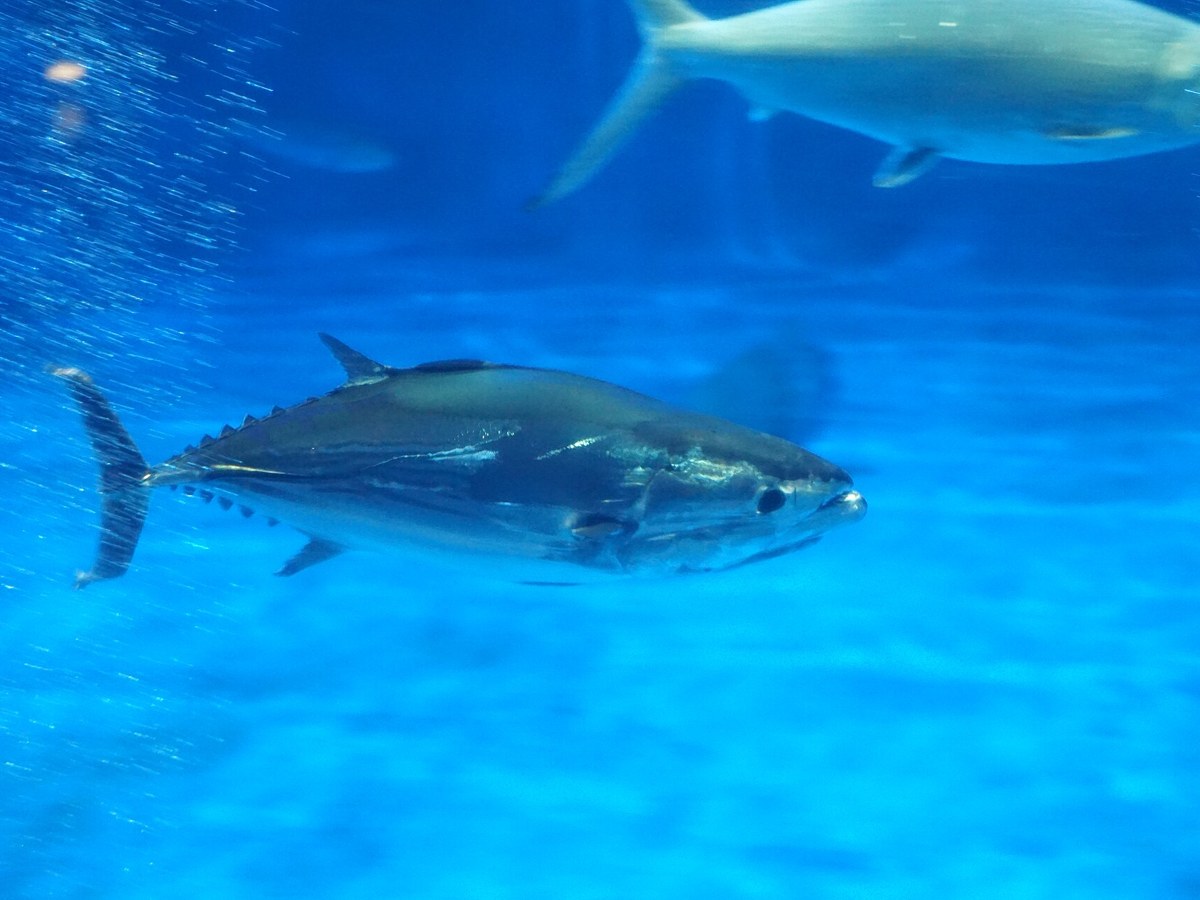
The Kuroshio current brings the bonito past Kochi twice. Hatsu-gatsuo, the first bonito of spring (roughly March to June), is lean, clean and firm — the connoisseur's fish. Modori-gatsuo, the returning bonito of autumn (September to October), has fattened all summer and eats richer and softer. Locals argue the seasons the way wine people argue vintages, and both sides are right.
Much of Kochi's catch is still taken by ipponzuri — pole-and-line fishing, one fish at a time on a single hook — a centuries-old method that lands each bonito in better condition than netting. The attachment is measurable: in the 2024 national household survey, households in Kochi City spent more on katsuo than those of any other prefectural capital in Japan, several times the national average.
Practical details: prices, where to eat, sear your own
Prices (checked 2026-11-09): a serving of tataki at Hirome Market or a Kochi specialist costs ¥800 to ¥1,500 depending on the cut and stall (market plates run about ¥700–1,300). At Myojinmaru, the restaurant group credited with making shio-tataki the standard, twelve slices with salt and sauce are ¥1,958. To sear your own fish over straw, Tosa Tataki Dojo charges ¥1,500 for the dish, ¥1,800 as a set meal.
Where to eat: Hirome Market in central Kochi City — some sixty stalls around shared tables, the tataki seared over straw in front of you — is the essential first stop; the city's Tosa restaurants are the formal version. Type of edition: regional edition — a place-defined preparation of the prefecture's own fish, in its home market.
Thick slices, raw garlic, no apology
First-timers sometimes meet tataki elsewhere as a polite few slices in ponzu, and Kochi's version resets expectations: the slices are cut a centimetre and a half thick, the garlic is raw and plentiful, the smoke is real, and the centre is unapologetically rare. It is sashimi that has been to a fire and come back with a story.
Go in season if you can — spring for the lean first fish, autumn for the fat return — and eat at the market at least once, standing close enough to feel the straw fire flare. Kochi's confidence about this dish is not branding; it is what happens when one prefecture eats one fish better than anywhere else for centuries.
Scope: what 'limited' means here
Katsuo no tataki is documented in its Kochi form — warayaki straw searing, thick cuts, the salt-and-garlic Kochi style, the prefecture's two bonito runs and its home market. Tataki served elsewhere is stated in the limitations. Checked 2026-11-09.
Sources — checked 9 November 2026
- EatMono: Kochi food guide — katsuo no tataki, Hirome Market, ¥800–1,500 a serving
- Japan Activity: Kochi katsuo no tataki — where to eat and how to sear your own
- Japan Trove: Katsuo no tataki — Kochi's straw-seared bonito and where to try it
Original prose and official links only; no source text or maker media reproduced. Photos are credited Creative Commons works, not product photographs.
Editorial review 2026-11-09