Every pickle begins with a vegetable. This one begins with a temple, a priest's journey to Kyoto, and a bath. Nozawana is the leaf that Nozawaonsen village in Nagano's snow country turned into Japan's archetypal winter pickle — a turnip that refused to grow a root in the mountain cold and put everything into its leaves instead, then got washed in hot-spring water and pickled by the barrel. It is counted among Japan's three great pickles, and it still starts, each November, with the whole village washing greens in the baths.
The turnip that became all leaf
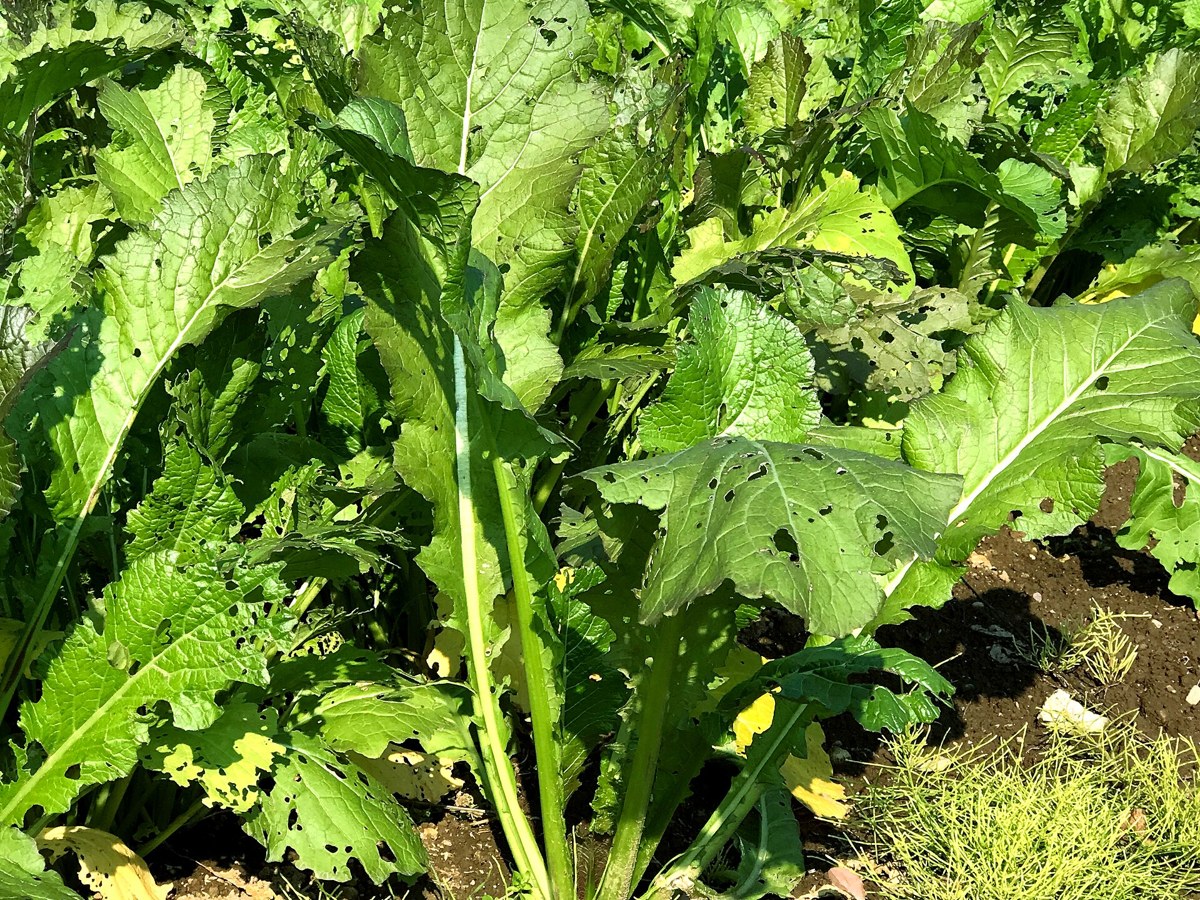
The checked food account introduces the plant by its measurements. Nozawana is a pickled vegetable of the Brassicaceae family, originally grown in Nozawa Onsen Village in Nagano Prefecture and known as Shinshu-na — a specialty of Nagano and the key ingredient of nozawana pickles, counted as one of Japan's three major pickles. The plant itself is a giant among greens, reaching about one metre in height, and it is the petioles — the long leaf stalks — that are used for pickling; the roots are left in the ground at harvest and sprout new shoots in spring, eaten as Totachina.
The pickling produces two ages of the same leaf, and the account distinguishes them by colour. New pickles, lightly pickled, retain a vibrant green; old pickles darken to a tortoiseshell colour as lactic-acid fermentation deepens them. Beloved for a slightly salty taste and a crunchy texture, and rich in vitamin C on the Tourism Agency's record, the pickle is less a condiment than Shinshu's stored summer — the green a snowbound prefecture eats in February.
1756: the priest, the Kyoto seed, the temple field
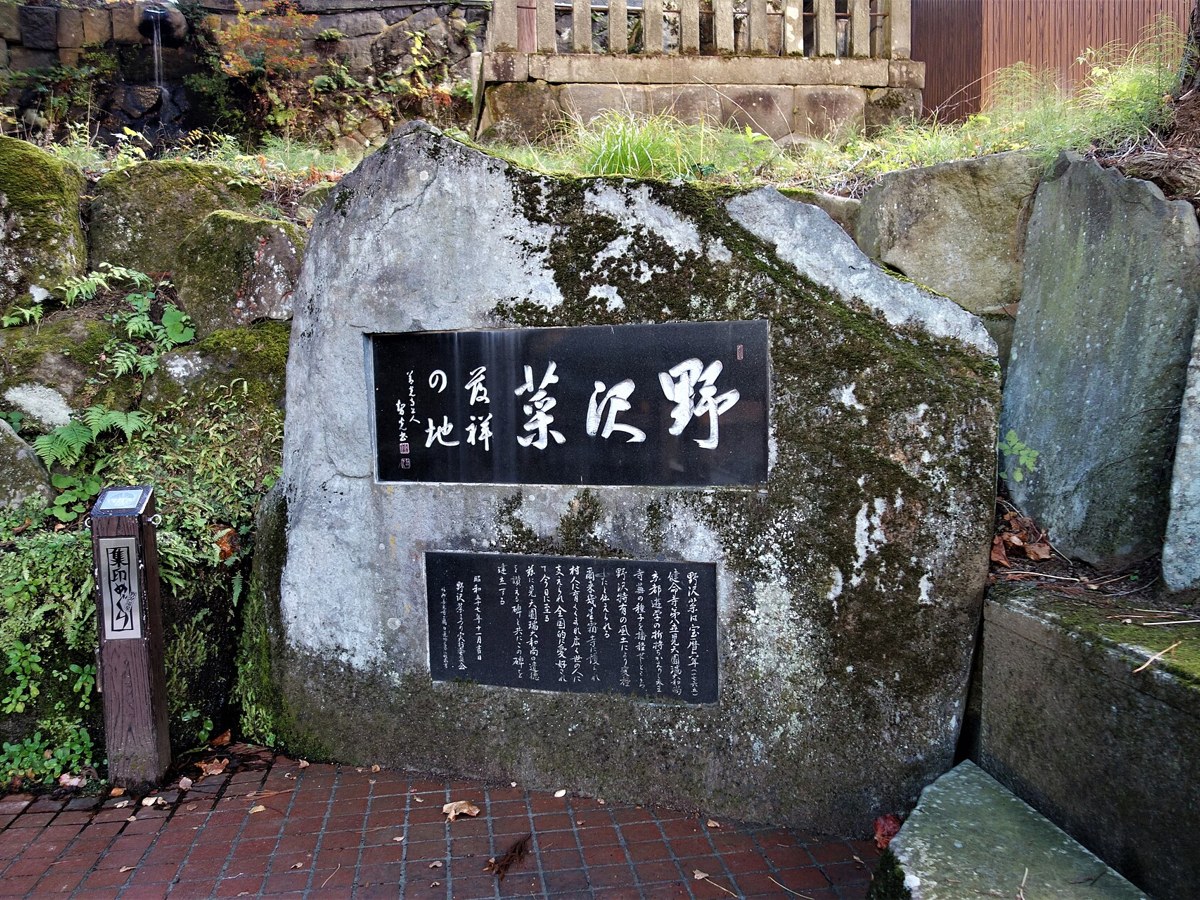
The origin is kept by a temple. Kenmeiji, an ancient Soto Zen temple founded more than four centuries ago on the mountainside at Nozawaonsen, is said to be the place of origin of the locally grown leaf vegetable nozawana, the Tourism Agency's record states. In 1756, the eighth head priest of the temple, who had travelled to Kyoto to study, returned with seeds of Tennoji kabura, a type of turnip. When the seeds were planted in Nozawa Onsen, they sprouted much bigger leaves and stems than their original variety did — the cold, high village had edited the plant, trading the root for the leaf.
The temple never let the line go. Within the temple grounds there are still nozawana fields, the record continues, and the teradane — the temple seeds, handed down as a precious treasure — can be purchased there. The checked food account tells the same journey with the year 1766; the village's own tourism record carries 1756, and this page follows it. Either way, the shape of the story is fixed: one priest, one journey, one seed that found its true climate eleven days' walk from home.
Washed in the bathhouses: the Ona-Arai
The calendar is strict, and the food account walks it. The seed is sown in September; the leaves are harvested after the first frost — from late October through late November — because the frost enhances their sweetness; the greens are carefully washed and pickled in large barrels called issokuoke, each area preserving its own traditional method; and the pickle is ready within two to three weeks, reaching peak flavour around the end of the year. In Nagano, where harsh winters prevent harvesting any greens, those barrels are the difference between a green winter and a white one.
Nozawaonsen washes its harvest in the obvious local abundance: hot water. The prefecture's brand account describes the Ona-Arai, the nozawana-washing held in early November, when about half of the village's thirteen public bathhouses open for a limited period and villagers of all ages can be seen washing nozawana in the hot springs, talking as they work — the baths valued not only for bathing but as the village's meeting place. By mid-December, when the ski season begins, the fully pickled honzuke is ready to eat. The encyclopaedia account adds how the name travelled: local villagers long called the plant simply a turnip, until visiting skiers, impressed by the pickle, nicknamed it after the village — and nozawana it has been ever since.
What the winter staple costs
At retail, this is everyday food at everyday prices — which is the point of a preserved staple. A checked Rakuten record sells a Nagano maker's nozawana asazuke, the light style of pickle, in a wasabi flavour: contract-grown nozawana, pickled without synthetic preservatives in a JAS-certified factory by Marutaka of Azumino, Nagano — 320 grams at ¥648. The forms multiply from there, as the food account notes: the pickle fills onigiri rice balls, tops bowls of rice, and anchors the souvenir shelves of a prefecture that has eaten it through two and a half centuries of snow.
Nagano's standing stories are a spice, a soba and a dumpling — Yawataya's shichimi, Togakushi's buckwheat and the Shinshu oyaki. Nozawana is the prefecture's fourth and its first pickle: the preserved green against which all the others are winter food too. Three great pickles Japan keeps — takana in the south, hiroshimana in the west, and this one, washed in a hot spring in the snow.
Sources — checked 11 November 2026
- Food in Japan: Nozawana — pickled vegetable from Nagano Prefecture (checked food account)
- Japan Tourism Agency multilingual record: Kenmeiji Temple and the Origins of Nozawana (checked official record)
- Nagano Prefecture brand site: Tsukemono — Nozawana-Zuke (checked prefectural account)
- Nozawana (checked encyclopaedia account)
- Rakuten Ichiba: Marutaka nozawana asazuke, wasabi flavour (checked retail record)
Original prose and official links only; no source text or maker media reproduced. Photos are credited Creative Commons works, not product photographs.
Editorial review 2026-11-11