Nagano is soba country, but soba was the feast; oyaki were the fuel. In a mountain prefecture too cold and steep for rice, farm households wrapped their pickles and garden vegetables in flour dough and baked the buns in the hearth's ash — a portable meal that kept through a winter's work. The prefecture's official guide calls oyaki 'the original Nagano snack food', and they give Nagano its third story, beside its temple spice and its mountain soba.
The bun that stood in for rice
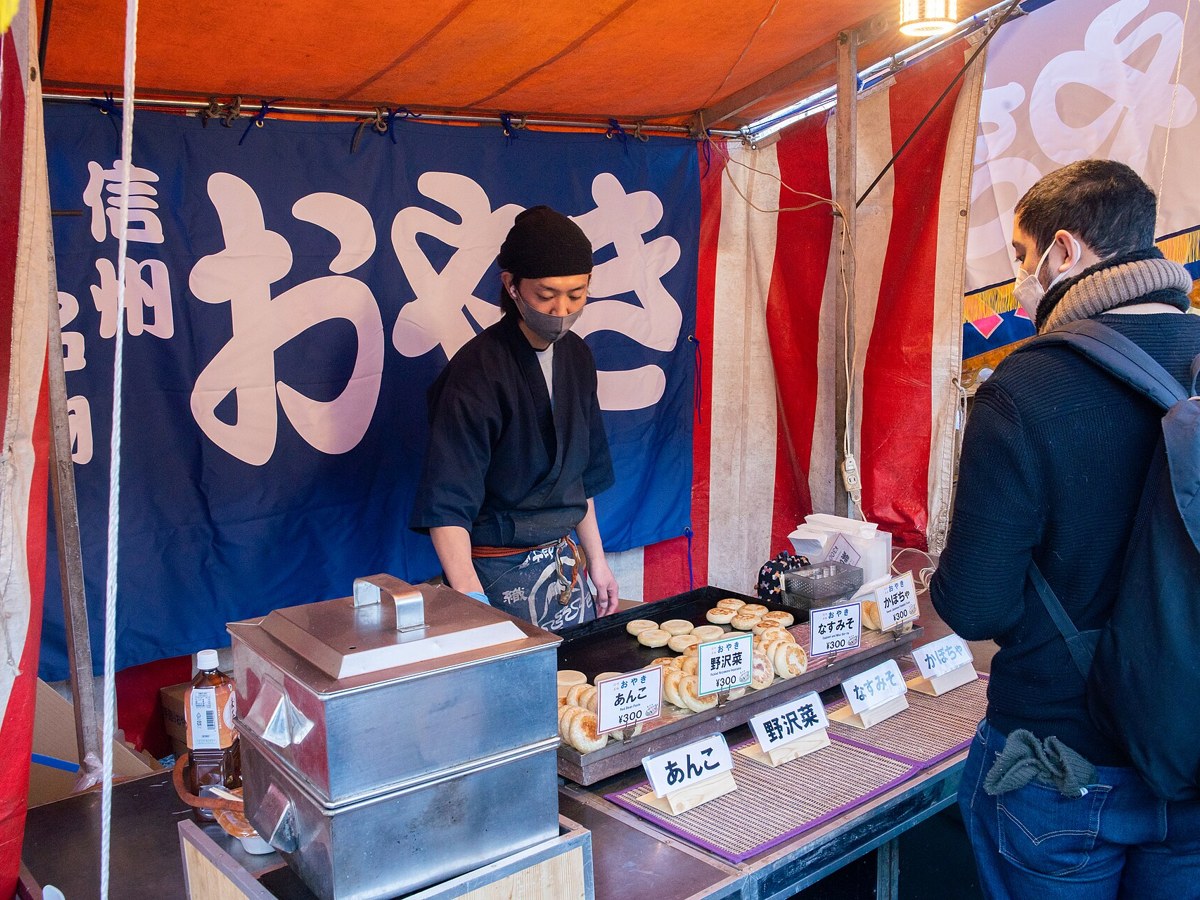
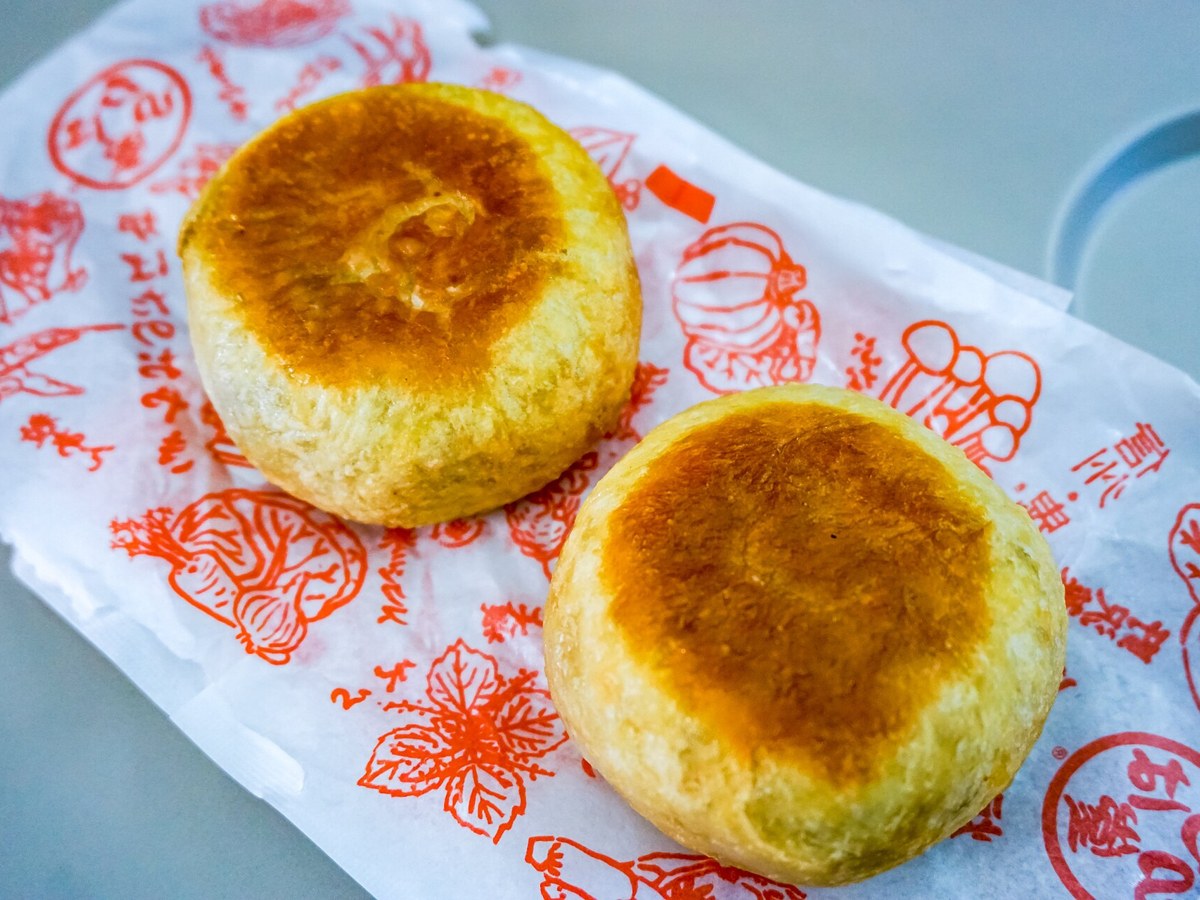
Go! NAGANO, the prefecture's official travel guide, introduces oyaki without hedging: the original Nagano snack food, a flour dumpling filled with vegetables and then steamed, char-grilled or fried to perfection. The guide's second oyaki account gives the economics underneath: like soba, oyaki have been an important part of local cuisine for a very long time, because in rice-scarce Nagano these flour buns filled with pickles and veggies were an important source of carbohydrates and protein. Wheat and buckwheat grew where rice paddy could not; the pickle barrel supplied the filling; the hearth supplied the oven.
The classic filling is itself a Nagano signature: nozawana, the mustard greens pickled at Nozawa Onsen and kept in every farmhouse, chopped and seasoned and folded into the dough. Around it the guide lists the standing cast — miso-marinated eggplant, shredded daikon radish, mashed pumpkin — and the makers add their own: negi-miso green onions, kiriboshi dried radish, mushrooms, sweet red-bean paste for the dessert bun. An oyaki is a fist-sized census of a Nagano pantry.
Baked in the ash of the hearth
The oldest oyaki never saw an oven. Farmhouse oyaki were buried in the hot ash of the irori, the open hearth at the centre of the house, and baked slowly in its embers — the method the official guide calls the traditional one, against which today's usual steaming is the modern shortcut. The dough tells the method: a plain flour skin, sometimes leavened, that can take ash-baking, grilling or steaming and come out with the same dense, satisfying chew.
One address keeps the old fire lit. Ogawa Village, west of Nagano City, is particularly famous for oyaki, and at Ogawa no Sho guests sit around the fireplace on tree-trunk stools and watch oyaki after oyaki grilled in front of them — nozawana, miso eggplant, shimeji mushroom and unohana the house favourites. The official guide prices the full participation version: for ¥540 you make two oyaki of your own, with complimentary tea and miso soup, under a master whose shop motto is 'round oyaki, round hearts'.
The maker who scaled it: Irohado
A farmhouse food becomes a prefecture's souvenir when a maker industrialises it without flattening it, and Nagano's maker is Irohado, founded in 1925 in the mountain district of Kinasa and now the name on the station counters. Its OYAKI FARM, in Shinonoi in Nagano City, is among the largest oyaki factories in Japan, producing about five million oyaki a year, with a shop, café and hands-on workshops under a great circular wooden roof — the irori's descendant, rebuilt as architecture.
Irohado's range, sold frozen through JR East's official mall, runs to seven standing fillings — vegetable mix, kiriboshi daikon, pumpkin, sweet bean, shimeji mushroom, nozawana and negi-miso — each piece about 90 grams, the sets at 14 pieces for ¥5,290 and 21 pieces for ¥7,390, tax and shipping included, keeping 120 days frozen. At fresh counters across the prefecture — the station, the Zenko-ji approach, the village shops — a single hot oyaki runs roughly ¥200 to ¥350 in the checked guides: the farmhouse price, more or less intact.
How to eat Nagano in one hand
The field guide is short. Eat the first oyaki hot and plain, wherever you bought it — the dough's chew and the pickle's salt are the whole argument. Start with nozawana, the signature; follow with pumpkin if you want the sweet register, or negi-miso for the savoury one. At Ogawa no Sho, spend the ¥540 and make your own: the hearth, the tea and the miso soup turn a snack into the prefecture's autobiography, told in flour.
Set oyaki beside Nagano's other two stories and the shelf explains itself. Yawataya's shichimi is the spice the temple town sells; Togakushi's soba is the noodle the shrine village serves; oyaki is what the farmhouses actually ate, three meals a day, all winter. In a collection about things that exist in exactly one place, a dumpling invented by a whole prefecture's hunger is the most democratic exhibit of all.
Sources — checked 10 November 2026
- Go! NAGANO (Nagano Prefecture official travel guide): 9 of Nagano's Best Local Foods — Oyaki Dumplings
- Go! NAGANO (Nagano Prefecture official travel guide): How to Make Your Own Oyaki
- JRE MALL (JR East official mall): Irohado Oyaki Sets
- Oyaki Farm by Irohado — facility listing
Original prose and official links only; no source text or maker media reproduced. Photos are credited Creative Commons works, not product photographs.
Editorial review 2026-11-10