Noto beef is the wagyu that stays home: shipments are so small that it circulates almost only inside Ishikawa, under rules written in 1995 — Kuroge blood, an Ishikawa final home, a grade of A3 or better, and a Premium tier reserved for the marbling elite. In Kanazawa it reaches the street as bowls and croquettes.
The name is a licence
“Noto beef” is not a description; it is a permission. Under the rules the Noto Beef Brand Promotion Council drew up in 1995, the name may be used only for beef that is Kuroge wagyu of clear pedigree, whose final and longest raising place is inside Ishikawa Prefecture, and whose meat quality grade is A3 or above, or B3 or above. Anything else, however good, is not Noto beef.
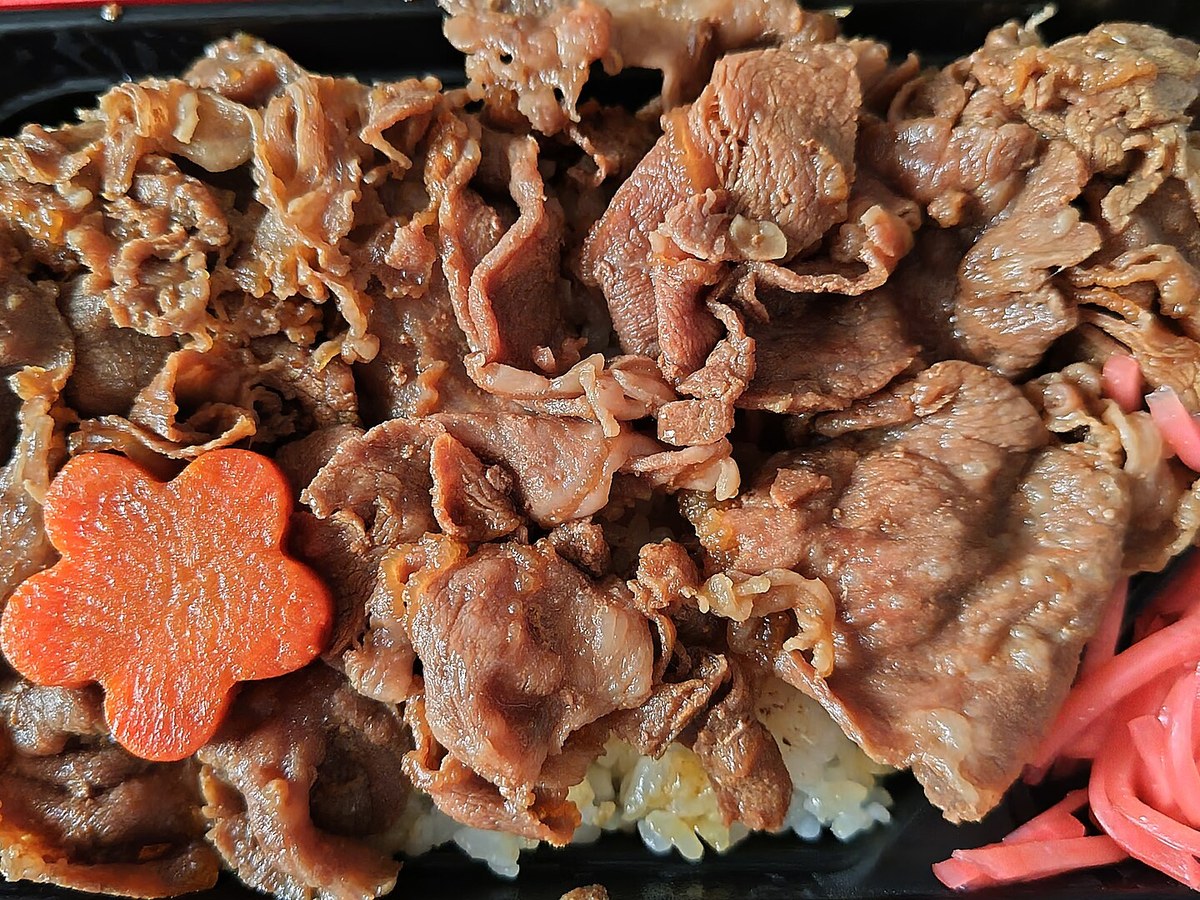
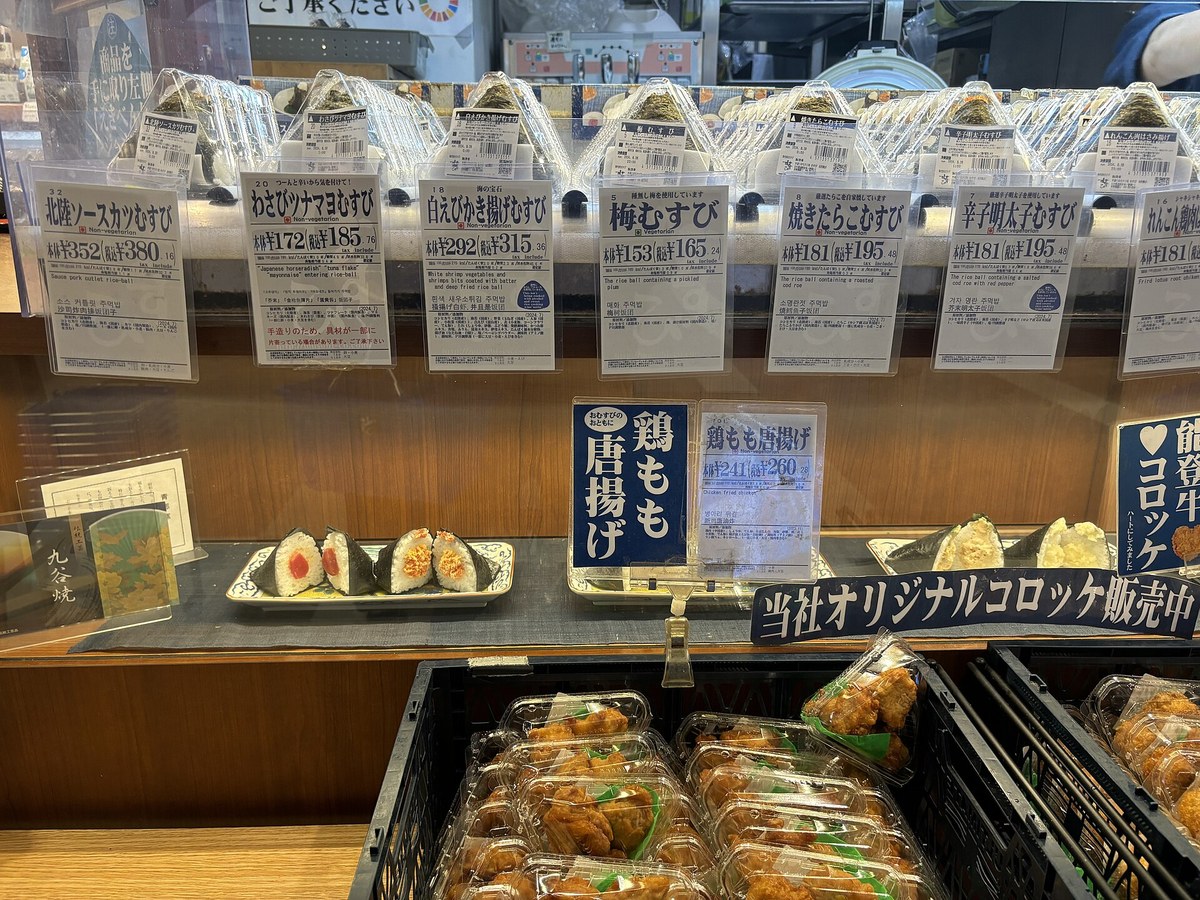
Above the standard sits Noto Beef Premium, with its own certificates and seals: A5 beef with a BMS marbling score of 10 or more, or A5 at BMS 8–9 whose oleic-acid share reaches 55 percent. Our photographs are the beef at street level in Kanazawa — sliced over rice in a beef bowl, and the croquette and rice-ball counter of a Kanazawa shop, where the brand meets the shopping street.
1995 to Premium
The council — the prefecture and the prefecture’s beef trade bodies — was formed in 1995 and set the certification rules the same year. In 2007 the beef took a special prize at the 9th National Wagyu Contest, and that October the name was registered as a regional collective trademark. The Premium certification scheme followed in 2011, drawing the line inside the brand between the certified and the exceptional.
Scarcity is structural, not marketing: the record states plainly that shipments are few, so the beef circulates almost only inside Ishikawa. When the pandemic cut demand in 2020, the prefecture’s answer was to put Noto beef into school lunches across the prefecture — the home market, feeding its own children first.
How Kanazawa eats it
Because whole cuts rarely leave the prefecture, the Kanazawa forms are the accessible ones: the beef bowl, sliced beef laid thick over rice with pickled ginger and a carved carrot flower, as in our first photograph; sukiyaki bowls in the market quarter; and the croquette — minced Noto beef folded into potato, crumbed and fried — sold from counters like the one in our second photograph, alongside Noto-beef rice balls.
The travel record read this run priced the market-quarter forms gently for a brand wagyu: a Noto beef sukiyaki bowl at ¥790 and a Noto croquette at ¥480 in the Omicho area, with an A5 Noto beef skewer at ¥1,500 nearby. The brand’s ceiling is a steakhouse; its floor is a market counter, and both are inside one city.
Buying it
Go to Ishikawa: that is the buying advice the brand’s own distribution imposes. In Kanazawa, the market and station quarters carry the bowls and croquettes; for the trade measure, the wholesale-market listing read this run prices Awa Foods’ Noto beef croquette at ¥89 per 70-gram piece, sold as a tax-included ¥445 lot of five — a trade sample price, stated as such, and a useful floor under the street price.
Check the seal before you pay a Premium price: Premium beef carries its own certificate and sticker, and the standard name itself is licensed. In Ishikawa the paperwork is part of the product.
Sources — checked 15 November 2026
- Noto beef — encyclopedia record (the 1995 certification rules, the Premium tier, the Ishikawa-only circulation)
- Awa Foods Noto beef croquette — wholesale-market listing, and a Kanazawa travel record (the ¥89 croquette, the ¥790 bowl)
Checked 15 November 2026 (stored links re-fetched and judged per product): reserved where the page says so, with an editorial review note kept per product. Press, PR and travel use stays outside the grant.
Editorial review 2026-11-15