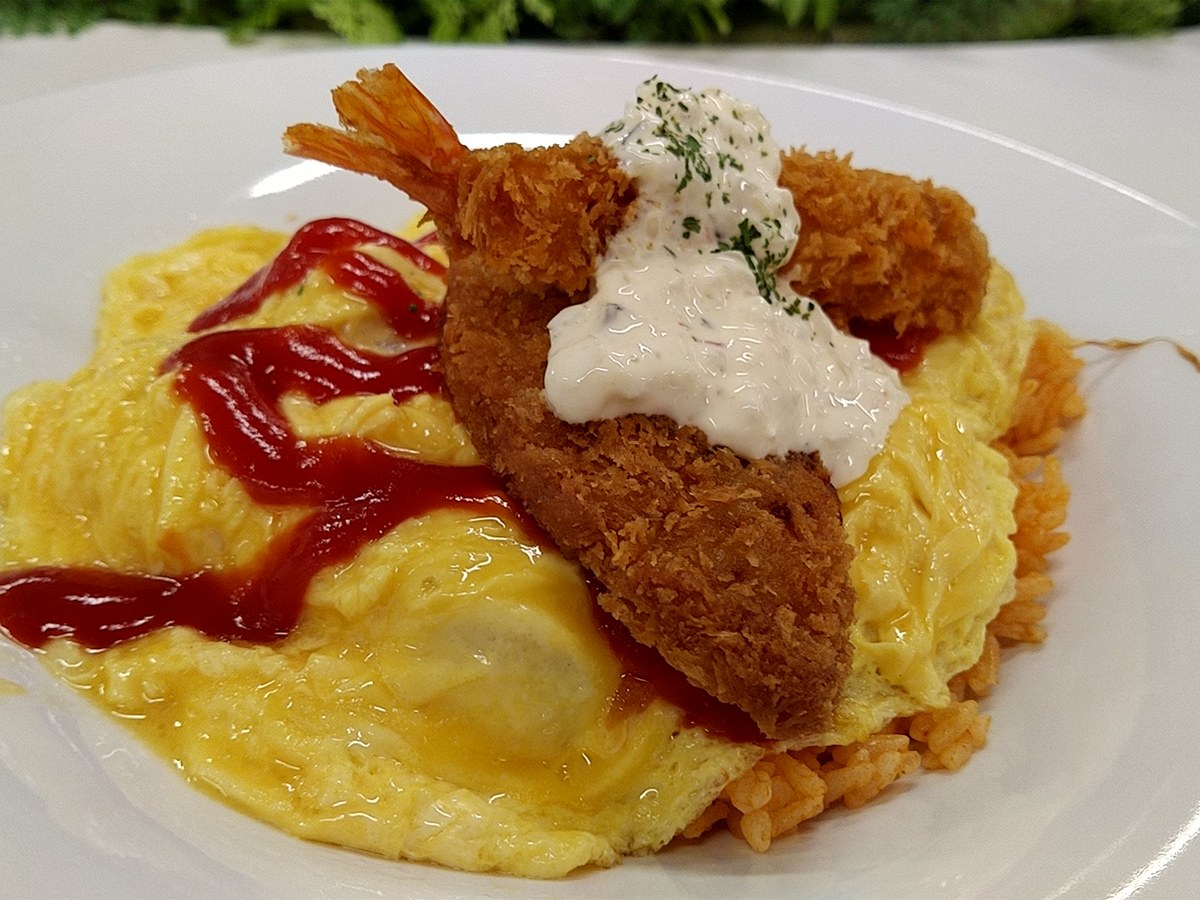
Start with omurice, then break its rules. Kanazawa's hanton rice lays ketchup-flavoured buttered rice under a thin, soft omelette — so far, so familiar — and then crowns it with fried white fish and fried shrimp, a stripe of ketchup and a generous pour of tartar sauce. The name is a coinage from two languages: han, from 'hungry' (or Hungarian, on the other telling), and ton, the French word for tuna — although the classic Kanazawa plate contains no tuna at all, and at its most famous address the fried fish is marlin. It has been the city's soul food since the late 1960s, served by small Western-style restaurants with queues out of the door.
Omurice, re-plated by a castle city
The construction is precise even where toppings wander. At the base, rice fried in butter with ketchup — chicken-rice style, sweet and red. Over it, a thin omelette, soft rather than set, draped instead of wrapped. On top of that, the fryer's contribution: white fish in crisp crumbs as the constant, fried shrimp beside it at the standard houses, tonkatsu or chicken at the varying ones. Then the two sauces together — ketchup for sweetness, tartar for richness — where an ordinary omurice makes do with one. The plate is big, cheap and defiantly un-French, and Kanazawa has eaten it for over half a century.
At Grill Otsuka, the address the record calls the place to go, the standard plate is itemised like a definition: ketchup rice, soft-boiled egg, fried white fish and shrimp, ketchup, and a homemade tartar sauce described as mildly sour and very creamy, gently enveloping the fries. Other houses mark their territory in the sauce — Kitchen Suginomi pours a special 'thousand sauce' with paprika in its mayonnaise base — but the grammar of omelette, ketchup rice, fried fish and tartar never changes.
A name from two languages, a dish from one kitchen — or two
The name first. 'Hanton' is a coined word: the Food in Japan record combines the Hungarian 'han' with ton, the French for tuna, and tells how the dish was said to draw inspiration from a Hungarian meal topped with tartar sauce — except that no such Hungarian dish exists, so that half of the origin, the record concedes, remains elusive. The Sora News telling reaches the same word by a different road: 'hungry' shortened, plus thon. Both roads are carried here as the record gives them; what is certain is the tuna that is not on the plate — Grill Otsuka fries marlin.
The birth has two tellings too. On the Food in Japan account, around 1968 a company opened a restaurant in Katamachi, Kanazawa's centre, and its head chef introduced hanton rice as an original menu item — scrambled eggs with fried fish on top — which became a hit and spread as colleagues from that kitchen opened their own restaurants. On the account of Grill Otsuka's owning family, the dish was first made in the Grill Otsuka kitchen as a staff meal; a cook who left to open his own place put it on his menu, and Grill Otsuka then began serving it to customers too — leaving 'first to serve it' honestly unsettled between the two houses. The article attributes both and does not choose.
Half a century of queues
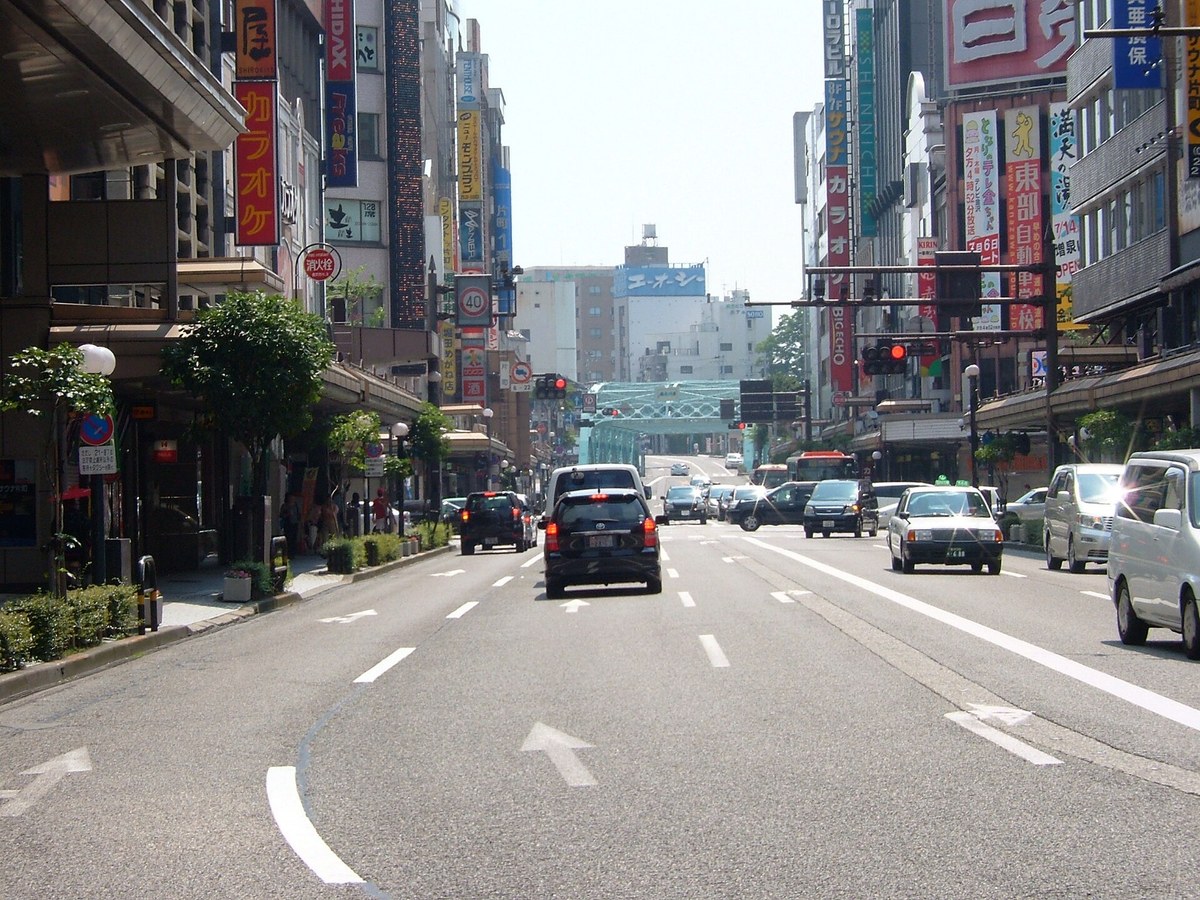
However it began, the dish stayed home. Hanton rice is centred on Kanazawa to this day, reaching the wider Kaga and Noto areas and parts of neighbouring Toyama and no further — a distribution map that reads like the delivery radius of a handful of family restaurants. Grill Otsuka, founded in 1957 at 2-9-15 Katamachi, is famous enough that tourists queue on Saturdays and Sundays; Kitchen Suginomi has served its version since 1978; Yoshokuya RYO in Nagamachi pours its tartar over a deluxe plate with grilled seasonal vegetables. Guidebooks arrived late to a dish the city had already kept for fifty years.
That obscurity is part of the record: hanton rice is routinely introduced, even in Japan, as the famous dish nobody outside Kanazawa has heard of. It never became a chain product or a convenience-store line; it remains what its makers made it — a single city's lunch, cooked to order in small rooms, priced for the people who live there.
Eating it in Kanazawa
The Food in Japan record, updated in November 2026, prices the city's plates across a friendly range: Grill Otsuka's standard Hanton Rice at ¥980; Kitchen Suginomi's Hanton with salad and soup at ¥750; and the deluxe plate at Yoshokuya RYO — large fried shrimp and white fish, grilled seasonal vegetables, miso soup and a seasonal salad — at ¥1,620. Start at Grill Otsuka for the standard form (expect the weekend queue the record warns of), and take the small size seriously: the plates are famously generous.
Hanton rice is restaurant food, made to order where it is eaten; no packaged or take-home version appears in the sources checked. Order it in Katamachi or Nagamachi, eat it hot while the tartar is still cold against the fries, and you have the whole dish — Kanazawa does not export it, and on the evidence of sixty years, does not need to.
Sources — checked 12 November 2026
- Food in Japan — Hanton rice: Kanazawa's specialty buttered rice dish (updated 9 November 2026)
- Sora News 24 — Hanton rice: Kanazawa's regional food, visited at Grill Otsuka (published 12 April 2024)
Original prose and official links only; no source text or maker media reproduced. Photos are credited Creative Commons works, not product photographs.
Editorial review 2026-11-12