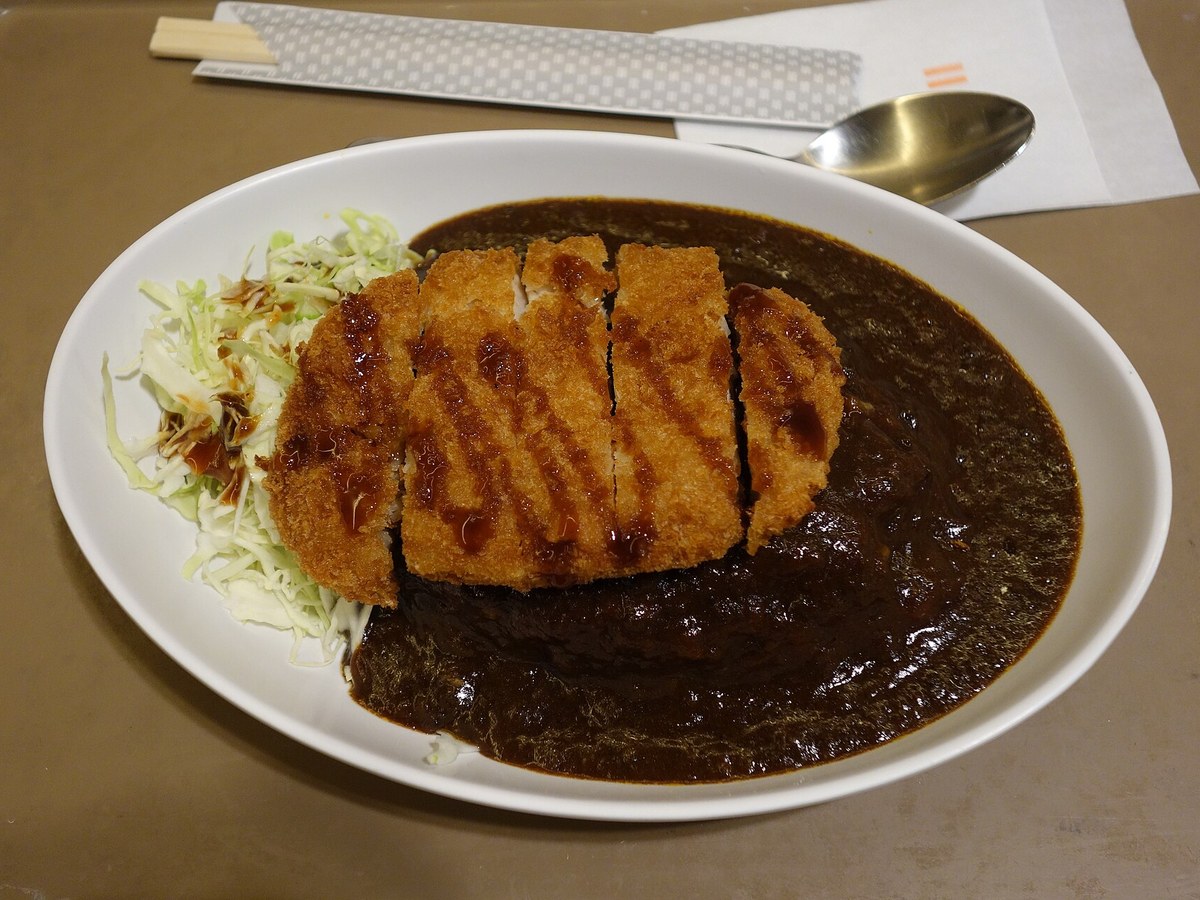
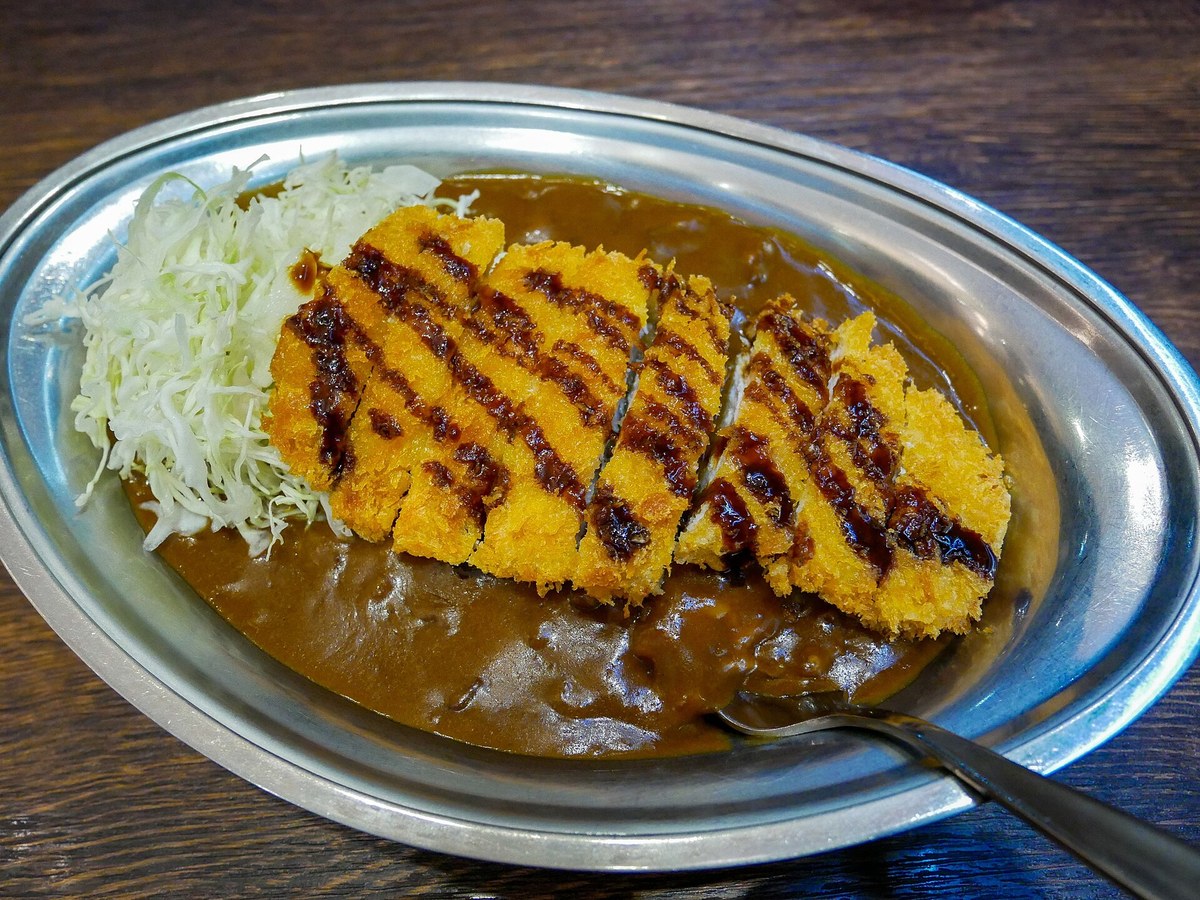
Kanazawa curry is a style with five marks and one inventor: a near-black roux thick enough to stand a spoon in, served on a stainless boat plate, a pork cutlet laid on top of the curry with sauce poured over the cutlet, shredded cabbage at the side, and a fork — never chopsticks — to eat it with. One yoshoku chef fixed the form in the early 1960s, and the city has eaten it that way since.
One chef, one recipe, a city of curry houses
The style begins with a single cook. Yoshikazu Tanaka, a yoshoku chef who had been chief cook at the Kanazawa restaurant New Kanazawa, went independent in 1961 and opened Yoshoku Tanaka. He served ordinary Western-style curry at first, but by 1963 at the latest the plate had taken the form the city still knows: curry on a stainless boat plate, a cutlet set on it with sauce poured over, shredded cabbage alongside.
Tanaka did not keep the recipe to himself — he passed it inside the trade. In 1964 his fellow apprentice from New Kanazawa, Tadao Iwata, received it and founded Indian Curry with his own arrangement; in 1965 Yoshoku Tanaka itself became a curry specialist; Kitchen Yuki, founded in 1966, was taught the recipe by the same circle. Turban and Citizen Alba followed in 1971. The old houses of Kanazawa curry are one recipe, shared.
The five marks of the style
The published definition — the Kanazawa Curry Association’s, and Champion Curry’s own history page in nearly the same words — has five marks. The roux is dark to the point of near-black and thick, glossy and heavy. It is served on a boat-shaped stainless-steel plate. It is eaten with a fork or a spork. The cutlet sits on top of the curry — not beside it — with tonkatsu sauce poured over the cutlet itself. And shredded cabbage always stands at the side.
Not every house meets every mark, and the association says so; but the plate in the photograph is the reference form, and Ishikawa’s density of curry houses is part of the claim: Champion Curry, citing a 2013 NTT Townpage survey, notes the prefecture led Japan in registered curry shops per 100,000 residents.
A name younger than the dish
For four decades the style had no collective name — the houses were simply the city’s curry shops, and most trade was local. The words “Kanazawa curry” surface only in the mid-2000s, set against Yokosuka navy curry and Sapporo soup curry; a local maker registered “Tsukuda no Kanazawa Curry” as a trademark in 2007, and in 2007 Go Go Curry — a sister line of the old Turban house — began calling itself the name’s populariser and carried it to Tokyo and beyond.
The Kanazawa Curry Association, a private body founded in 2014 around Go Go Curry’s founder, now lists the member houses. The genre’s founder house stands apart from it: Champion Curry, Tanaka’s own line, trades on “the original Kanazawa curry” and does not belong to the association. The name is new; the plate is sixty years old.
Eating it: fork first, cabbage as you go
Order the reference plate at Champion Curry — the L-katsu curry, a loin cutlet on the dark roux, regular size ¥1,100 including tax on the house’s own store menus when checked for this story, with the genre’s standard katsu curry running about ¥700–1,200 across the old houses. Locals eat with the fork, cutlet and cabbage worked into the roux as they go; whether to mix the cabbage in is a genuine hometown argument, and the record notes most Kanazawa eaters historically did not.
Retort pouches from the old houses travel well and are the honest souvenir — the roux is the dish, and it survives the pouch. What does not travel is the plate itself: stainless, boat-shaped, and eaten with a fork in a Kanazawa curry house.
Sources — checked 14 November 2026
- Kanazawa curry — encyclopedia record (Tanaka lineage, five marks, the name)
- Food in Japan — Kanazawa Curry guide (sourced survey)
- Hokkoku Shimbun — Champion Curry L-katsu festival (price record)
Checked 14 November 2026 (stored links re-fetched and judged per product): reserved where the page says so, with an editorial review note kept per product. Press, PR and travel use stays outside the grant.
Editorial review 2026-11-14