Most branded vegetables are a variety. Naruto Kintoki is an address. The sweet potato that Tokushima sends across Japan — crimson skin, flesh that turns gold in the oven, a dry chestnut fluffiness where other sweet potatoes go creamy — is legally three things at once: a lineage (selected lines of the Kokei No. 14 cultivar), a map (Naruto City, Tokushima City and Itano District), and a name (a regional collective trademark registered in 2007). A Kokei 14 potato grown one prefecture away is the same plant and a different product. This is the story of how sand, strait and trademark law made the distinction edible.
A trademark, not a cultivar
The careful record — compiled from the trademark registry, Tokushima research reports and breeding papers — is exact about what Naruto Kintoki is not: it is not a separately bred cultivar. A 2017 report of the national agriculture research organisation explains that growers in each production area selected their own derived lines of Kokei No. 14, the cultivar bred in neighbouring Kochi, and branded them — Naruto Kintoki is the Tokushima branch of that branding. What makes a potato Naruto Kintoki commercially is the union of the three conditions: Kokei 14 lineage, production inside the trademarked Tokushima area, and authorised use of the regional brand.
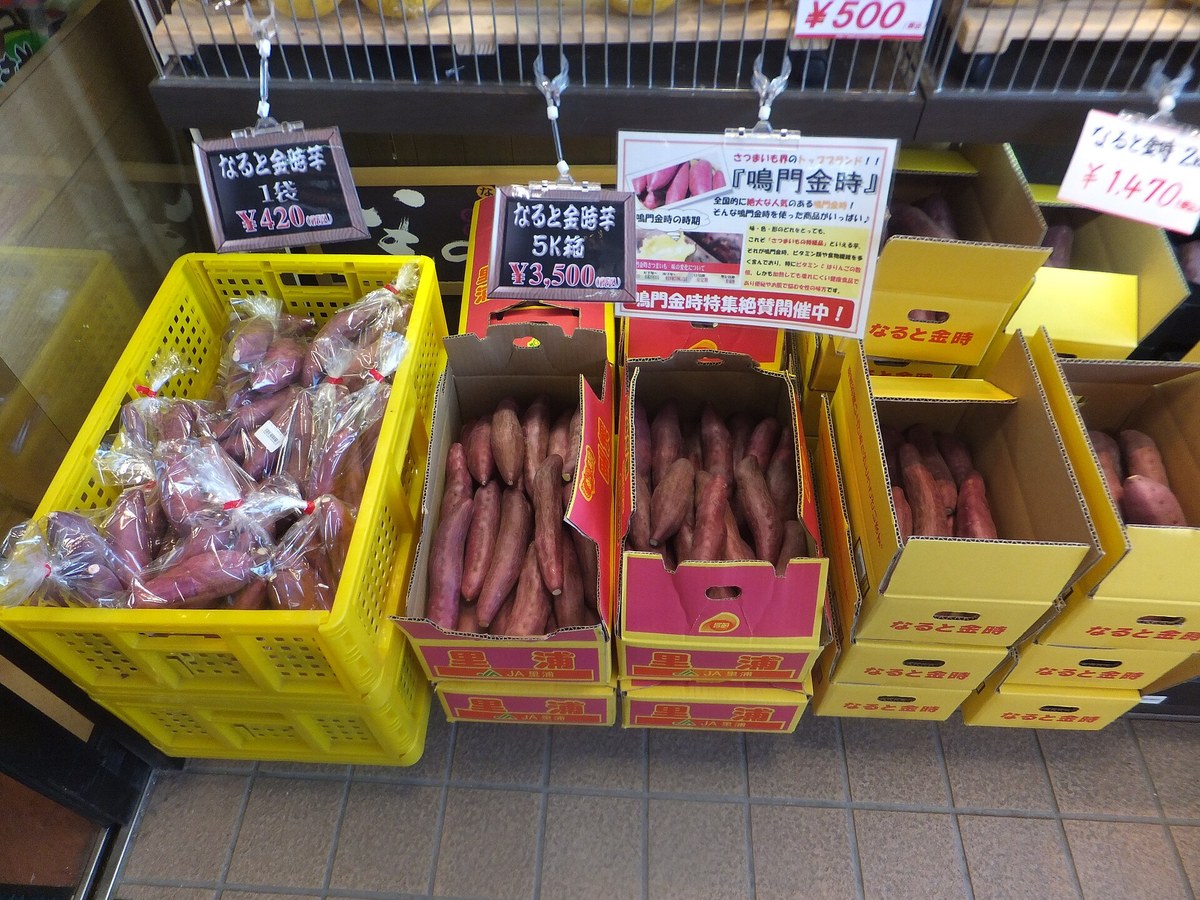
The legal step is dated: on 20 April 2007 the Japan Patent Office registered なると金時 as Regional Collective Trademark No. 5043110, the right held through the JA Zen-Noh federation's Tokushima arm. Inside the brand sit local labels — Satomusume, shipped by the Satoura cooperative in Naruto's Satoura district, is the best known, a brand within the brand, graded and boxed under the cooperative's own name.
Sand by the strait
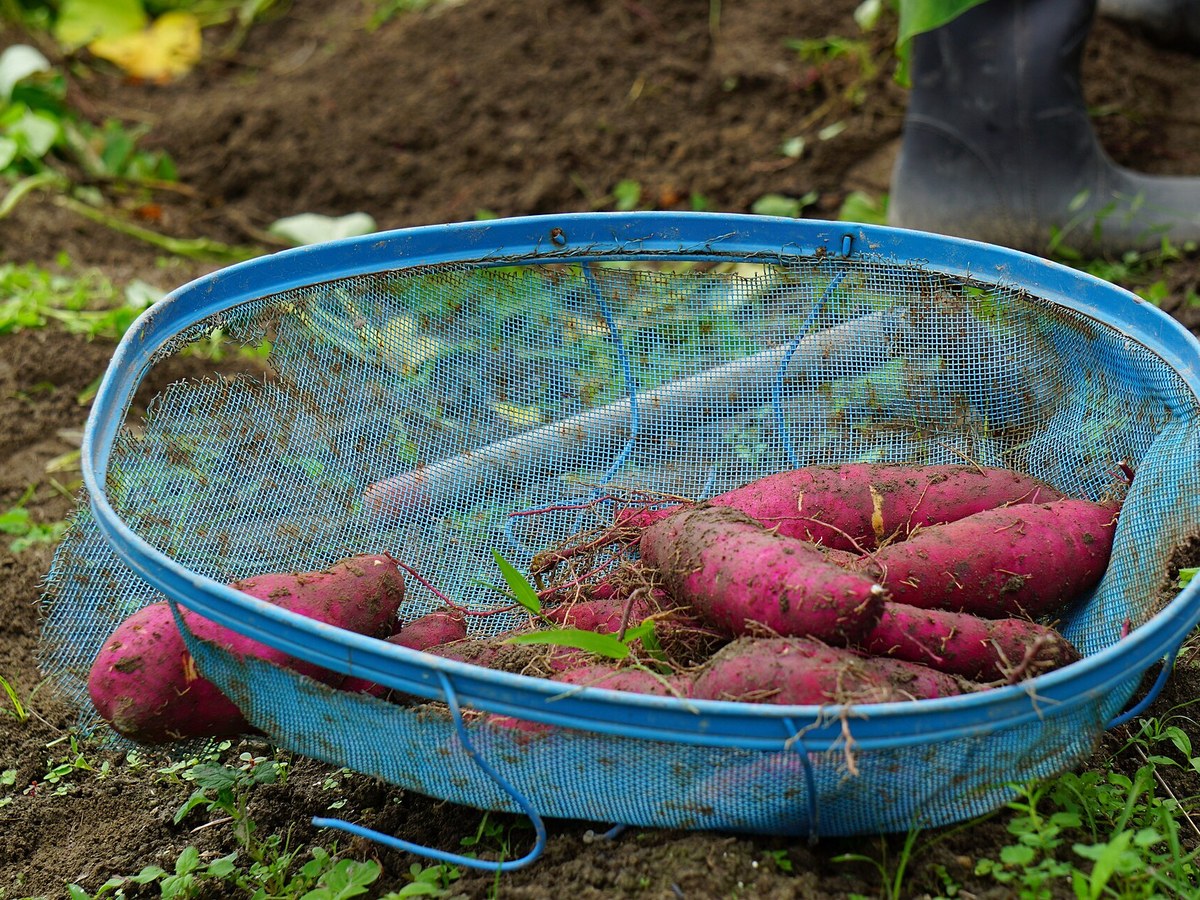
The growing ground is the brand's first argument. JA reporting on the current season describes Naruto Kintoki raised in the sandy fields of Naruto and its neighbouring districts — sand with excellent drainage and aeration, in the fields around the Naruto Strait and the old and new Yoshino River channels — producing the vivid red skin and the flesh that turns golden when heated, with a chestnut-like fluffy texture and a clean, gentle sweetness.
Sweet potatoes forgive poor soil, but this soil does positive work: the sand's minerals and the strait's maritime air are the growers' standing explanation for the skin colour and the dry, mealy flesh that sets Naruto Kintoki apart from the moist, fibrous style of Kagoshima's famous potatoes. The harvest runs from high summer into winter, and the potatoes are cured and stored — the Satoura cooperative's Satomusume shipments are famously a stored, matured product, sweetness settled by waiting.
What the papers say
Naruto Kintoki is studied as well as sold. The Journal of the Japanese Society for Food Science and Technology carries work on the potato itself — a study of high-temperature curing treatment and storability in 'Kokei No. 14' Naruto-Kintoki, following the fruit through export shipping conditions to Malaysia — evidence that the brand trades internationally enough to need shipping science: the potatoes are exported to Singapore, Malaysia, Hong Kong and Taiwan by Tokushima trading houses.
At home the brand's reach is the souvenir shelf: the Naruto City products hall sells Naruto Kintoki fresh in season alongside the sweets, wakame and sudachi of the strait, and the city's roadside station Kurukuru Naruto builds an entire food park around the potato — soft-serve, baked goods and packaged snacks all from the one trademarked tuber. A regional trademark that can anchor a roadside station is doing the work regional brands are meant to do.
Buying the gold flesh
The fullest price record is kept by a Naruto retailer itself: Toyota Shoten of Naruto, whose guide — prices checked against its own shop pages — lists the top grade of Naruto Kintoki in a 5 kg box at ¥4,860 including tax, the home-use grade at ¥3,780 in the same box, and bagged top-grade potatoes of about a kilo at ¥1,080, with delivery charged by region. The JA Town farm-direct shop sells the current season's potatoes under both the plain Naruto Kintoki name and the Satomusume label — about five kilograms, M size, from the Satoura cooperative.
What to check on any box: the trademarked name in its registered form, a Tokushima origin inside the three-area map, and the grade — the grades divide by appearance, not eating quality, so the home-use box is the connoisseur's discount. And read 'Kokei 14' listings from other prefectures for what they are: the same distinguished cultivar, honestly labelled, but not this potato — the name, like the sand, stays in Tokushima.
Sources — checked 12 November 2026
- Food in Japan — Naruto Kintoki research compilation (trademark registry, Tokushima research reports and breeding papers)
- JA Town (JA Zen-Noh) — Tokushima Naruto Kintoki on sale, November 2026 (via Shinano Mainichi Shimbun release)
- Journal of the Japanese Society for Food Science and Technology (J-STAGE) — Curing treatment and storability of 'Kokei No. 14' Naruto-Kintoki
- Toyota Shoten (Naruto) — Naruto Kintoki guide: grades, box sizes and prices (retailer's dated price record)
Original prose and official links only; no source text or maker media reproduced. Photos are credited Creative Commons works, not product photographs.
Editorial review 2026-11-12