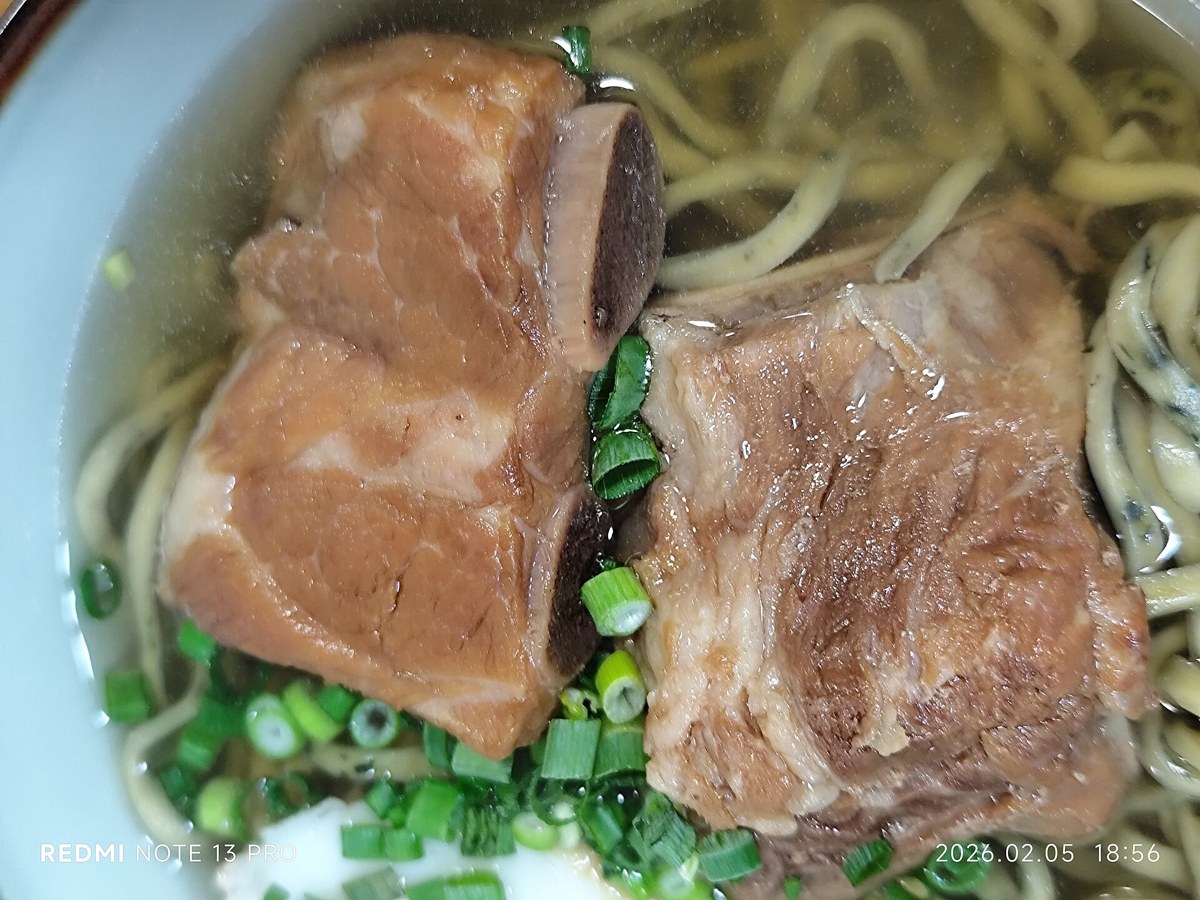
Awa wasanbon sugar was Tokushima's refined first story. Its second is the prefecture's working bowl: Tokushima ramen — dark soy-browned pork broth, thin noodles, pork belly stewed sweet instead of sliced chashu, and a raw egg you crack in yourself. Locals called it chuka soba for fifty years before the rest of Japan learned its name.
A postwar stall at the ferry port
The documented story starts after the war, not in the 1930s. Komatsushima Port ran the passenger ferries to Kansai, and crowds and a black market gathered around them; according to the Shin-Yokohama Raumen Museum's account, a vendor named Hiromu Futaki began pulling a noodle stall there around 1949, and the museum treats his cloudy pork-bone soup as the origin.
The white style — the same pork base with light soy — spread first through Tokushima City in the 1950s. The dark-soy brown style appeared around the end of the 1960s, at shops including Kanton and Inotani at roughly the same time, and became the face of the dish. National fame waited until 1998-2000, when the Raumen Museum presented Tokushima ramen as the last regional ramen of the 20th century and Inotani ran a counter there.
Three colours, one bowl logic
The colour framework is the museum's, and it works: brown (cha-kei) pairs pork-bone stock with dark, sometimes tamari, soy sauce for a salty-sweet, near-black bowl; white uses light or white soy on the same base; yellow builds on pork, chicken and vegetables. Brown is the style travellers meet first and the one Tokushima City serves most.
Whatever the colour, the toppings mark the bowl as Tokushima's: slices of pork belly simmered in sweet tare instead of roasted chashu, bean sprouts, green onions — and a raw egg, cracked over the hot broth at the table to cook gently in it. Some shops include the egg; others charge about ¥50. Ask, then crack.
Practical details: small bowls, honest prices
A typical bowl runs ¥750-1,000 in the checked guide. Named anchors from a March 2025 shop listing: Inotani's meat bowl with egg at ¥900, the egg itself ¥50; Todai's extra-pork regular size at ¥950. Bowls run deliberately small by ramen standards — the custom is kaedama, a second helping of noodles for the remaining broth at about ¥100, rather than one giant serving.
Start with Inotani for history — it has served the brown style since the 1960s and drew the museum invitation — or Todai for the brown style at full intensity. Order the meat-and-egg version first; it is the complete sentence the dish speaks.
The ramen that outnumbered udon
Shikoku is udon country — this collection's Sanuki entry sits one prefecture away. Tokushima is the island's exception: one checked account of the NHK documentary notes ramen shops in the prefecture now outnumber udon shops, a reversal of the region's noodle history. The brown bowl is why: a pork-and-soy depth that owes nothing to the sardine lightness across the border.
There is also a lesson in the naming. For fifty years the bowl needed no brand — it was lunch. The museum's colour chart and the 1999 spotlight did not change the soup; they gave the nation a vocabulary for a prefecture's habit.
Scope: what 'limited' means here
The edition is Tokushima's chuka soba tradition: the pork-soy broth, the sweet pork belly, the raw egg, served by the prefecture's ramen shops. Tokushima-style bowls elsewhere are noted as the style's spread; the three-colour framework is credited to the Raumen Museum, as the sources credit it.
Sources — checked 9 November 2026
- Food in Japan: Tokushima Ramen — 3 broth styles and where to eat
- Rurubu & All Way Japan: Tokushima ramen — 5 recommended shops
- Japan Tourism Agency (MLIT): Tokushima Ramen search details
- Japan Activity: Tokushima ramen styles and restaurant guide
Original prose and official links only; no source text or maker media reproduced. Photos are credited Creative Commons works, not product photographs.
Editorial review 2026-11-09