The most famous senbei in northern Japan contains no rice. Nanbu senbei are wheat, water and salt, clamped into a cast-iron press until the edges spill out and crisp into 'ears' — the part everyone fights over. Iwate's fifth story is the cracker the Nanbu domain carried to war, baked today in Ninohe by a house that started in 1948 with twenty-one moulds.
A cracker defined by a domain, not a prefecture
The official Hachinohe guide defines the cracker by the old country's borders, not the modern map: nanbu senbei are a special type of wheat cracker found in the southeastern area of Aomori and the northern part of Iwate Prefecture. The dough is wheat flour, water and salt — one Sannohe shop, Oyamada, lists flour, salt, baking powder and water and nothing else — kneaded and baked in a special round iron mould.
That straddle is the point of the name. Nanbu is the domain that once ruled both sides of today's border, and the Ninohe maker Iwateya names the cracker's towns in one breath — Hachinohe, Ninohe, Morioka, the rest of the old Nanbu domain — where, it says, senbei have been baked and eaten for some 450 years. Aomori's official guide claims the origin for its own side, the Hachinohe region, while Iwate's prefectural guide documents named makers in Morioka and Kuji; the cracker simply ignores the modern border its name predates. This page files the cracker to Iwate by its Ninohe maker, and states the Aomori half of its home in full.
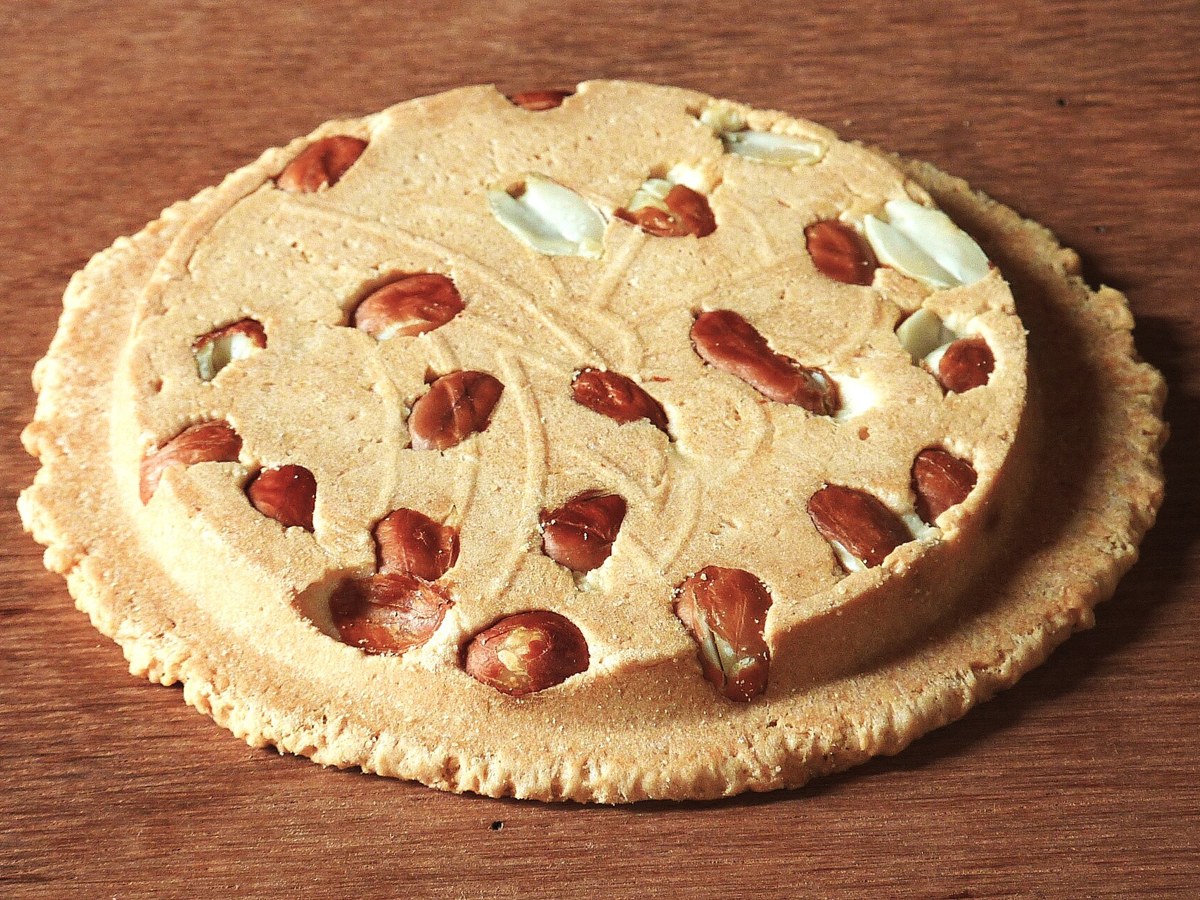
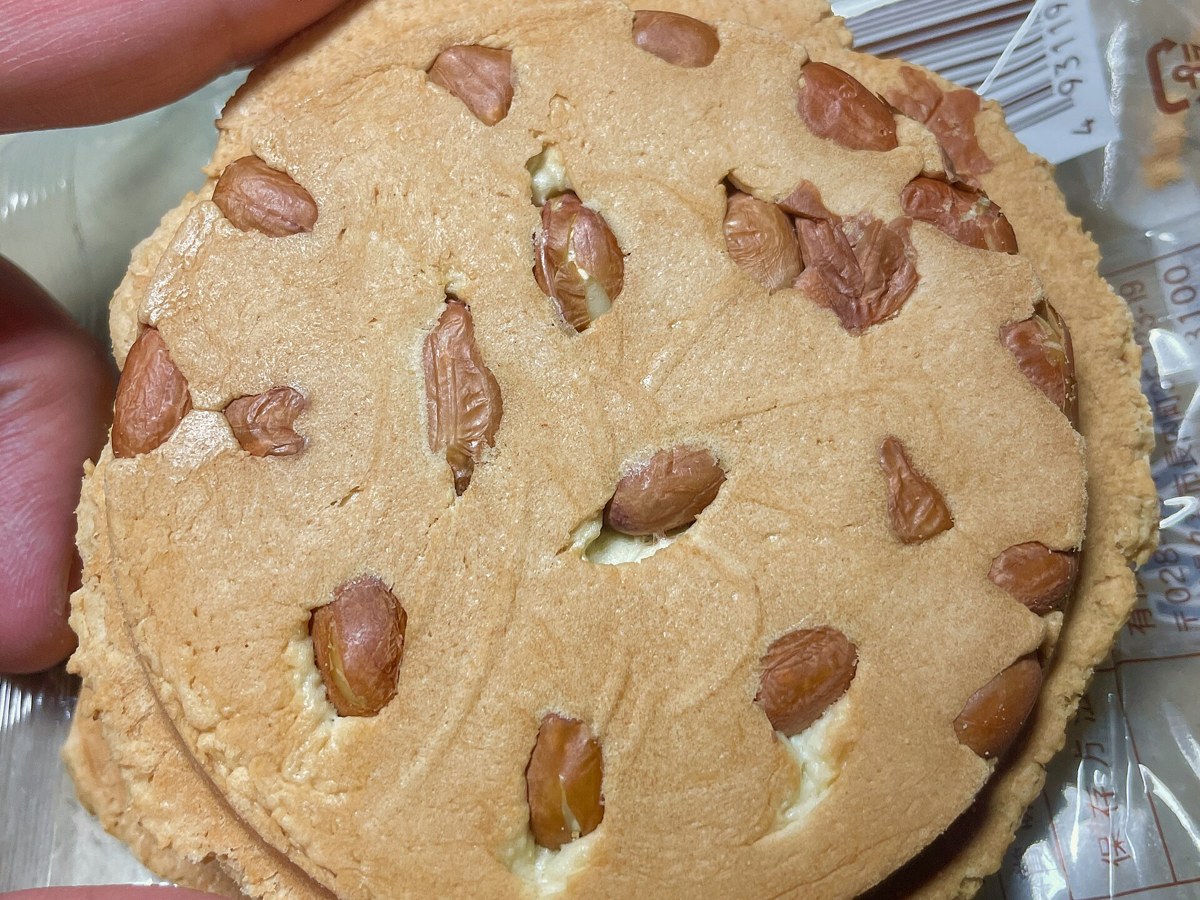
Pressed in iron, finished with ears
The making is a press, not an oven. Dough is grilled in a circular cast-iron mould, and as the mould is clamped down some of the dough overflows and cooks on the outside of the mould. That overflow is called the mimi — the ears — and the Hachinohe guide calls it often the most sought-after part of the cracker. At Oyamada the cooled crackers are trimmed to perfect circles, and the trimmings are collected, packaged and sold as mimi in their own right.
Oyamada's own history shows how hand-work scaled without changing tools: the shop opened in 1917 making hand-grilled senbei in single cast-iron moulds one at a time, installed a hand-cranked grilling machine in 1936, and has used that system ever since, usually making over 7,500 senbei a day in toppings that run from peanuts to wild sesame seeds. The classic toppings are sesame — the original flavour — wild sesame, shrimp and peanut; Iwateya's traditional line adds soy sauce beside sesame and peanut. Nowhere in the country are the ears treated as waste: trimmed, bagged and sold under their own name, they are for many buyers the first bag in the basket.
An emperor's snack, a domain's rations
Iwateya tells the origin carefully, as one account among several: about 600 years ago, in the Kentoku era, a retainer is said to have kneaded buckwheat flour from a nearby farmhouse, baked it round, sprinkled it with sesame and presented it to the Emperor Chokei, then touring the Nanbu region. About 450 years ago, the maker says, the cracker was being eaten as the field rations of the Nanbu domain — it kept well, and the ingredients were close at hand.
For the domain's farmers the cracker was not a snack but a staple: people who could not obtain white rice used buckwheat and barley, baked at the kamado or the hearth. Aomori's official guide frames the same keeping quality from its side — the crackers allegedly originated in the Hachinohe region and served as non-perishable rations samurai carried into battle. From the Meiji era, wheat flour became the main ingredient, and the baking turned commercial in earnest.
Ninohe's grandmother, Morioka's twenty kinds
The maker behind this page's price is Iwateya of Ninohe, founded in 1948 by Komatsu Shiki, who started her Nanbu senbei shop with twenty-one baking moulds after learning the baking at twelve years old, at an apprenticeship in a small town in Aomori. The house — formally Komatsu Seika — still works from Ishikiridokoro in Ninohe, and its traditional line is sold as the Obaachan — grandmother's — series: sesame, peanut and soy sauce, with sesame the mainstream flavour from the shop's beginning and the one this page prices below.
Morioka, the domain's old castle town, keeps the form at the country's southern edge: the prefecture's guide lists the Morioka Senbei Store, established in 1936, selling about twenty varieties including sesame, peanut, soy sauce and green tea, and the Shirasawa shop making handmade nanbu senbei in more than twenty types. And on the Aomori side the cracker takes one more form — stewed with chicken and vegetables as senbei-jiru, a soup this collection covers from Hachinohe.
Sources — checked 11 November 2026
- Visit Hachinohe: Nanbu senbei guide
- Aomori official tourism guide: Nanbu senbei
- Iwateya (Komatsu Seika): Nanbu senbei and the house history
- Iwateya official shop: Obaachan sesame senbei
Original prose and official links only; no source text or maker media reproduced. Photos are credited Creative Commons works, not product photographs.
Editorial review 2026-11-11