Two of Morioka's three great noodles arrive finished. The third hands you the work. Jajamen comes as flat noodles under a dark mound of meat miso, and nothing happens until you mix it, taste it, and start deciding — vinegar for brightness, chili oil for heat, garlic if you dare. Then, when the bowl is nearly empty, it becomes soup. No other noodle in Japan asks this much of its eater, or gives this much back.
A repatriated noodle, rearranged
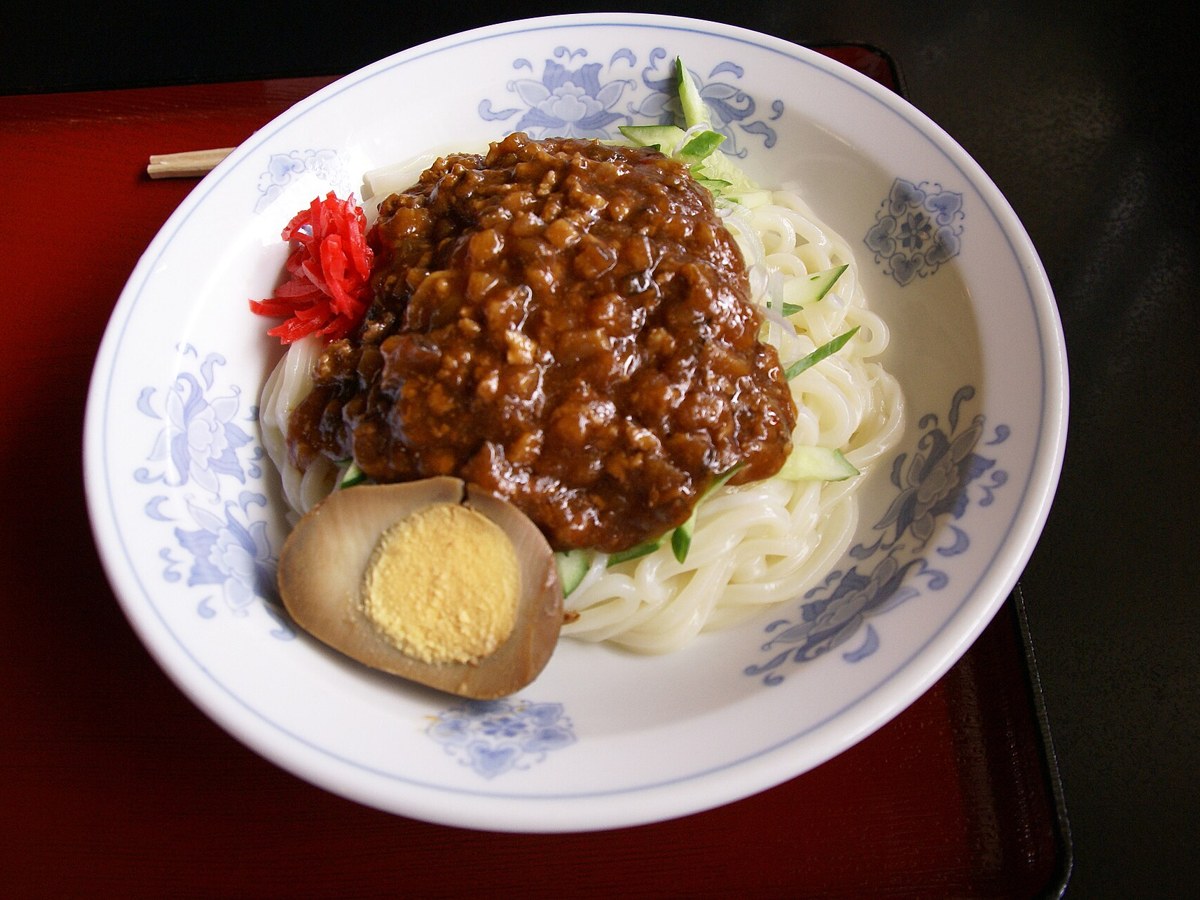
The founding house tells its own origin plainly. Pairon began as a food stall about sixty years ago; its founder, Takashina Kansho, had eaten zhajiangmian in prewar Manchukuo, and after repatriation to Morioka he arranged the dish to suit Morioka tastes. That arrangement is jajamen's beginning, in the maker's own words. The Chinese original's fermented black-bean sauce became a Japanese miso — at Pairon, a secret miso of minced meat, sesame, shiitake and more than ten other ingredients, mixed, stir-fried and rested until it deepens — and the noodles became the flat, chewy hira-uchi style the house still serves.
The adaptation kept going after the founder. On the checked guide's account, customers helped shape the style over decades of daily eating: the sauce balance, the toppings of cucumber, green onion and ginger, and above all the finale. What began as one stall's improvisation hardened into a citywide grammar that every Morioka jajamen shop now follows, while competing inside it — sweeter miso here, stronger garlic there, sesame forward somewhere else.
Brothless, and proud of it
Jajamen is not ramen and not a failed soup noodle; it is a mixed noodle, and the mixing is the dish. The flat noodles arrive under the meat miso with shredded cucumber for crunch against the richness, green onion and ginger for lift. You stir until every strand is coated, taste the house's base seasoning first — the guide's standing advice — and only then begin adjusting: a little vinegar, a thread of chili oil, raw garlic added slowly because it takes over fast. Two people at the same counter, ordering the same bowl, will finish with two different dishes, and both will claim theirs is correct.
That interactivity is why locals return. Reimen refreshes and wanko soba entertains, but jajamen is the noodle Morioka eats on ordinary days — quick, casual, filling, and never quite the same twice. It is the third of the city's three great noodles, and the only one of the trio that is warm, brothless and seasoned at the table.
Chitantan: the second course hiding in the first
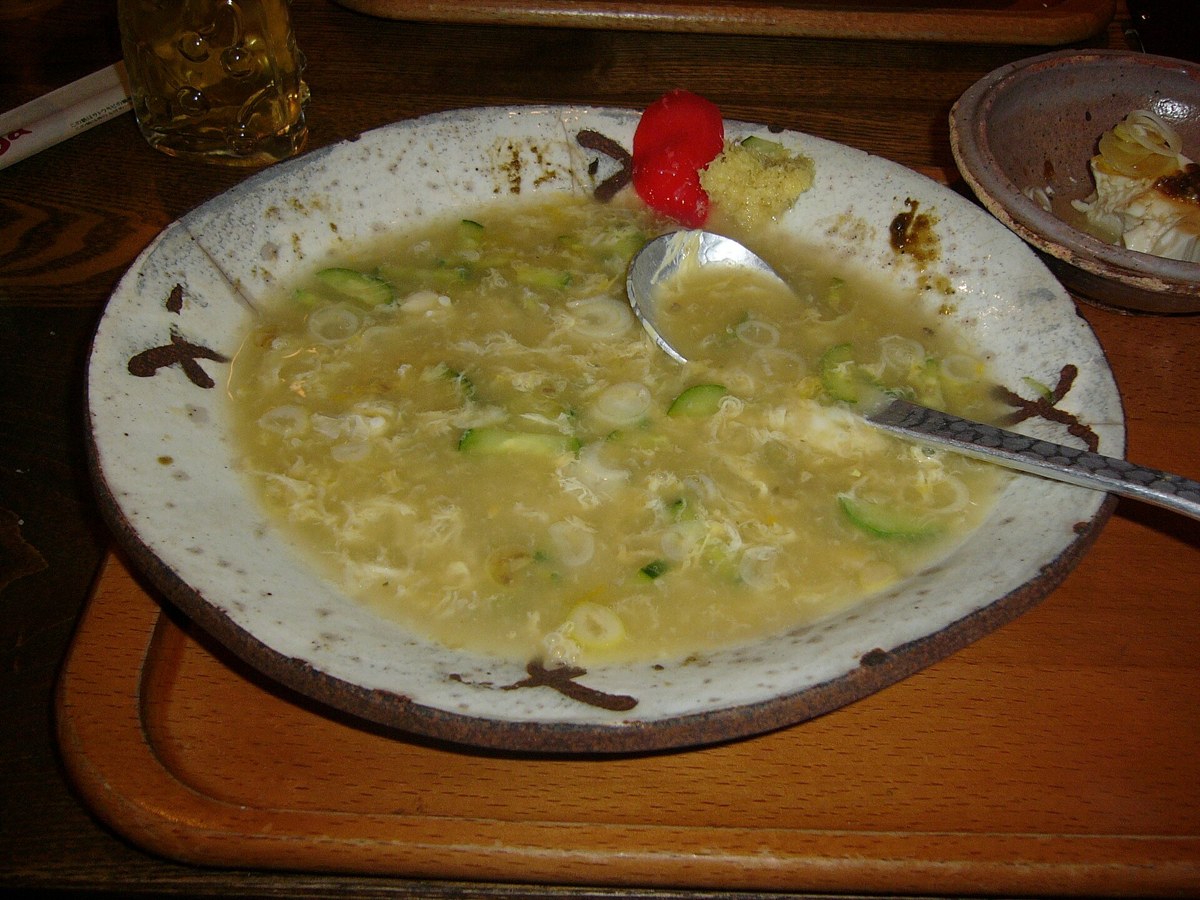
Before the last noodles disappear, stop. The finish is called chitantan, and it is the part visitors miss. Leave a little of the meat miso in the bowl — a few noodles too, if you can — crack in a raw egg, and ask the staff for the hot water the noodles were boiled in. Poured over the egg and the remaining sauce, it blooms into a mild, warm, slightly creamy egg soup: the strong, salty miso softened into something closer to a restorative. The meal ends not with the richest bite but with the gentlest one.
The economics are part of the charm. A standard bowl at Morioka's jajamen shops typically runs ¥600-900 on the checked guide's current readings — the cheapest of the three great noodles, and two courses by any honest count. Pairon, the founding house, remains the classic first bowl; after that, the local sport is comparison, shop by shop, miso by miso.
Iwate's shelf, completed in noodles
Set jajamen beside Iwate's standing stories and the prefecture's famous claim becomes whole: Morioka reimen, the cold Korean-rooted bowl; wanko soba, the endless small bowls; Nanbu ironware, the craft the noodles' city is also known for. Jajamen was the missing third of the trio this collection already held two of — the warm, working-day bowl that locals, on every checked account, call their own favourite of the three.
Eat it in the order the city does: mix hard, taste plain, season slowly, and save the ending. The chitantan is not a trick for tourists; it is the practical spirit of a postwar stall food, wasting nothing — not even the sauce. Morioka invented a noodle that finishes itself. All you have to do is leave enough behind.
Sources — checked 11 November 2026
- Pairon (the founding house): Morioka jajamen (maker's own official site, Japanese)
- Food in Japan: Morioka Jajamen Guide (checked specialist guide)
Original prose and official links only; no source text or maker media reproduced. Photos are credited Creative Commons works, not product photographs.
Editorial review 2026-11-11