Most soups are judged by their broth. Senbei-jiru is judged by its crackers — discs of plain wheat senbei, baked hard for one purpose, broken into a steaming pot of chicken, burdock, mushrooms and greens, and fished out at the exact moment they turn chewy. It is the household soup of Hachinohe, on Aomori's Pacific coast, and in the last decade it has collected a B-1 Grand Prix crown and a national 100-Year Food certificate without changing a thing.
The cracker that replaced rice
Start with the land. The Nanbu region — southern Aomori running into northern Iwate — is cold-damage country, where the rice crop failed often enough that wheat and buckwheat became the grains of survival. From them came Nanbu senbei: flour, salt and water kneaded, pressed into round iron moulds and baked — a cracker built to keep. By the Meiji period, the food-culture atlas counts, there were some 140 senbei makers around Hachinohe alone.
A storable staple invites a second use, and the checked guide is plain about where it happened: at home, at the hearth. Cooks began dropping the crackers into the household soup — meat or fish broth, mushrooms, burdock, cabbage, leek — where the dense wheat discs drank the stock and softened without dissolving. That hearth soup is senbei-jiru, and its name is simply its recipe: cracker soup.
Baked for the pot alone
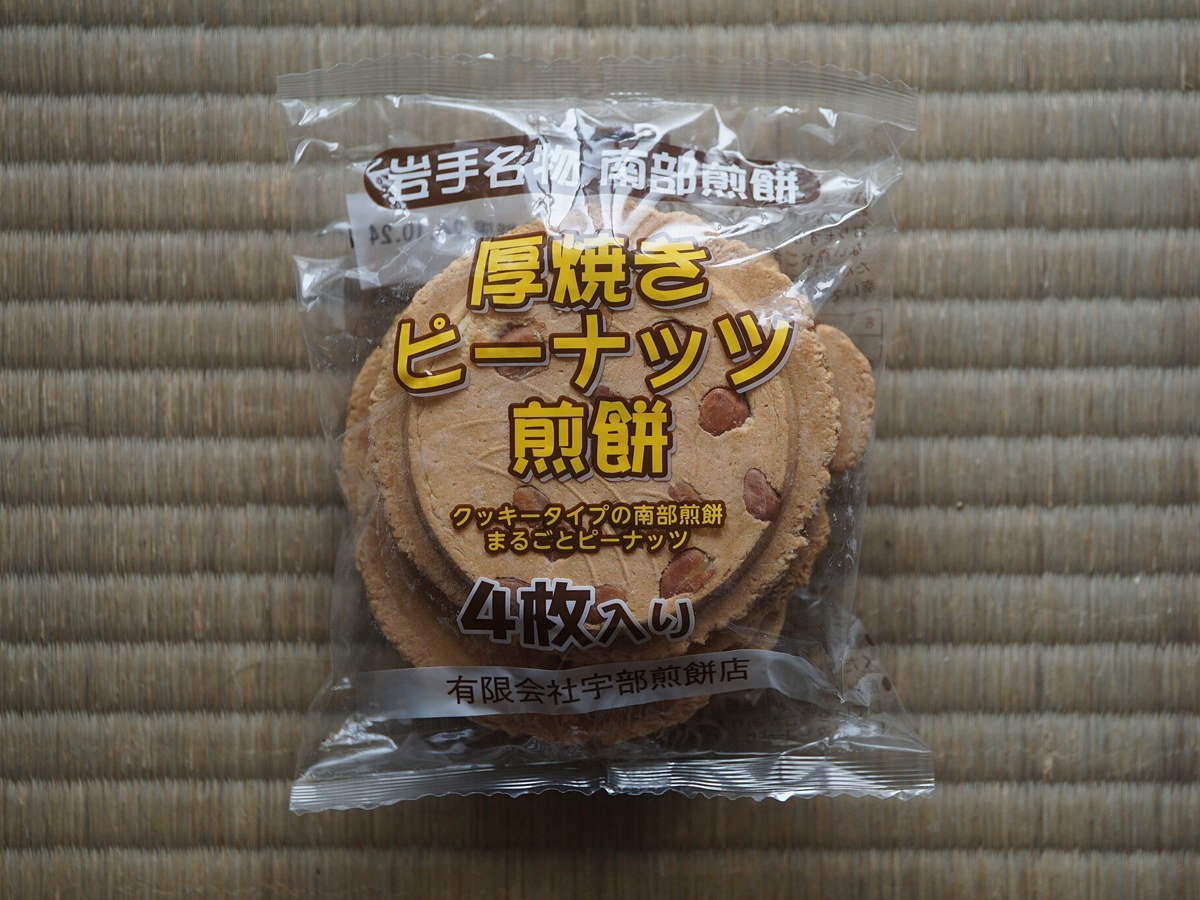
The soup has its own cracker. Ordinary Nanbu senbei come sesame-flecked, peanut-studded, sweet-glazed — a whole shop shelf of them, as the guide's catalogue shows. The soup takes none of those: it takes otsuyu senbei (also called kayaki senbei), a plain white disc baked exclusively for simmering, flavoured with nothing but wheat and salt so the broth does the seasoning. Eaten dry it is almost austere; in the pot it becomes the point.
Timing is the technique. The crackers go in broken, near the end, and are eaten al dente — the guide's own comparison — springy at the centre, stock-soaked at the edge. Seasoning runs three ways by house and shop: chicken with soy sauce (the most common), fish with salt in this port city, and a miso form. Minato Shokudo, by the fishing port at Minatomachi, serves it beside the morning's seafood; the Hasshoku Center market's counters serve it steps from the stalls that landed the fish.
A crown, a certificate, a price list
The dish's modern honours are official ones. A local promotion body, the Hachinohe Senbei-jiru Institute, formed in 2003 to carry the soup's name; in 2012 senbei-jiru won the Gold Grand Prix at the seventh B-1 Grand Prix, Japan's regional-dish championship; and in fiscal 2022 the Agency for Cultural Affairs certified it among its 100-Year Foods, the national register of food cultures a century deep. Few soups can show a cleaner set of papers.
The city itself publishes the take-home arithmetic. On Hachinohe City's own furusato-nozei value list, the Institute-certified senbei-jiru set — four servings, twice over — carries a general sale price of ¥1,728, and the certified soup-senbei sets run ¥1,440 for four bags and ¥2,880 for eight. In the city's restaurants a checked Aomori guide puts a bowl at roughly ¥600 to ¥1,200. Aomori's standing stories here are two Tsugaru crafts and Oma's great tuna; senbei-jiru is the prefecture's first cooked dish — the one that warms.
Aomori's shelf, warmed
Set the pot beside Aomori's three standing stories and the prefecture's north makes sense as a meal. The lacquer and the glass are Tsugaru's patience, the tuna is the strait's prize — and senbei-jiru is what a cold country cooks on an ordinary night, from the cracker tin, when the rice jar is the thing being saved.
Order it where the broth is chicken and soy, and eat the first cracker the moment it bends: too early and it is a biscuit, too late and it is a dumpling. In between, for about a minute, it is exactly what Hachinohe has been eating for a century — and what its city hall now prices, certifies and ships with civic pride.
Sources — checked 10 November 2026
- Senbei jiru: Aomori's Nanbu cracker soup (checked specialist guide)
- Food-culture atlas: Senbei-jiru (Nanbu cracker hot pot)
- Amazing AOMORI (official Aomori travel guide): Nambu Sembei Crackers
- Hachinohe City: published furusato-nozei value list (30 October 2026)
Original prose and official links only; no source text or maker media reproduced. Photos are credited Creative Commons works, not product photographs.
Editorial review 2026-11-10