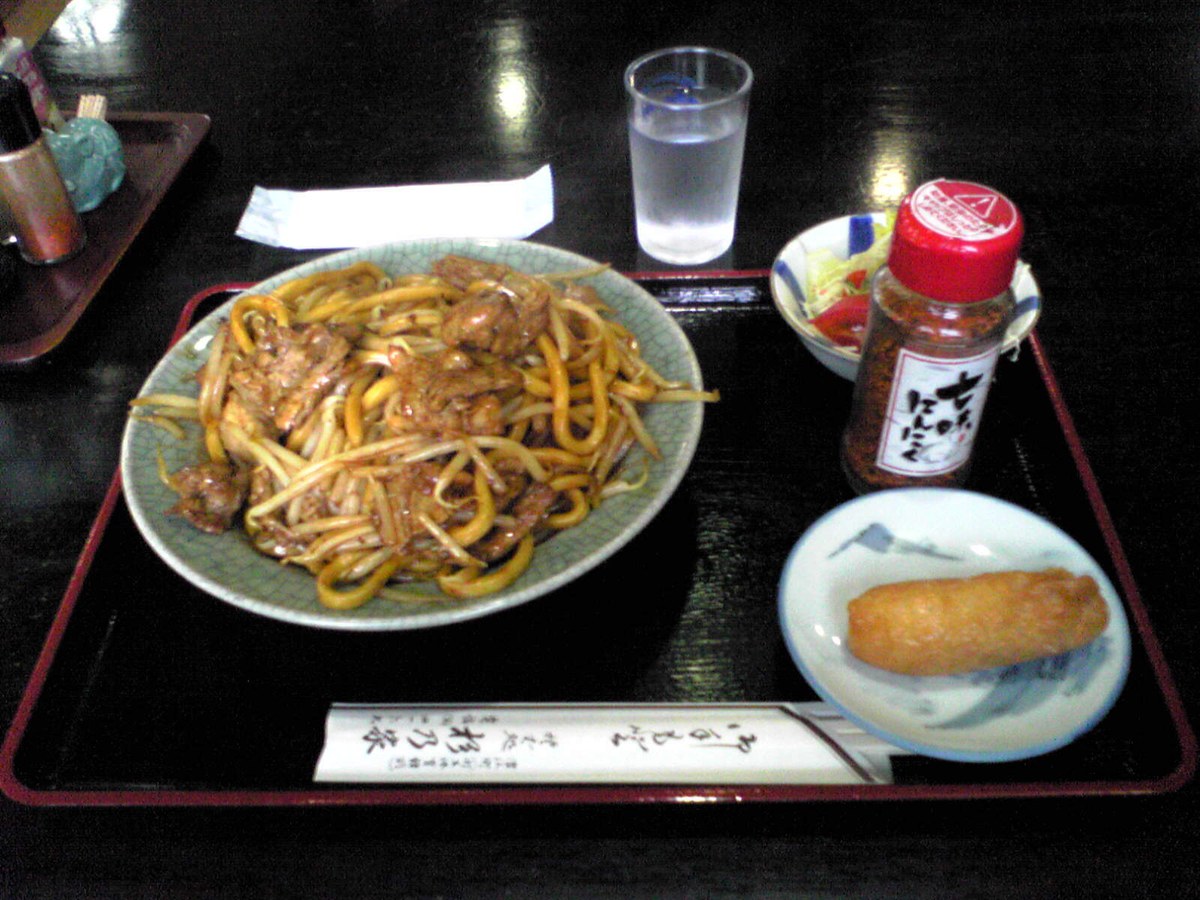
Namie yakisoba is three ingredients and a refusal to be thin: udon-fat noodles fried in lard with only bean sprouts and pork belly, bound in a rich sauce and finished with a shake of ichimi. It was built to fill labourers in a Fukushima coastal town, evacuated with the whole town in 2011, and — cooked by a scattered team that would not stop — took the B-1 Grand Prix two years later.
A labourers’ plate: thick, cheap, filling
Namie’s industries were farming, fishing and forestry, and its noodle was designed for the people who worked them: cheap, tasty, and above all filling. The answer was thickness — an extra-thick Chinese noodle, about three times the usual gauge on the maker’s record, fried in lard with the ingredient list cut to the bone: bean sprouts and pork belly, nothing else, in a rich sauce, with ichimi pepper shaken over at the table as the knowing way to eat it.
The plate is credited to Nawanoren, an izakaya by the old JNR Namie Station that began serving the extra-thick yakisoba in 1955, and for half a century it stayed exactly local — loved inside the town, unknown outside it, on the chamber’s own account.
Taikoku, evacuation, and the gold medal
In 2008 the chamber of commerce’s youth division formed Namie Yakimen Taikoku — the “thick-noodle kingdom” — to take the dish on the road, and entered the B-1 league. Then, on 11 March 2011, the Fukushima Daiichi accident put the whole of Namie under evacuation orders and the team scattered with the town. They kept cooking anyway: fourth place at B-1 Himeji in 2011, fourth again at Kitakyushu in 2012.
In November 2013, at the eighth B-1 Grand Prix in Toyokawa, the evacuated town’s noodle took the Gold Grand Prix — first in Japan. The noodle maker behind it, Asahiya, had its own parallel story: a rice shop of 1935 turned noodle company in 1953, whose “Futtocho Yakisoba” of 1982 is the dish’s retail root; it restarted production in Koriyama in 2012, built a factory in Soma in 2015, and in September 2022 opened a new factory back in Namie itself.
A trademark, a fee, and a withdrawal
The name is protected: in March 2017 the Namie Town Chamber of Commerce registered “Namie yakisoba” as a regional collective trademark (No. 5934383), after imitations had spread, and Asahiya stands as the dish’s sole certified factory. In March 2025 the Agency for Cultural Affairs certified the dish in the future division of its 100-Year Food programme.
The record also carries the name’s hard year, stated plainly: in 2025 the chamber notified serving shops of a registration fee and a 2.5 percent royalty; some old houses took the name off their menus rather than pay — and that November the chamber withdrew the charge and refunded the fees, after it emerged that the registration, covering food sales, does not reach dishes served inside a restaurant. The noodle outlasted the paperwork, as it had outlasted worse.
Eating it back home
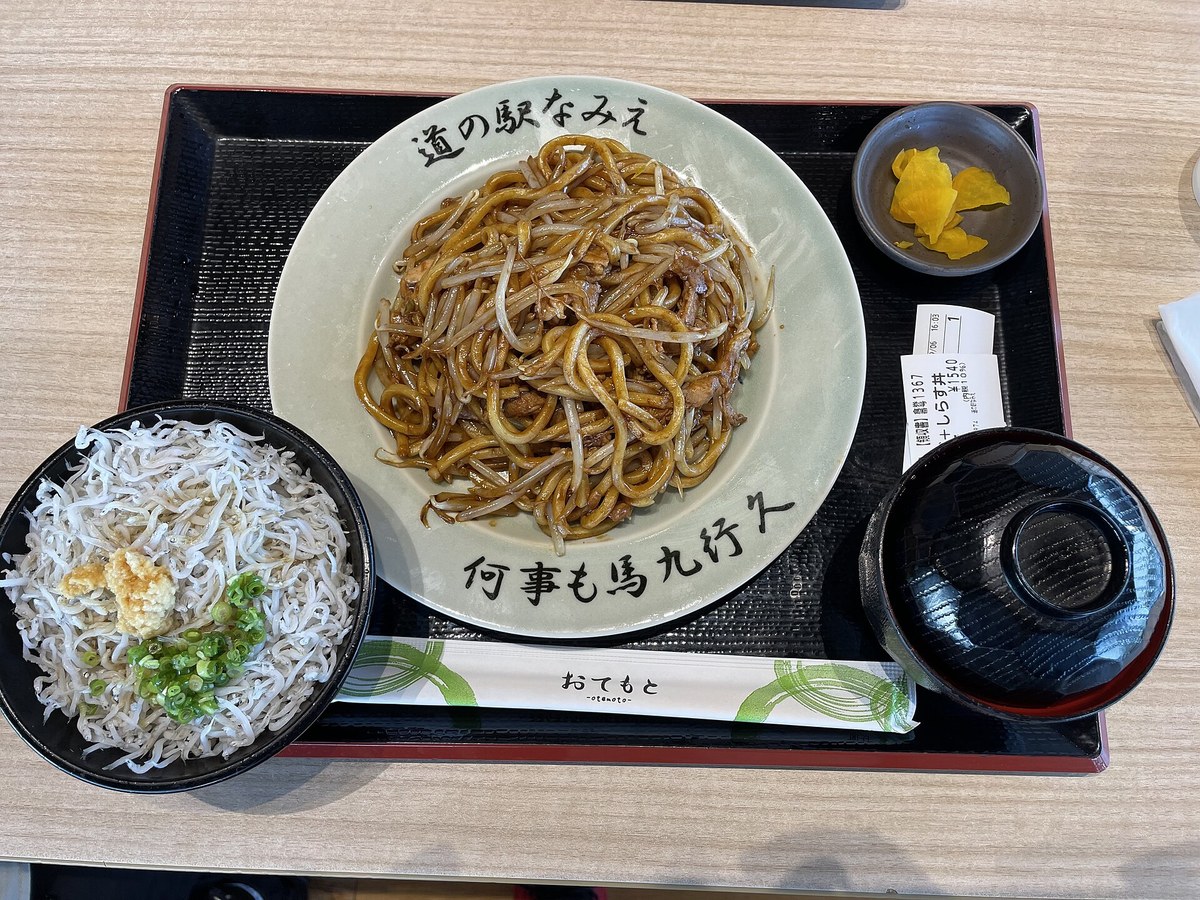
Eat it where it came back to: the food court of Roadside Station Namie serves the plate on crockery inscribed for the dish, and the town’s diners fry it to order — thick, glossy, the moyashi still crisp, ichimi on the table. The take-home form is Asahiya’s own: JR East’s official mall lists the certified factory’s set of five two-meal packs at ¥3,480 including tax with free shipping, each pack carrying the noodles, the sauce and the lard — add your own moyashi and pork belly, and nothing else.
That short shopping list is the whole recipe and the whole point: a dish that asks for three ingredients and one town.
Sources — checked 14 November 2026
- Namie yakisoba — encyclopedia record (1955 origin, Taikoku, B-1 gold, trademark)
- Reconstruction Agency case record — Asahiya, Namie Town (Fukushima)
- JRE MALL (JR East) — Asahiya Namie yakisoba, 2-meal × 5 packs
Checked 14 November 2026 (stored links re-fetched and judged per product): reserved where the page says so, with an editorial review note kept per product. Press, PR and travel use stays outside the grant.
Editorial review 2026-11-14