Most gyoza arrive as a row. Fukushima's arrive as a wheel. Enban gyoza — 'disc gyoza' — are arranged in a circle in the pan, fried together until the whole pan is one browned, crackling disc, then carried to the table still joined and cut into portions. A plate holds twenty to thirty dumplings, the filling tilted heavily to cabbage so a table can finish the whole disc without effort, and the style is counted among Japan's three great gyoza. It began in 1953 at a Fukushima City house called Manpuku, where the founder's rules — two flours, two days' aging, cabbage dried two days — are still the recipe the directory quotes today.
A disc, not a row
The GOOD LUCK TRIP Fukushima food article, published 9 March 2026, describes the style in one line: dumplings arranged in a circle, pan-fried, and cut into easy-to-eat portions — a Fukushima City original. The NEFT city guide, updated 15 January 2026, gives the table's view: perfectly browned dumplings arranged to resemble a large flower, each plate holding twenty to thirty pieces, light in flavour with less meat and more vegetables, 'so people can eat a lot'. The disc is not presentation; it is the portion. One pan, one plate, one table.
At the birthplace house the plate is fixed at thirty. Manpuku's directory record states it plainly — each plate comes with 30 gyoza — and its takeout follows the same arithmetic, sold in increments of ten starting from thirty. The disc scales to the gathering: nobody orders six.
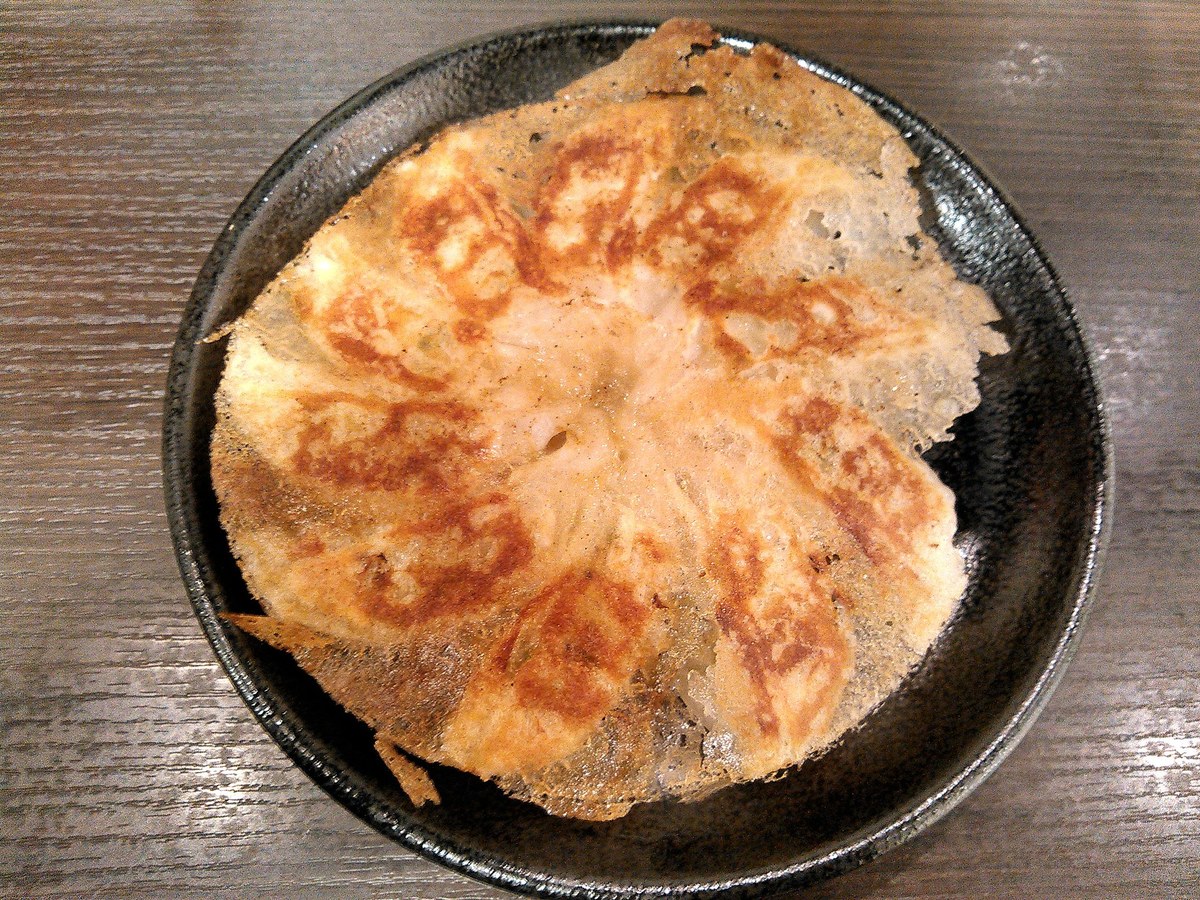
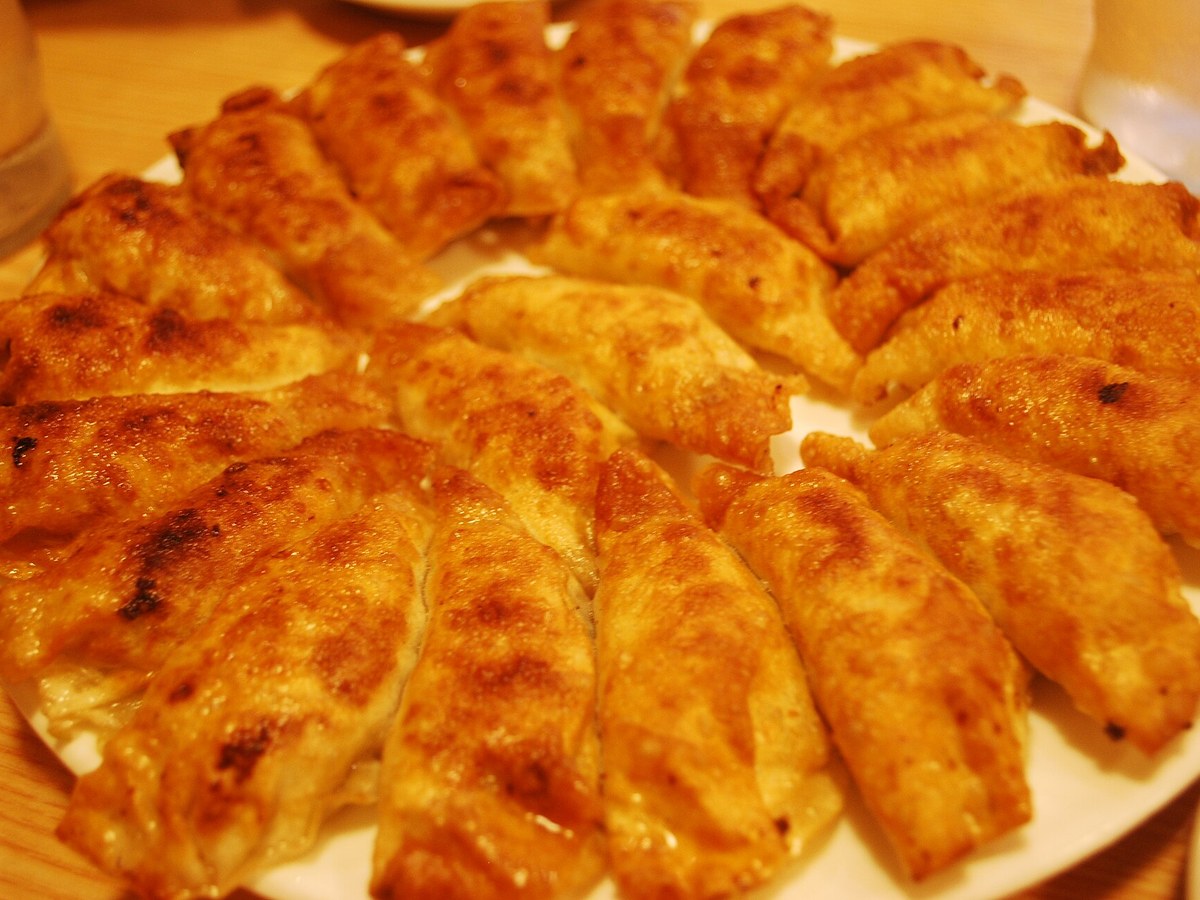
1953: the founder's recipe, kept literally
Manpuku was founded in 1953, and the NEFT guide names the founder: Katsue Kanno, a repatriate from Manchuria, the originator of Fukushima's disc — or UFO — gyoza. The directory record adds the house's creation myth in one clause: its enban gyoza has been passed down through generations since she devised it. What she devised was a discipline, and the record quotes it like a spec sheet.
Each dumpling is completely handmade, following the founder's teachings: the house-made wrappers blend two kinds of flour, are kneaded by hand and aged two days; the filling's napa cabbage is dried over two days to draw out its sweetness, then joined by ground pork, green onion, garlic chives, garlic and ginger. The disc is cooked slowly with a small amount of oil, and the Manpuku way of eating it is fixed too — house-made chili oil, vinegar, and Kitakata soy sauce. The restaurant serves no rice and no noodles: gyoza is the whole menu.
The second generation of the disc
A city style is proved by its imitators, and Fukushima's arrived early. The food article's second house, Gyoza no Mise Yamame, has served enban gyoza since September 1964 — eleven years after Manpuku — hand-stretching each wrapper only after the order comes in, with a filling of 70 percent vegetables to 30 percent meat, cooked almost like shallow-frying in oil. Two houses, two doughs, one disc.
The NEFT guide's named house by the station, Gyoza no Terui at the East Exit, keeps the form with its own materials: a cabbage-based filling with Yonezawa Sangenten-crossbreed pork, in thin house-made wrappers of flour and water only, the dumplings cooked in their circular pattern after each order. The guide's visitor record prices Terui's round gyoza at ¥1,300 for a plate of twenty-two. Between them — thirty at the founder's counter, twenty-two by the station — the city's plates run twenty to thirty, exactly as the guide's definition says.
Eating it in Fukushima City
Go to Manpuku for the original: 1-24 Nakamamachi, Fukushima City, open 4:30pm to 9:30pm — from 11:40am on weekends and holidays — closed Tuesday and Wednesday, and finished when the day's dumplings sell out. The directory prices the meal honestly: lunch from ¥1,000, dinner from ¥2,000. A plate of thirty is built for sharing; the solo traveller should know the house's floor before sitting down.
For a station-side plate, Terui's East Exit branch fries its disc to order by Fukushima Station at ¥1,300 for twenty-two on the January 2026 guide's record — the lighter commitment, and still the full circle. Either way, order the disc whole. A Fukushima gyoza cut from the ring, eaten with the cabbage sweetness the two-day drying buys, is a different food from the same dumplings fried in a row — that, and not nostalgia, is why the city kept the shape for seventy years.
Sources — checked 13 November 2026
- GOOD LUCK TRIP — Ganso Enban Gyoza Manpuku, Fukushima City (directory record, checked 13 November 2026)
- GOOD LUCK TRIP — 11 Popular Restaurants to Try Fukushima's Signature Dishes (published 9 March 2026)
- NEFT — Fukushima City Travel Guide (updated 15 January 2026)
Original prose and official links only; no source text or maker media reproduced. Photos are credited Creative Commons works, not product photographs.
Editorial review 2026-11-13