Musashino udon is the noodle a dry plateau invented: thick, brownish, unyielding noodles cut by hand from local wheat, served on a basket with a hot pork dip. The Musashino tableland could not grow rice, so it grew wheat — and made the chewiest udon in the Kanto plain.
The noodle that resists
Everything about the noodle is a refusal of smoothness. The flour is the plateau’s own wheat, the water ratio is low and the salt high, and the result is thicker than a standard udon, brownish to dark in colour, with a bite the record describes as strong, rough and rugged — gotsu-gotsu, not tsuru-tsuru. Lengths vary wildly in the hand-made form, from ten centimetres at the folded edge to nearly a metre at the centre, because the dough is rolled round and cut by hand.
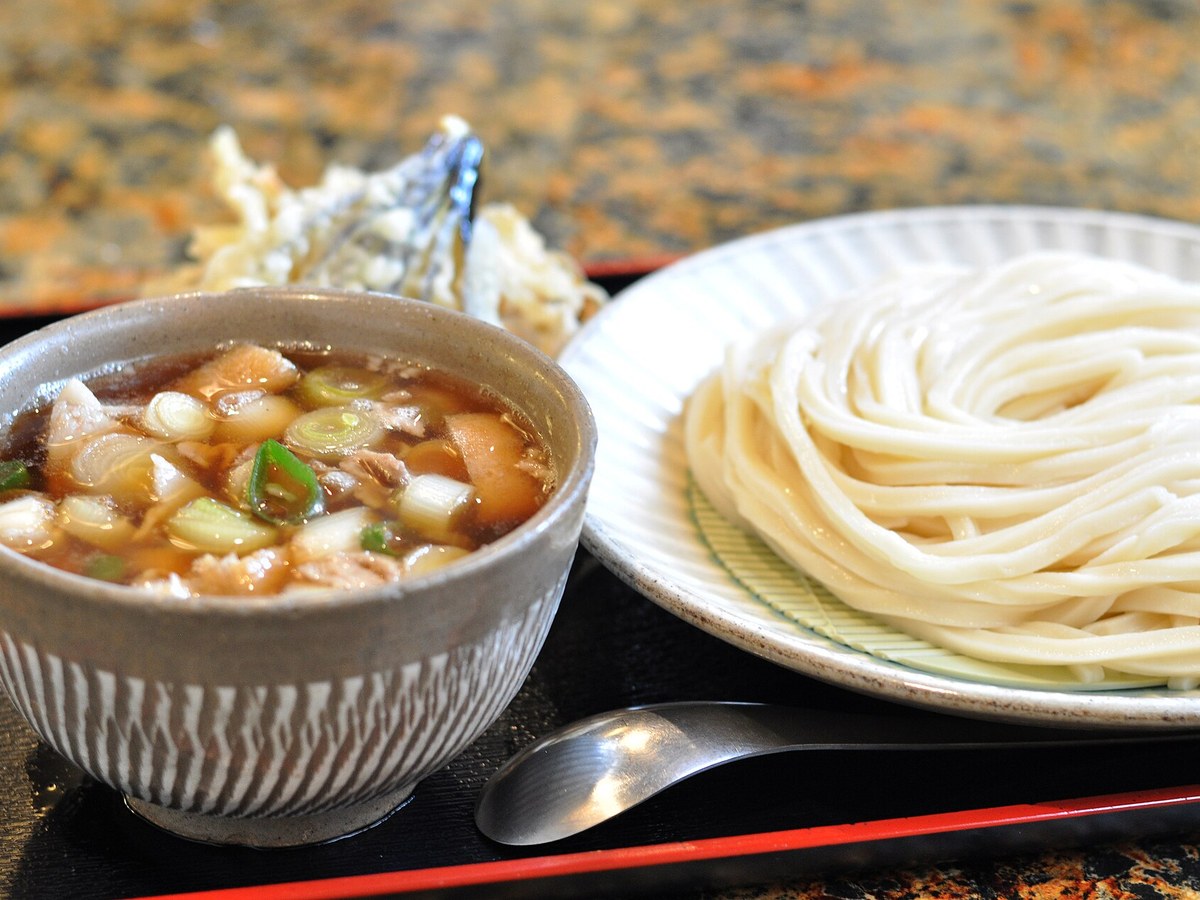
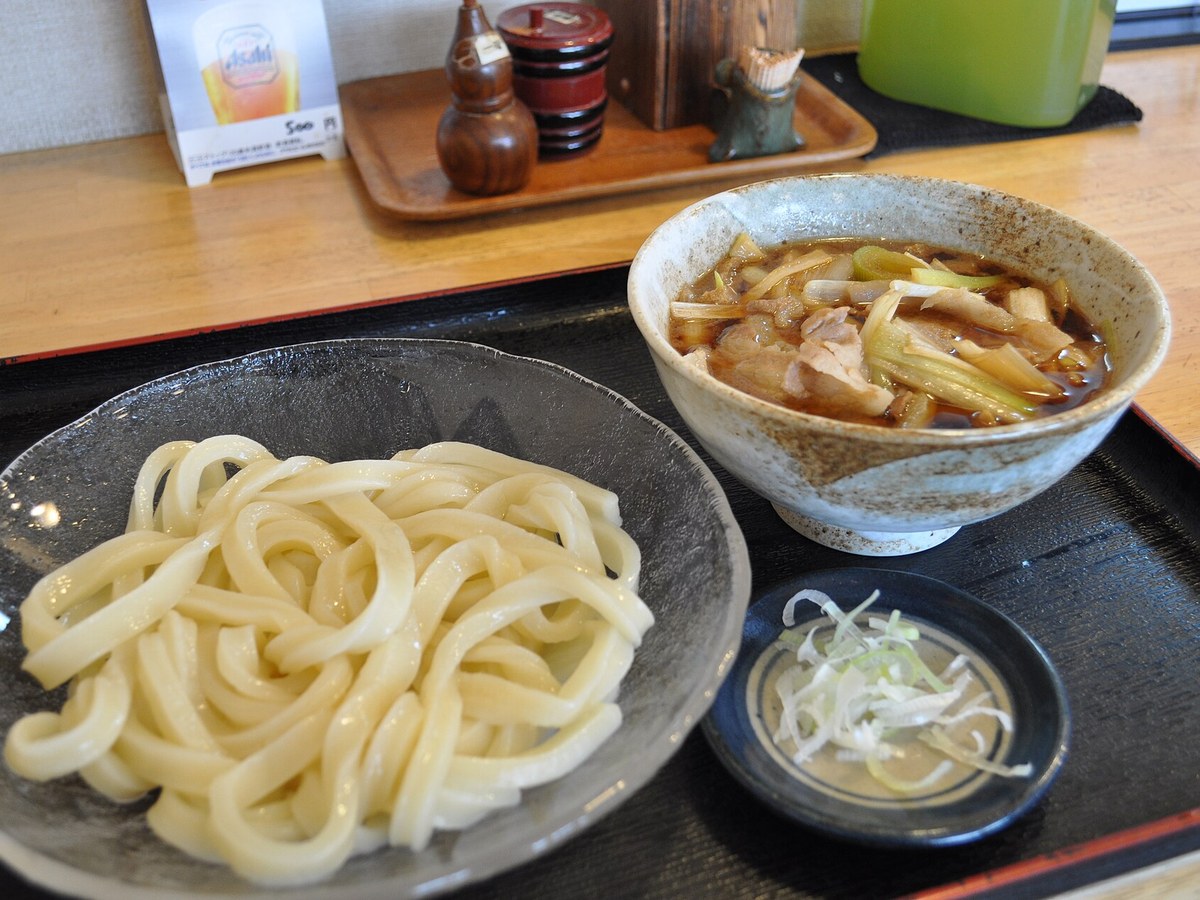
It is served as mori or zaru udon — the noodles plain on a basket — with the flavour carried by the dip: a warm, strong, slightly sweet broth of niboshi and katsuo, with shiitake or sesame worked in, eaten with negi and aburaage as you like. Our two photographs are two different shops’ servings, noodles and dip side by side, as the form demands.
A plateau that could not grow rice
The Musashino plateau, between the Tama and Ara rivers under its Kanto loam, had no great river of its own, and paddy rice needs water it could not guarantee. From the Edo period it farmed wheat and barley instead, and watermills on its small streams ground the grain efficiently enough for flour foods to take root. Udon — festive food, wedding and funeral food, the dish of the hare day — became the district’s representative food, made from its own fields.
It stayed precious: even after milling improved, a flour-heavy dish was a luxury beside the everyday barley rice, and the skill was a household qualification — the saying in the farm villages was that a woman who could not make udon could not marry. Pre-war records gathered in the national food-life surveys list the hand-made udon across Saitama and Tama villages as both daily and festive food.
Treading, kate, and the modern nikujiru
The making’s signature is the foot: the rested dough is trodden flat, rolled up and trodden again, five times over in the recorded farmhouse method, before rolling, folding and cutting — the treading is what builds the chew. Traditionally the noodles came with kate — boiled seasonal vegetables from the farm, eggplant and beans in summer, daikon and greens in winter — and tempura counted as an extravagance on top.
The shop form today standardises two dips: nikujiru, the pork dip — meat in udon broth is documented on the plateau from before Meiji, and the pork form settled in the mid-Meiji years — and kinoko-jiru, mushroom. Many shops still make the noodles in a glass-walled room at the front, so the queue can watch the treading and cutting it is waiting for.
Eating it in Saitama
The measured chain this run is Takekuni, the Musashino udon house born in Saitama: on the official-menu record read this run, its Komaki Inter store prices nikujiru udon at ¥900, with 350-gram, 500-gram and 700-gram noodle servings at the same price — order the size by appetite, not by thrift. Its all-you-can-eat stores list adults at ¥1,200 on the same record.
Eat the first strands plain, before the dip: the wheat flavour and the resistance are the dish, and the hot pork dip is the accompaniment the plateau added later. If the noodle slides down easily, it is not Musashino udon.
Sources — checked 15 November 2026
- Musashino udon — encyclopedia record (the plateau wheat history, the firm low-water noodle, the treading method, the modern name)
- Takekuni official-menu record, Oct 2026 (the ¥900 nikujiru, the same-price sizes, the ¥1,200 all-you-can-eat)
Checked 15 November 2026 (stored links re-fetched and judged per product): reserved where the page says so, with an editorial review note kept per product. Press, PR and travel use stays outside the grant.
Editorial review 2026-11-15