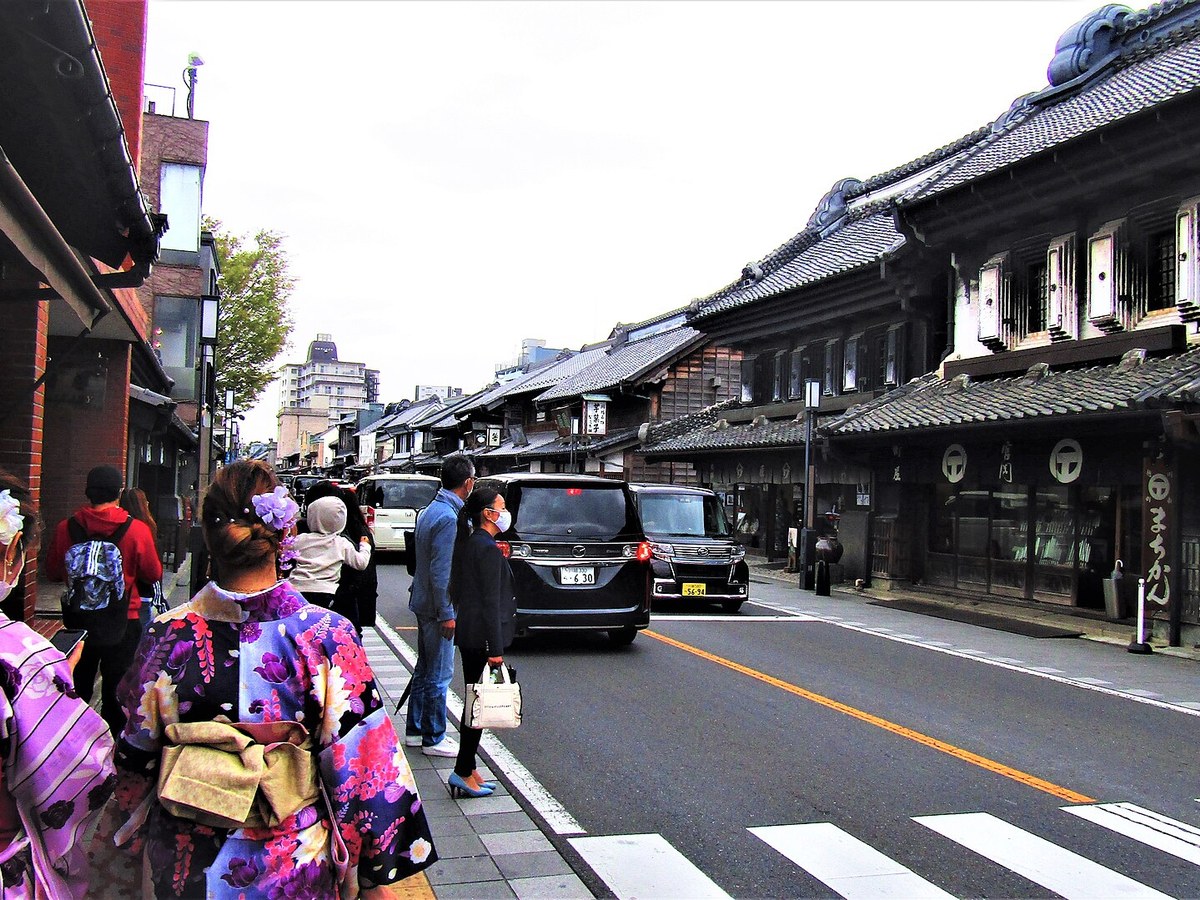
Some towns have a mascot; Kawagoe has a root vegetable. The Saitama castle town — Koedo, 'Little Edo', with its black-walled warehouse street — built its name in the Edo period on sweet potatoes: grown in the Musashino volcanic soil that defeated other crops, shipped down the Shingashi River to the capital while potatoes were still scarce enough to count as luxury goods, and sold there under the town's own name. Kawagoe imo still signals quality on a menu, and the warehouse district eats the potato in every form — above all as Imo Koi, 'potato love', a steamed bun with a whole round slice of sweet potato wrapped inside.
The capital's potato, by boat
The tourism association's account is a trade history in three sentences: sweet potatoes were cultivated actively from the Edo period; the potatoes of the Kawagoe domain and the adjacent Musashino land were called Kawagoe potatoes; and because so many were shipped from Kawagoe to Edo by boat, at a time when sweet potatoes were few and considered high-class products, the image Kawagoe = sweet potatoes was firmly established. The guide record adds the mechanism: other staple crops struggled in the volcanic soil, sweet potatoes thrived in the sandy, well-drained ground, and the river delivered them to the capital in about a day.
The town kept improving its asset. The same guide records that in 1866 the farmer Nihee Akazawa began researching seed selection, fertiliser and ridge-forming methods, and published his findings in 1910 — Kawagoe imo as applied science, two generations before branding was a word.
A town that thanks a potato god
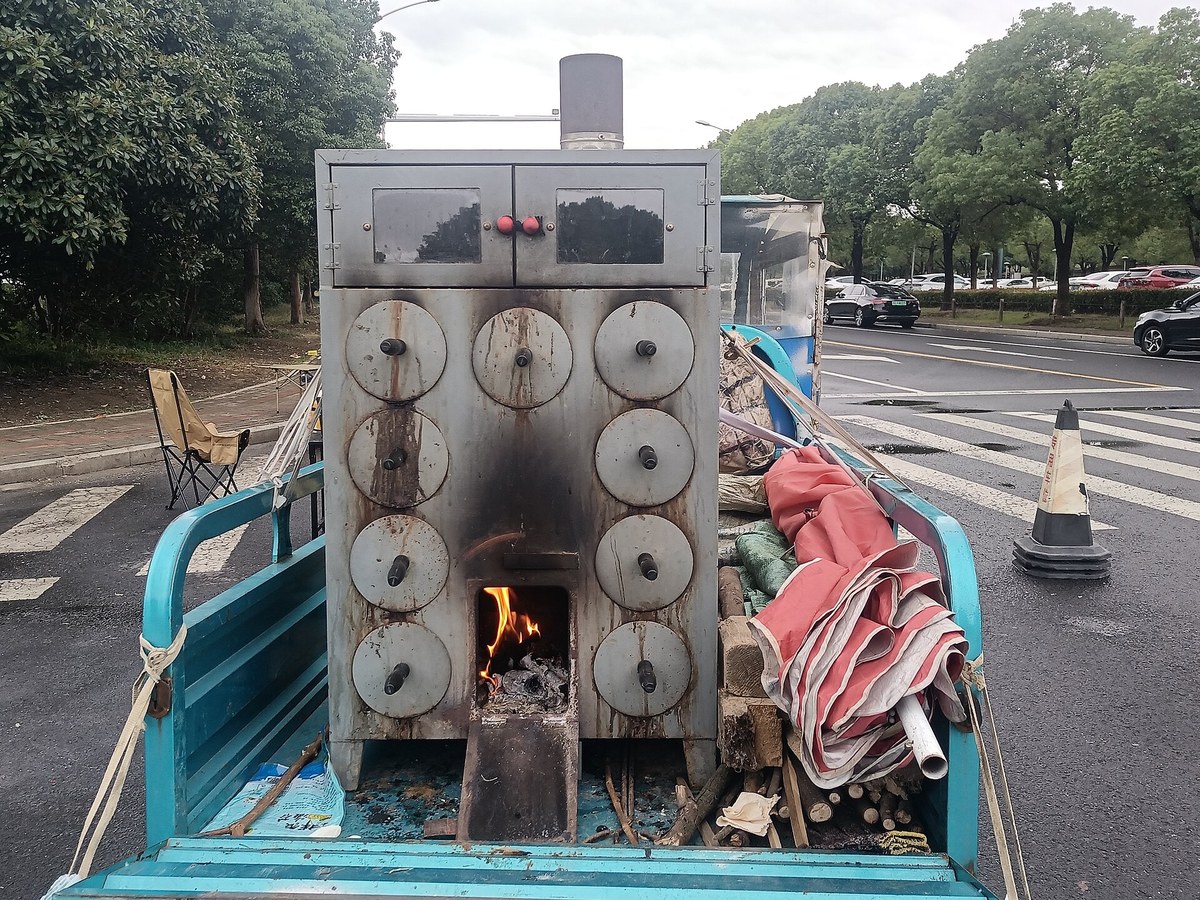
The devotion is institutional. Kawagoe's Myozenji Temple holds a service every 13 October thanking the Sweet Potato Jizo for the harvest, on the guide record; potato digging on the town's farms runs September to early November; and in December 2019 the Sweet Potato Mini Museum opened in the old storehouse district, exhibiting the crop's 18th-century arrival and the Jizo folklore. The tourism feature lists the eating street that grew from all this: imo senbei crackers, imo yokan, sweet-potato puddings and gelato, and shop after shop working the one ingredient.
At the centre of the warehouse street stands the form this story prices: Kasho Umon's Imo Koi, listed by the tourism association among the town's sweet-potato sweets — handmade, and eaten warm, with the sweet potato slices as they are.
Imo Koi: a slice, not a paste
Most potato sweets mash the potato into anonymity. Imo Koi does the opposite, and the mail-order record states its construction plainly: sweet potato and tsubu-an — chunky sweet bean paste — gently wrapped in a dough of yam and mochi rice flour. The potato goes in as a round slice, whole, so the bun cuts open like a cross-section of the town's whole economy: Kawagoe's crop, bean paste, and a chewy steamed skin. The listing's instructions are simply to warm it — steamer or microwave — and its frozen life is 90 days from manufacture.
The name is the town's own wordplay: imo, potato, and koi, love — the bun Kawagoe professes its feelings with, sold steaming at the maker's shops by the Bell Tower and shipped frozen across Japan.
Buying Kawagoe imo sweets
The checked retail record is JR East's JRE Mall listing for Imo Koi: 20 pieces at ¥7,050 including tax with free shipping (the 15-piece box stands at ¥5,670 on the same shop), processed in Saitama Prefecture, delivered frozen about seven days after ordering. In Kawagoe itself, Umon's shops on Ichibangai and by the Toki no Kane bell tower sell the buns singly and steaming, and the warehouse district's other makers cover the rest of the potato's range.
What to check on any Kawagoe potato product: the Kawagoe name and a Kawagoe or Saitama maker — the town's claim is its documented trade and its living shops, not a variety patent, and the genuine article is the one the warehouse street itself sells.
Sources — checked 12 November 2026
- Koedo Kawagoe Tourism Association — Kawagoe's sweet potatoes and matcha (feature)
- JRE Mall (JR East) — Kawagoe speciality Imo Koi, 20 pieces (checked 12 November 2026)
- Kawagoe Sweet Potato Food Guide (2026)
Original prose and official links only; no source text or maker media reproduced. Photos are credited Creative Commons works, not product photographs.
Editorial review 2026-11-12