Japan has doll towns, and then it has Iwatsuki. The district in Saitama City has made dolls for about 380 years, leads the country's production, and is held — by the government's own magazine — to make the most refined dolls in Japan. It is Saitama's second story in this collection: not a tea or a sweet but a workforce, five specialised crafts deep, that assembles a face the way other towns assemble a car. The museum that explains it all costs ¥300.
A doll town built by a shrine's carpenters
The founding is a by-product of the grandest building project of the Edo age. When Tokugawa Iemitsu built the Nikko Toshogu shrine, craftsmen gathered from all over Japan along the Nikko Onari Kaido; Iwatsuki, the first post town out of Edo on that road, sat in paulownia country — and paulownia, light and fine, is doll wood. The authentic origin is dated to 1697, when Eshin, a Buddhist sculptor from Kyoto, settled in Iwatsuki and began making doll heads from local paulownia powder.
The town industrialised its inheritance without flattening it. By the 1960s Iwatsuki held Japan's highest doll production volume; today around 500 craftsmen and more than 3,000 employees work in its doll production, and the prefecture remains the country's largest doll producer. The Iwatsuki Ningyo Museum, opened in 2020, holds more than 5,000 dolls — the town archiving itself while it still works.
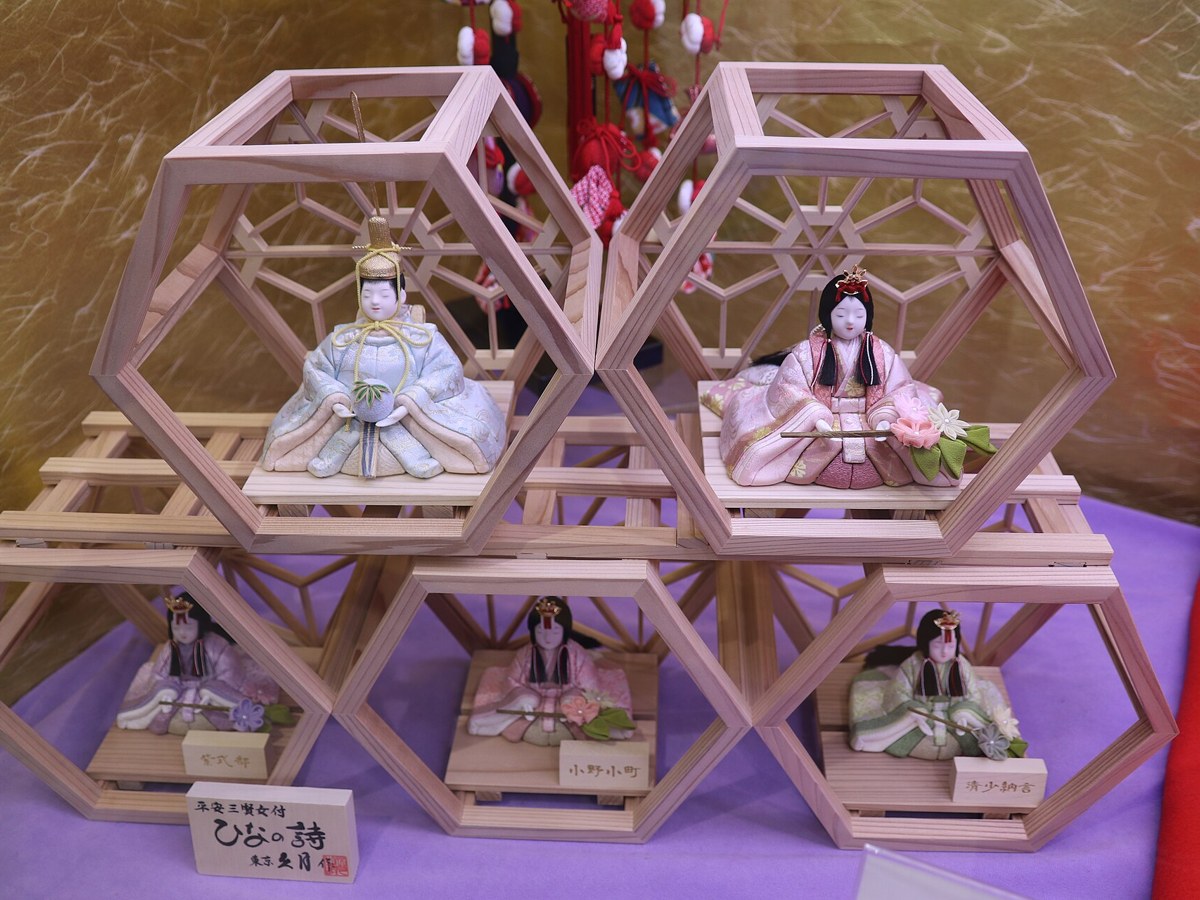
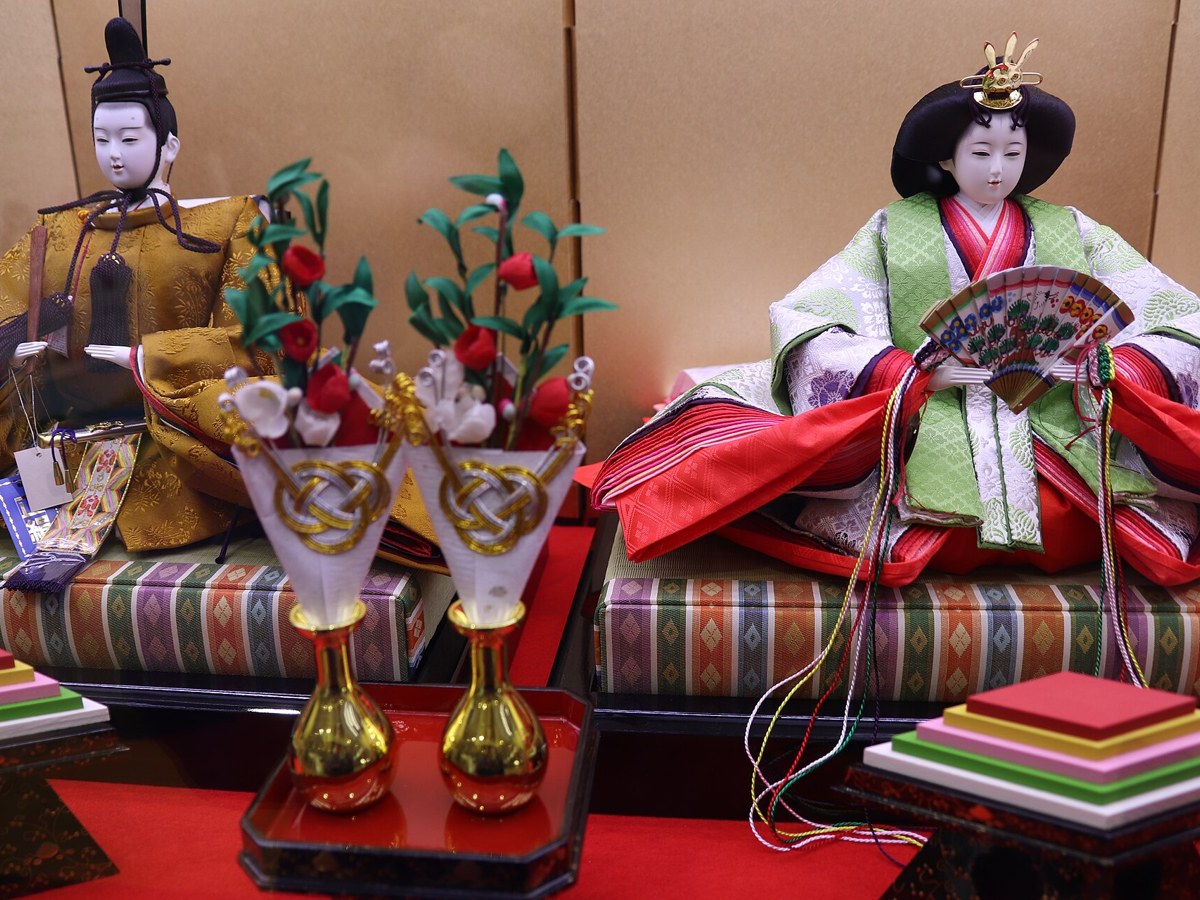
Five crafts in every face
No Iwatsuki doll is made by one person. Production divides into five specialised crafts — head makers, hair dressers, makers of hands and feet, costumers, and finishers — and a doll passes through the district the way a manuscript passes through a publishing house. The head is the glory: traditionally moulded from toso, a paste of paulownia powder, and built up in layer after layer of gofun, the shell-white pigment of pulverised clam and oyster shell, until the face takes its pearl-like lustre.
Two costume techniques carry the town's name. Kimekomi presses cloth into grooves carved in the toso body, so the costume is the doll's surface rather than its clothing; isho-gi dresses the figure in sewn costume proper. Between them they cover the town's great products — hina dolls for the March festival, gogatsu dolls for May — and the creative dolls the museum shows as art.
Practical details: museum first, then the makers
Start at the Saitama City Iwatsuki Ningyo Museum (opened 2020, between Iwatsuki Station and Iwatsuki Castle's park): admission is ¥300 for adults, ¥150 for high-school, university and 65-plus visitors, and ¥100 for schoolchildren. Its two permanent rooms show the making — tools, materials, English-narrated craft video — and the collection, centred on dolls gathered by the painter Nishizawa Tekiho.
For a priced object with the town's name on it, take the Iwatsuki Ningyo Cooperative's own release, announced by Saitama City: a kimekomi doll of the city's mascot made with the designated Edo-kimekomi technique, sold finished at ¥4,500 tax included, or as a make-it-yourself kit at ¥2,450. Full hina sets from Iwatsuki makers are priced per maker, size and craftsman across a far wider range — buy those in the town's doll shops, in season, with advice.
Doll royalty, still at work
The government's Highlighting Japan called Iwatsuki's dolls 'doll royalty', and the phrase earns itself in the workshop detail: six layers of coarse gofun before the fine, a head-maker's whole career inside a face the size of a plum. Refinement here is not a style choice; it is what a five-craft division of labour produces when each stage is somebody's entire trade.
What saves the town from becoming its own museum is that the division still runs. The museum's 5,000 dolls are a record, but the streets outside are a workplace — head shops that once numbered 300 association members for heads alone. Iwatsuki is the rare craft town where the archive and the industry are the same size, and both are open on weekdays.
Scope: what 'limited' means here
The edition is a production centre and its method: dolls made in Iwatsuki by its five crafts. Iwatsuki dolls are sold nationwide, as famous dolls should be, and other doll towns — Kyoto, Hakata, Konosu in the same prefecture — hold their own traditions, which this page does not rank against. The prices anchored here are the centre's own: its museum and its cooperative's published doll.
Sources — checked 9 November 2026
- GLTJP directory: Saitama City Iwatsuki Ningyo Museum
- Highlighting Japan (Government of Japan): Doll Royalty — Iwatsuki ningyo
- Saitama City press release: Iwatsuki Ningyo Cooperative releases the kimekomi doll 'Nuu'
- Kogei Japonica: What are Iwatsuki dolls? History, techniques, five specialised crafts
- Deep Exp: Iwatsuki doll events and the Iwatsuki Ningyo Museum
Original prose and official links only; no source text or maker media reproduced. Photos are credited Creative Commons works, not product photographs.
Editorial review 2026-11-09