Stand outside Mito Station and the first monument you meet is a giant bundle of straw. Inside it, metaphorically, is this story: small soybeans, fermented until they pour into threads, in the city that made natto famous. Mito natto is Ibaraki's second entry in this collection, and its fame is unusually well-dated — not ancient, but 1889, the year the railway arrived and a local seller started handing straw bundles to train passengers. The genuine straw-wrapped article still sells here for about ¥360 a stick.
Small beans, rice straw, and a ministry explanation
Natto is soybeans fermented with Bacillus subtilis until soft, savoury and famously stringy. Mito's version is built on small beans, and the reason is agricultural, not mystical: by the Agriculture Ministry's own account, the flood-prone fields along the Naka River favoured early-ripening small varieties — beans the miso and soy-sauce makers did not want, whose high surface-to-volume ratio turned out to be perfect for fermentation. More surface per bean means more ferment per bite.
The straw bundle completes the system. Traditionally the beans were packed in rice straw, whose natural bacteria did the fermenting; since the hygiene reforms of the early twentieth century the straw is sterilised and the beans are inoculated with cultured spores — but the bundle stays, for breathability, insulation and identity. A Mito natto in a plastic tub is a fine breakfast; a Mito natto in straw is the souvenir, the gift and the argument.
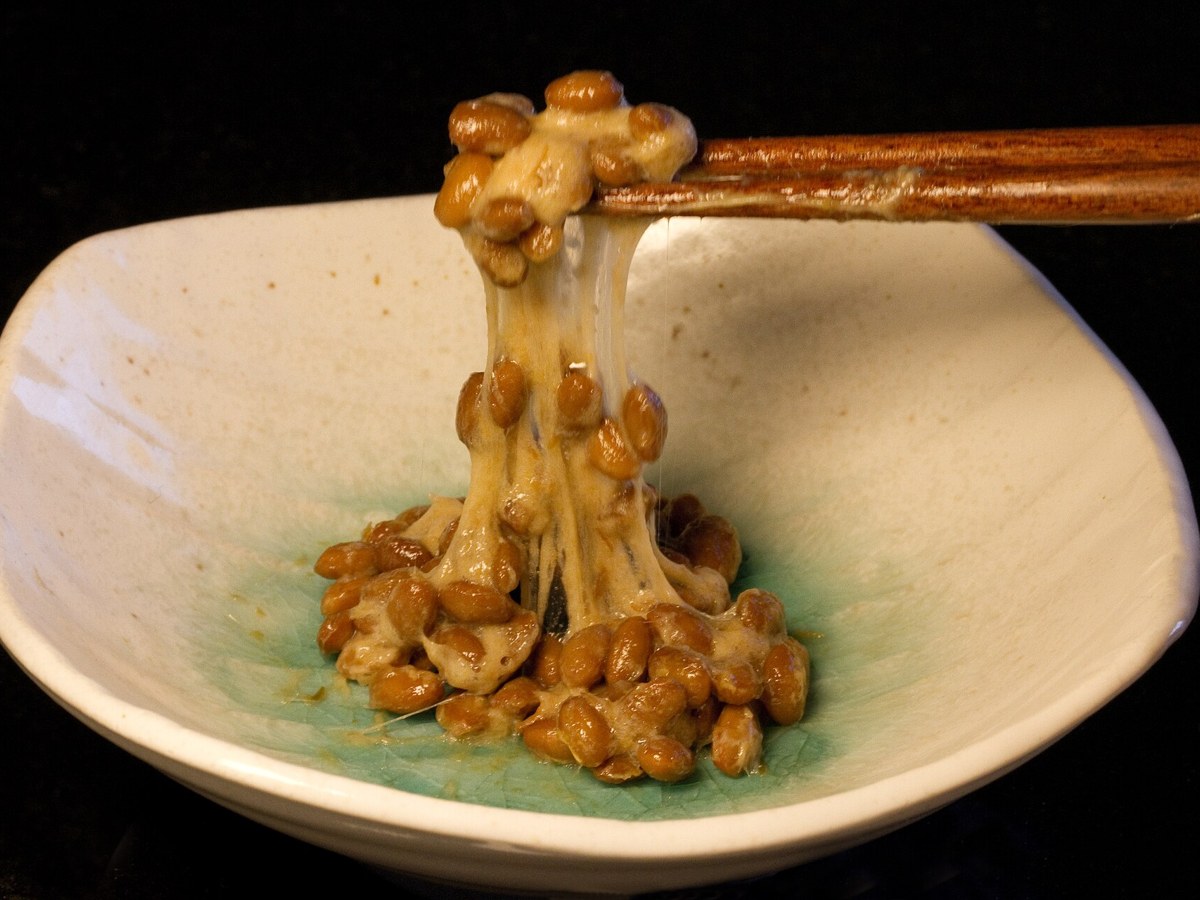
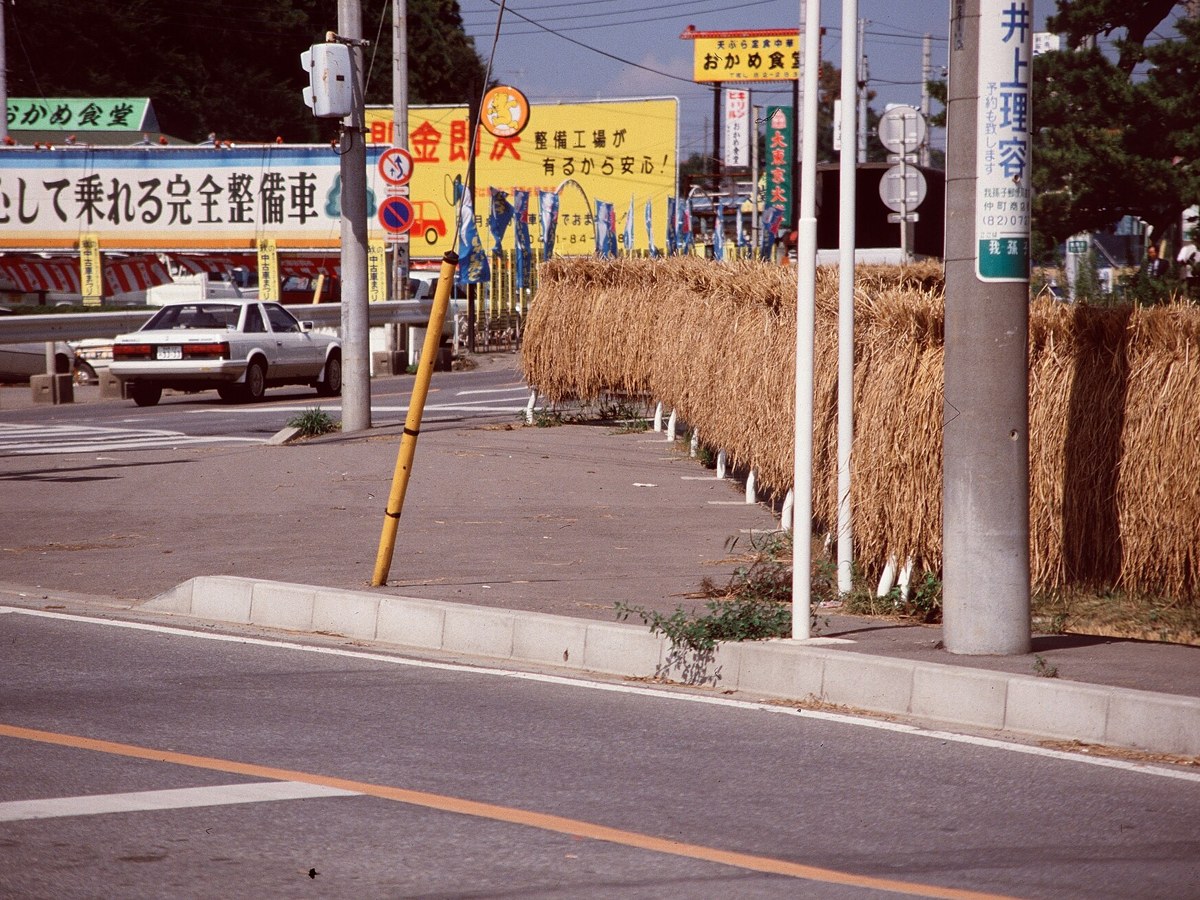
1889: the railway makes a word
There is an older story — in 1083, boiled beans packed in straw for Minamoto no Yoshiie's horses fermented on the march north, near Mito's Watari district. Mito's own city hall files it carefully under 'various theories exist', and this page does the same. The documented fame begins in 1889, the year the railway reached Mito, when Sasanuma Seizaemon began selling straw-wrapped natto to passengers under the name Tengu Natto.
Local boys hawked the bundles in the station square; travellers carried them home; and 'Mito natto' hardened into the national shorthand for the good stuff. The founder's line continues: a direct successor shop in the Sannomaru district still sells straw-wrapped natto, with a free exhibition hall about natto above the shop. Few regional foods can point to their fame's first year, let alone its first salesman.
Practical details: prices and where to buy
At the founder's successor shop, straw-wrapped natto runs about ¥360 a stick to ¥1,350 for a five-stick bundle, and the exhibition hall upstairs is free. Around Mito Station, souvenir shops stock the straw bundles from Mito's makers; keep them chilled on the journey home, as the old straw logic assumed a short trip.
For context, Mito still eats what it sells: in the government's household survey, Mito households' annual natto spending ranked second in 2025 at ¥7,314 — behind Fukushima City's ¥7,658, which has held the crown for two years. The pilgrimage is cheap to complete: a free natto museum at the founder's shop, a free factory-viewing hall opened in 2025 by a national maker, and the giant straw bundle outside the station for the photograph.
A legend filed under 'various theories'
The most Mito thing in this story is the filing system. A city that could simply print the 1083 legend on every bundle instead annotates it — various theories exist — and lets the 1889 railway record carry the weight. It is the same honesty this collection asks of every page: the legend is told, labelled, and never spent as fact.
And the legend and the record rhyme anyway. Whether the first straw bundle fermented for a warlord's horses or a stationmaster's customers, the mechanism is identical — beans, straw, warmth, time — and the product is identical too. Mito's claim was never really about who was first. It is about whose name the whole country says, and it has been saying it since the trains started running.
Scope: what 'limited' means here
Natto itself is not limited, and this page does not pretend it is: it is a daily food across eastern Japan, made nationally in tubs. The documented edition is Mito's — the small-bean, straw-wrapped product of Mito's makers, with its 1889 station trade — and the straw bundle is the test: if it is not wrapped in straw by a Mito maker, it is not the article described here.
Sources — checked 9 November 2026
- Hidden Japan Gems: Mito natto day trip — museum, factory & Kairakuen
- Nyrture: Natto — Japanese history of a modern-day superfood
- Soul Food in Japan: Mito natto (Mito, Ibaraki)
Original prose and official links only; no source text or maker media reproduced. Photos are credited Creative Commons works, not product photographs.
Editorial review 2026-11-09