Japan's most concentrated food industry makes something deliberately plain: sweet potatoes, steamed, sliced and dried in the winter wind. Hoshiimo has no added sugar and needs none — drying concentrates the potato's own sweetness into a chewy, amber strip. Ibaraki, centred on the coastal city of Hitachinaka, produces more than 90% of it, and a 500-gram pack of the good stuff costs about ¥1,000.
A winter industry at the edge of sweet-potato country
Ibaraki sits near the northern limit of sweet-potato growing, which sounds like a handicap and works as an advantage: the prefecture's black soils grow fine potatoes, and its dry winter northeasterlies — blowing exactly when the harvest is processed, December to March — do the drying for free. Makers add the third ingredient, promotion: the prefecture backed the industry until it became a near-monopoly.
Scale production began in Ibaraki around 1908, paused when potatoes became survival food in the war years, and revived with prefectural support; by 1955 Ibaraki had passed Shizuoka as Japan's top producer and has never given the position back. One kilogram of fresh potato yields only about 200 grams of hoshiimo, which is why the real thing is a premium snack rather than a cheap one.
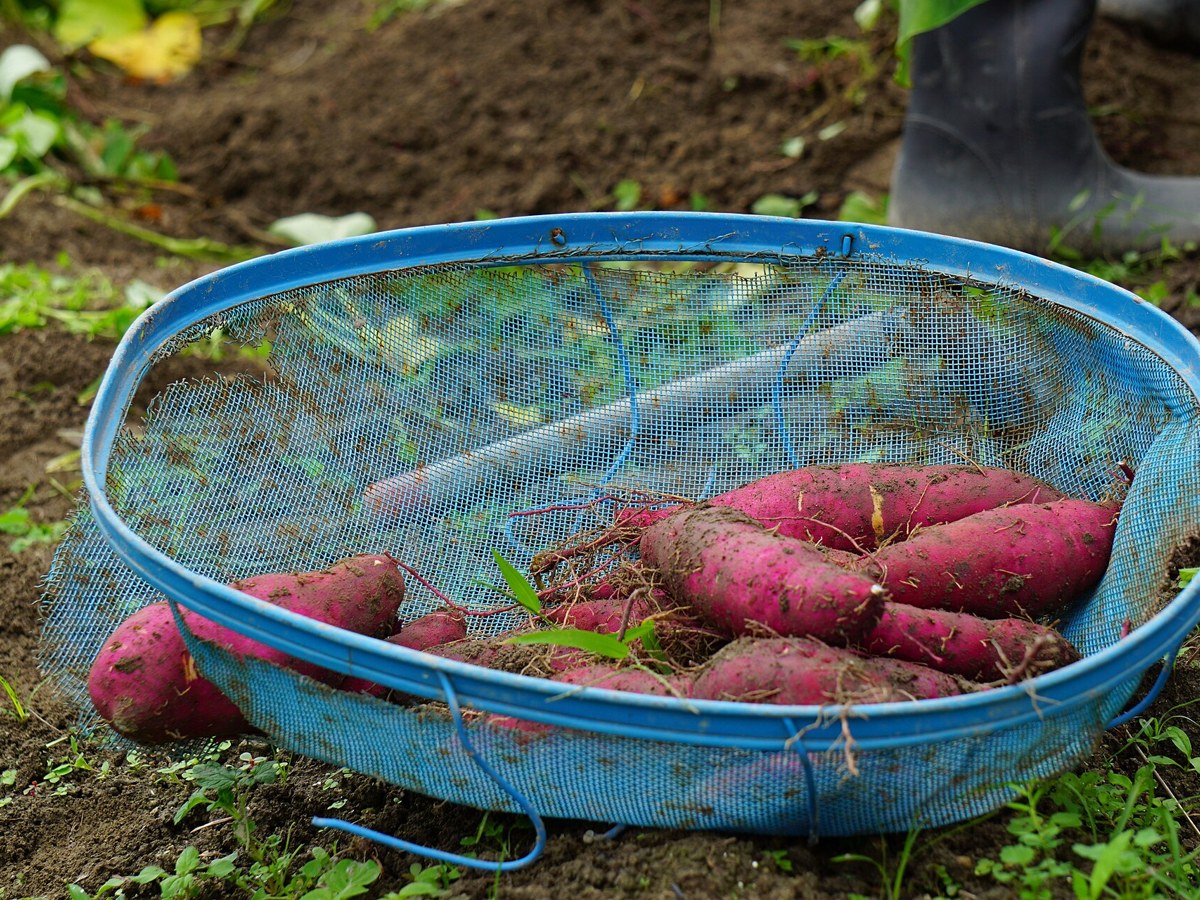
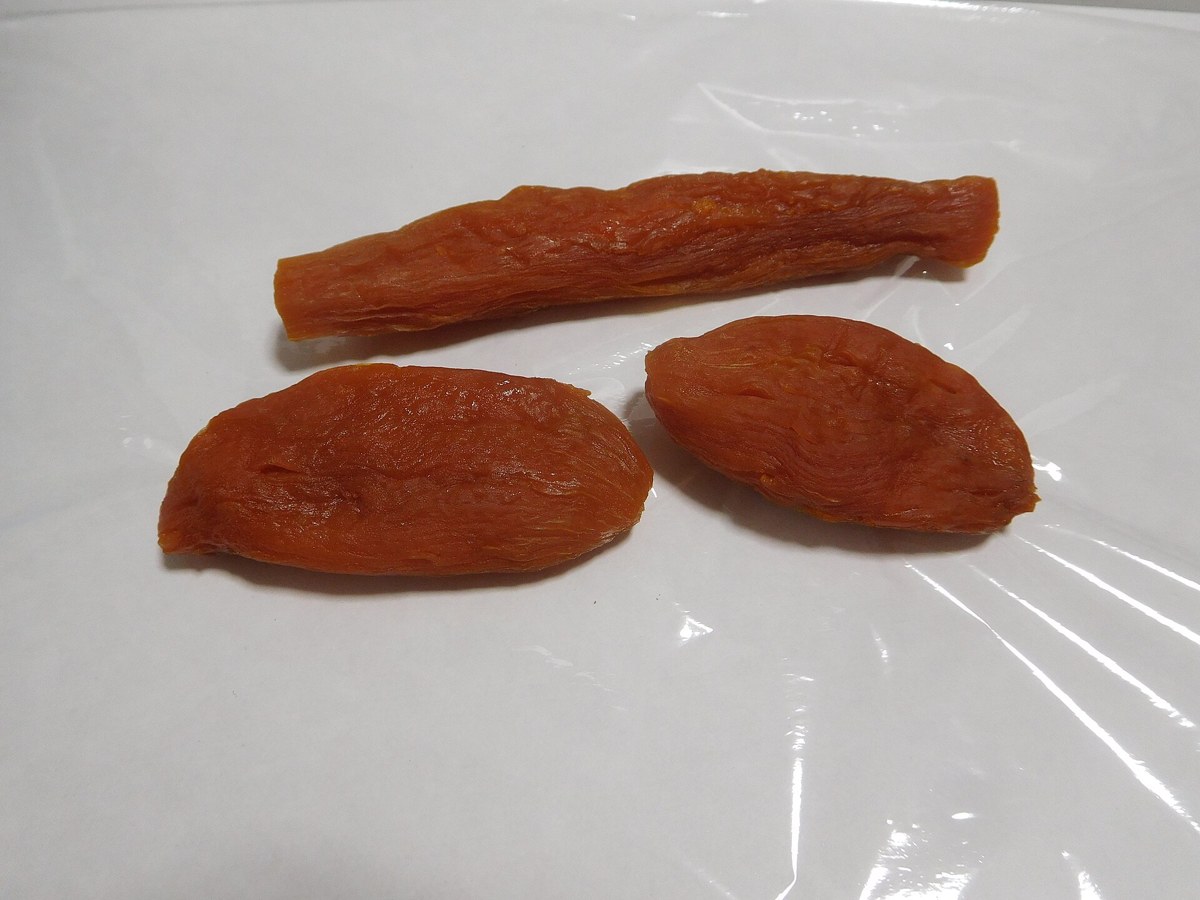
Beni Haruka changed the texture
The classic hoshiimo was firm, pale and earnest. The modern Ibaraki style rides on Beni Haruka, a variety whose flesh turns soft, moist and intensely sweet — dried gently, it stays pliable and almost jammy at the centre rather than leathery. Hitachinaka, Naka and Tokai are the production heartland, and specialist makers like Kouta Shoten of Hitachinaka, founded in 1948, build their whole business on the dried strips.
The product ladder is wider than outsiders expect: flat slices, thick round cuts, broken 'sekko' pieces at about half price, and premium single-variety packs. Locals warm the strips briefly — a few seconds in a toaster — to bring back the just-dried softness, a detail worth stealing.
Practical details: prices, season, where to buy
Prices (checked 9 November 2026): a 500 g pack of hoshiimo sells for about ¥1,000, and typical bags across varieties and brands run ¥400 to ¥1,000 — the variety and the maker move the price more than the weight does. Peak season is December to March, with the freshest batches in January and February; outside it, stock thins and prices harden.
Where to buy: Hitachinaka and Ibaraki farm shops, station shops and makers' own stores in season; supermarkets across Japan carry Ibaraki hoshiimo in winter, and makers sell online. Official online sales: yes — the claim is production share, not confinement. Type of edition: regional edition — one prefecture's 90%-plus industry.
The shrine to a dried potato
Hitachinaka wears the industry proudly enough to have built it a shrine: the Hoshiimo Shrine, opened in 2019 within the grounds of Horide Shrine at Ajigaura, with golden torii and sweet-potato-shaped votive tablets. The name is a pun — hoshiimo sounds like 'hoshii mono', the things you wish for — so visitors pray for what they want at a shrine to a snack.
It is the right monument. Hoshiimo is Ibaraki's proof that a regional specialty does not need a legend or a lord: a crop, a wind, a hundred years of winter work and one prefecture doing almost all of it will do.
Scope: what 'limited' means here
Documented scope: Ibaraki's production of hoshiimo — over 90% of Japan's supply, centred on Hitachinaka — made from the prefecture's sweet potatoes. Small production elsewhere and nationwide in-season sales are stated. Checked 2026-11-09. Bags should be checked for Ibaraki-grown labelling, as some processors also handle imported potatoes.
Sources — checked 9 November 2026
- Marukome (MAFF magazine): Hoshi-imo, a traditional Japanese preserved food — Kouta Shoten, Hitachinaka
- Food in Japan: What is hoshiimo? — Ibaraki, Japan's hoshiimo capital
- Japanese Wiki Corpus: Hoshi-imo (dried sweet potatoes)
Original prose and official links only; no source text or maker media reproduced. Photos are credited Creative Commons works, not product photographs.
Editorial review 2026-11-09