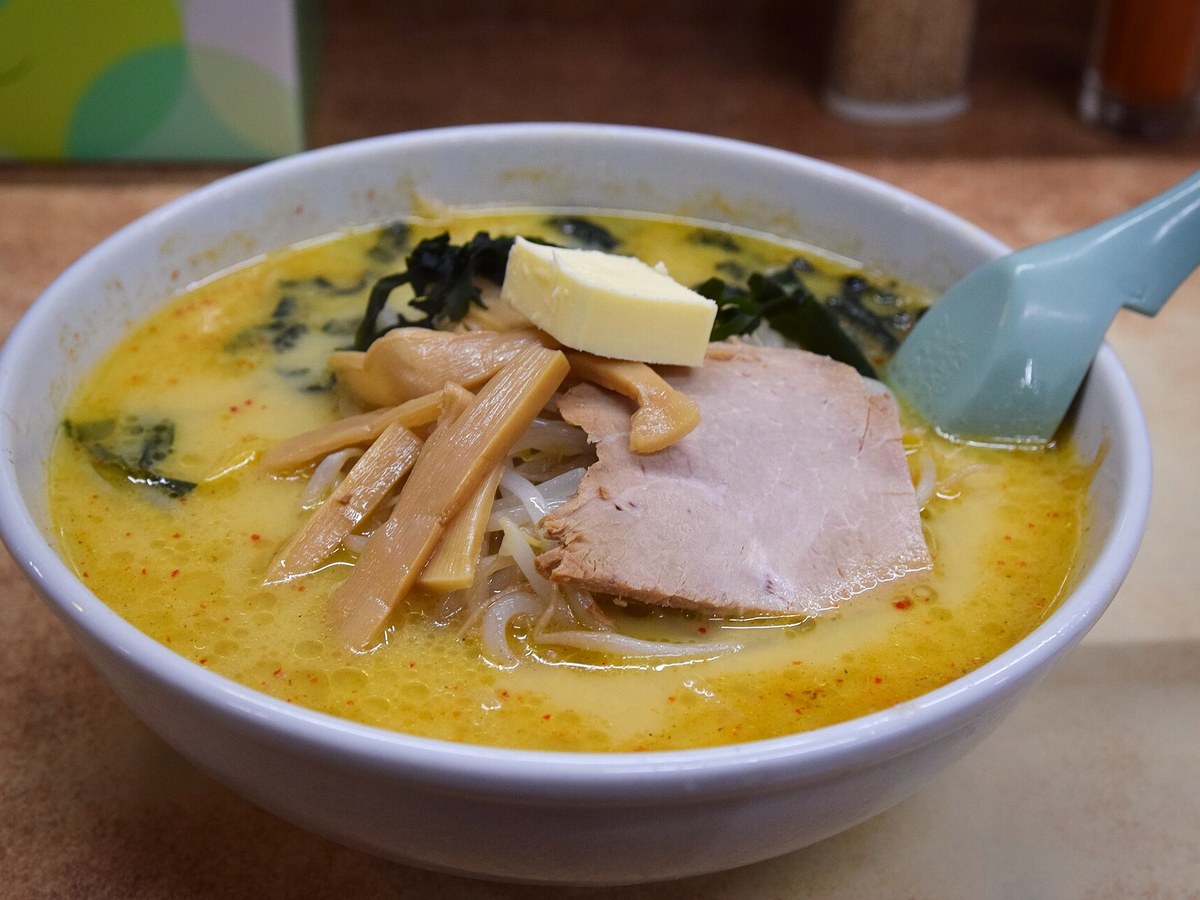
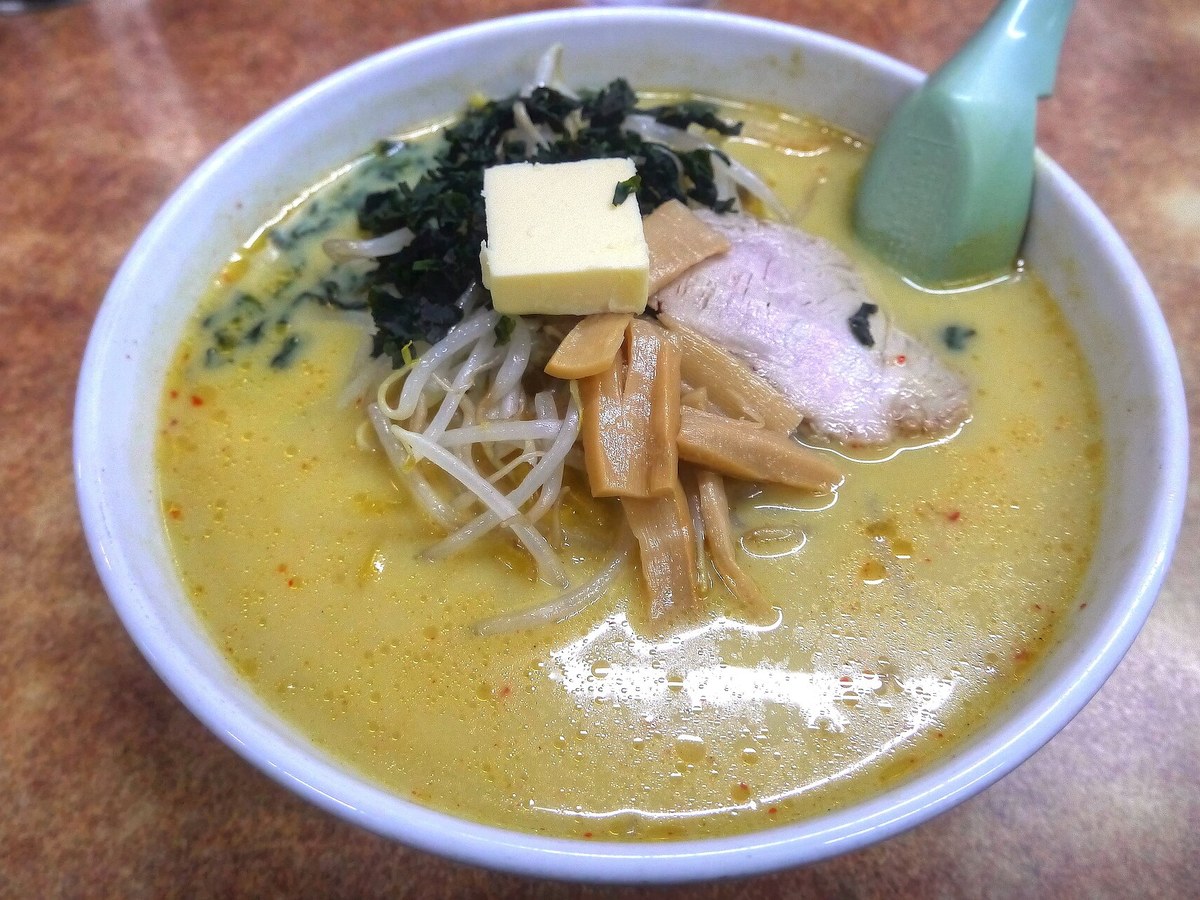
Miso, curry and milk walk into a ramen bowl in Aomori — and it works. A Sapporo ramen master’s Aomori shop, a crowd of school students mixing things into their bowls for fun, and three years of quiet adjustment produced the city’s soul bowl in 1978: a yellow curry-milk miso soup, a slab of butter melting on top, and a name that dares you to object.
A Sapporo master plants miso ramen in Aomori
The line starts in Sapporo’s ramen alley, where Kiyoshi Sato cooked before deciding that Tohoku deserved the real thing. In 1968 he opened Aji no Sapporo in Aomori City’s Matsubara district to bring genuine miso ramen south of the strait. The shop drew the city in — and, fatefully, its school students.
In the early 1970s the students took to a game at the counter: mixing whatever was to hand into their bowls to see what happened. Most of it was what games produce. One combination was not: miso, curry and milk. Sato did not ban the game. He joined it.
Three years from a joke to a menu
What Sato did next is why the bowl has his name on it rather than a schoolboy’s. He spent about three years adjusting the balance — the spice blend, the milk ratio, the miso tare — until the mixture stopped being a stunt and became a soup: curry’s aroma carried on miso’s depth, milk rounding the heat, and a slab of butter melting over the top as the finish. In 1978 Miso Curry Milk Ramen went on the menu formally, and it has not left.
The bowl’s build is now the city’s standard: a yellow medium-thick wavy noodle in the Sapporo manner, chashu, menma, moyashi and wakame under the butter, the soup the colour of the name — curry-yellow, milk-soft, miso-deep.
The noren divides: Onishi, Asari, Sapporokan
Aji no Sapporo’s curtain split into the houses that carry the bowl today. Aji no Sapporo Onishi, run by Sato’s head disciple Fumio Onishi, is the best-known: the balanced, canonical bowl, eight minutes from Aomori Station. Aji no Sapporo Asari, in Shinmachi, sharpens the spice — the regulars’ choice. Sapporokan, out in Ishie by the national road, turns the milk up and the heat down.
The prefecture’s official tourism site lists five serving shops for the dish, and the houses stand together in a promotion association that guards the name and has supervised a national cup-noodle version — a schoolyard game, incorporated.
Drinking the dare
First-time eaters arrive sceptical and leave converted often enough that the conversion itself is part of the dish’s fame. Order the butter version — the slab is not decoration; it is the third act of the soup. On the published menus compiled for this story, the bowl runs ¥950–1,050 depending on the house: Sapporokan lists ¥990, Asari ¥950–1,000, and Onishi’s miso curry milk butter ramen about ¥1,000.
There is no take-home form that counts: the fresh bowl, in Aomori, in one of the noren houses, is the dish. The cup noodle is the association’s postcard; the steam over a Sapporo-style bowl in a Tohoku winter is the original.
Sources — checked 14 November 2026
- Miso curry milk ramen — history, flavour and shops (sourced survey citing Aomori official tourism)
- Miso curry milk ramen — the origin story and the noren houses (survey)
Checked 14 November 2026 (stored links re-fetched and judged per product): reserved where the page says so, with an editorial review note kept per product. Press, PR and travel use stays outside the grant.
Editorial review 2026-11-14