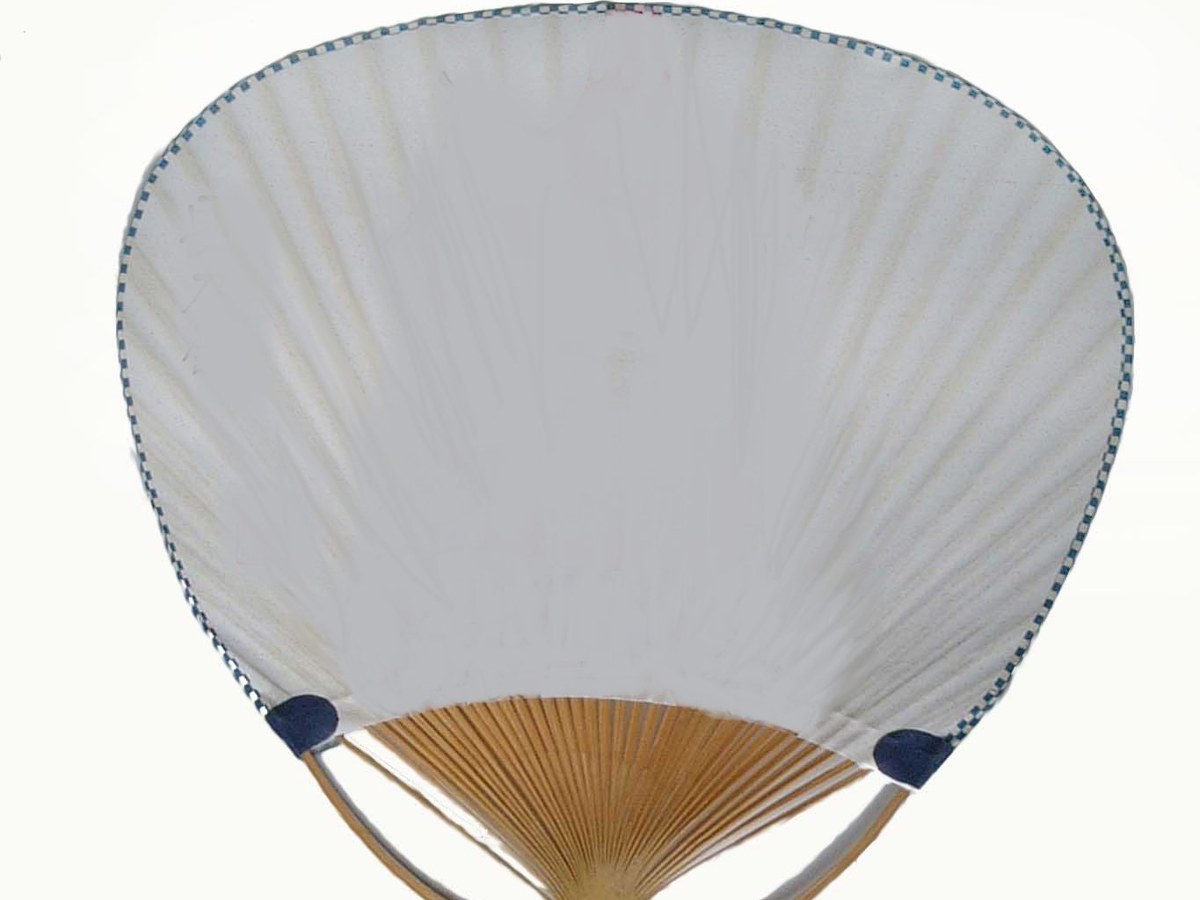
Every summer, Japan waves Marugame at itself. Nine out of every ten fans produced in this country come from one small castle city in Kagawa — and the genuine article among them, the designated craft, is a small miracle of economy: one piece of bamboo becomes both the handle you hold and the ribs that hold the paper, split, shaved and papered through 47 steps. This is Marugame uchiwa, born as a pilgrim's souvenir in the age of the shoguns.
Handle and ribs from a single bamboo
Start with the tree. The Marugame boutique Uchiwaya Ryo — which carries exclusively hand-made bamboo fans, all locally produced by craftsmen in the Marugame City region — describes production beginning with the procurement of a giant timber bamboo, three to five years old and over ten metres long, felled and transported by craftsmen working together. Identifying the right bamboo for the intended size and design is one of the craftsman's essential skills, because depending on size and design, approximately 100 to 200 fan frames can be produced from a single bamboo tree.
That is the Marugame construction: the frame is not assembled from parts but divided from one culm, so handle and ribs share one grain and one spring. The Tourism Agency's record counts the labour that follows — the process of making them is complex, with forty-seven separate steps involved, and the craftsmen mostly perform these by hand — and lists what the finished fans have been for across their history: cooling oneself in summer, cooling food, starting fires, swatting insects, and serving as fashion statements and decorations.
1633: a priest, a persimmon fan, a pilgrimage
The boutique's history dates the form precisely: it is said that in 1633 the chief priest of Konpira Shrine devised the Shibu Uchiwa, a fan coated with fermented persimmon tannin and bearing an official seal of the shrine. The Tourism Agency record carries the same origin in its pilgrim form — the fans were first made as souvenirs for pilgrims who came to Konpira Shrine, typically bearing the character for 'gold', the first character in the name of Konpira, which was both a reminder of the place one had visited and a bringer of good fortune to the receiver.
From the shrine road the fan went to the world. The boutique records that around 1887 Marugame uchiwa were exported to China and the United States, and that the export trade shaped the specialised production process — cutting frames from bamboo, mounting the paper leaves, painting them — that the city still uses. Its explanation of the city's rise is a lesson in industrial geography: Kagawa became Japan's number-one producer of bamboo fans because every material the craft needed, from woodblocks and knives to paper, glue and bamboo, was located and sourced in Marugame City itself.
90% of Japan's fans — and a few dozen true craftsmen
The headline figure is real, and the boutique is admirably honest about what it contains. Marugame uchiwa now account for 90% of all fans produced in Japan, the Tourism Agency record states — but most of them, the boutique continues, are machine-made plastic fans, and among the bamboo fans used in Japan the overwhelming share are imported; many low-priced fans marketed as Marugame uchiwa are made with bamboo frames made in China. Against that tide, just over a few dozen craftsmen, certified members and trainees included, are still engaged in the traditional production, and their number is decreasing with age.
The state's answer came in 1997, when Marugame uchiwa fans were designated one of the Japanese Traditional Crafts by the Ministry of Economy, Trade and Industry; in the following years, the boutique records, trainees have been recruited from the public under a successors training programme, and most of the existing craftsmen were trained in it. The designated craft is therefore best understood as a rescued core inside an enormous industry: the 47-step bamboo fan, still made in Marugame by named hands, within a city whose name is on nine fans in ten.
See it, make it, buy it in Marugame
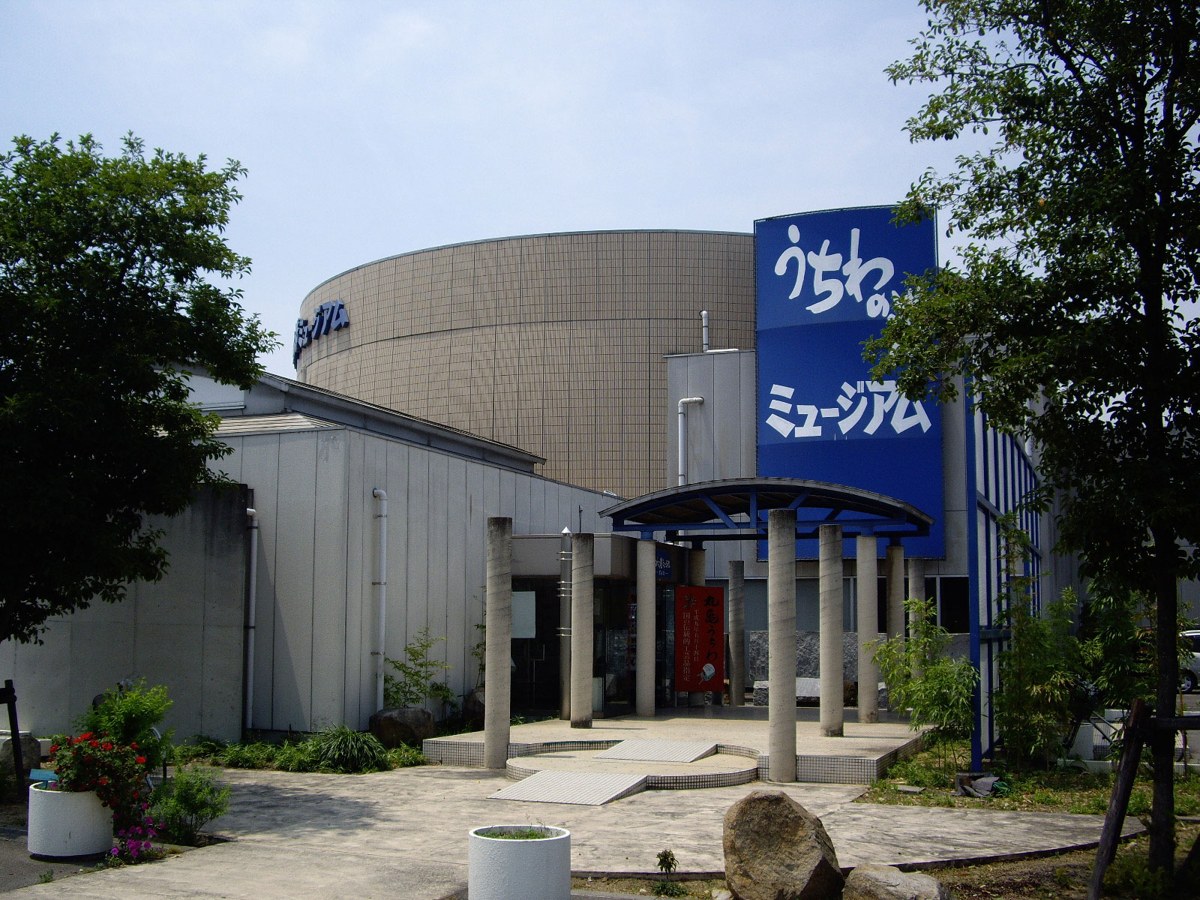
The craft has a house. The Marugame Uchiwa Museum — relocated in March 2023 beside the Nakazu Banshoen Garden from the old Uchiwa no Minato Museum site — introduces the fans with models of the process and production materials, keeps a live demonstration corner where artisans make bamboo frames and attach paper up close, and lines a sales corner with Marugame uchiwa in many colours and shapes. Admission is free; making your own fan, paper pasted on a bamboo frame under a master's instruction, is ¥1,000 per fan by advance reservation.
Kagawa's standing stories are all things you eat — Shodoshima's olive oil, Sanuki's udon and Marugame's own bone-in chicken. Marugame uchiwa is the prefecture's fourth story and its first craft, which feels exactly right for this city: the chicken is eaten in Marugame, the udon is slurped across the prefecture, and the fan is what you wave afterwards, in summer, in the city that taught Japan how.
Sources — checked 11 November 2026
- Japan Tourism Agency multilingual record: Marugame Uchiwa (Kagawa Prefecture Tourism Association text) (checked official record)
- Uchiwaya Ryo: Our Story — about Marugame Uchiwa fans (checked maker's account)
- GOOD LUCK TRIP: Marugame Uchiwa Museum (checked verified listing)
Original prose and official links only; no source text or maker media reproduced. Photos are credited Creative Commons works, not product photographs.
Editorial review 2026-11-11