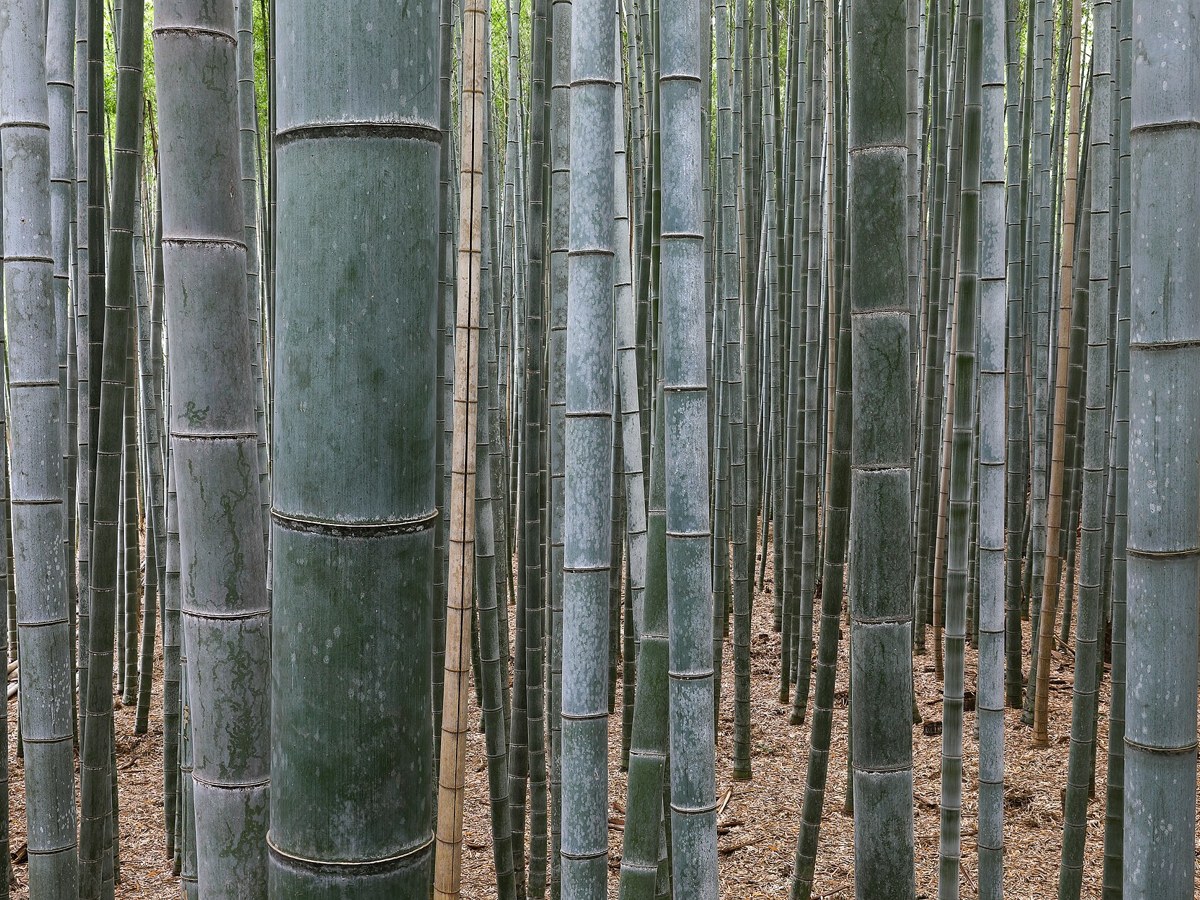
Beppu is famous for steam — hot springs everywhere — but its other mastery is dry and woven. Beppu takezaiku, bamboo craft, is the only bamboo work in Japan carrying the national Traditional Craft designation: madake bamboo split into fine strips and woven, by techniques with names of their own, into baskets, bags and lighting. Oita grows about a third of Japan's madake, and a hand-woven Beppu serving basket costs ¥6,050.
The hot-spring city's second craft
The origin story is told as legend: a kitchen attendant travelling with Emperor Keiko found Beppu's bamboo so fine that he wove a basket for rice bowls from it. The documented history is more commercial — by the Muromachi period Beppu baskets were made for travelling merchants to sell from, and the town's hot-spring visitors later carried the light, strong work home.
Designation came in 1979, and Beppu's master Shounosai Ikuno had already become, in 1967, the first bamboo artist named a Living National Treasure. The craft's centre in the city — the Beppu City Traditional Bamboo Crafts Center — exhibits the materials, tools and weaves, sells prefecture artisans' work and runs basket- and bell-making workshops.
Henso: eight weaves, one material
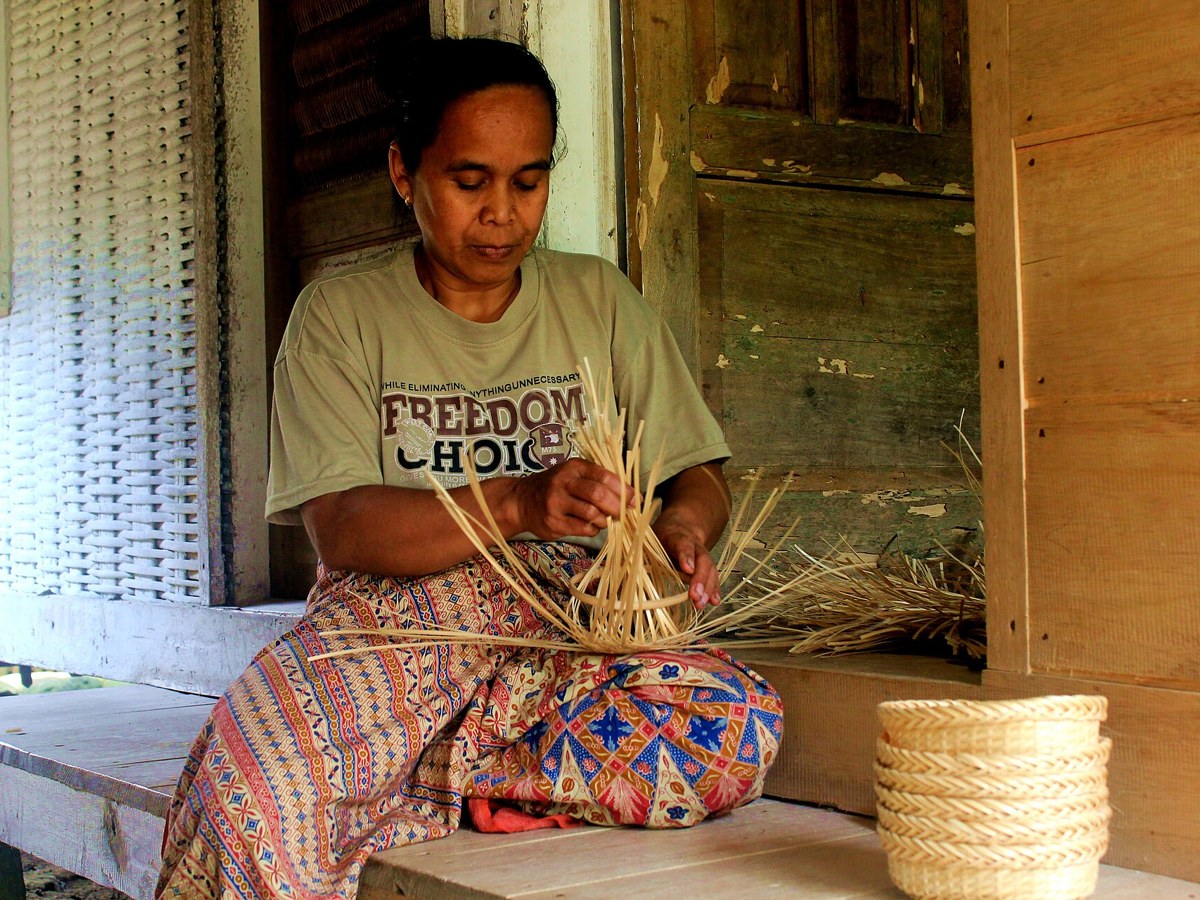
Everything turns on preparation and henso — the interlacing of finely prepared bamboo strips into form. Eight basic weaves hold the national designation: four-strand, six-strand, eight-strand, netting, mat, rope, chrysanthemum-base and ring weaves, combined and varied into patterns no mould dictates. The bamboo itself is chosen by treatment: fresh green, oil-extracted, carbonised, or susudake — strips aged for decades in the smoke of old farmhouse hearths.
That material range is why one craft covers both a ¥6,050 serving basket and museum-grade flower baskets. The weave is the signature: Beppu work is recognised by how much of the structure is woven rather than bent or nailed, a specialisation its craftspeople defend as the town's own.
Practical details: prices, where to buy, online sales
Prices (checked 9 November 2026): a hand-woven Beppu serving basket by Sakai Sangyo, about 24 cm across, is listed at ¥6,050 in a documented retail snapshot; everyday small items sit below that, and signed flower baskets and art pieces run far above. There is no single price for a craft of hundreds of workshops — the basket is the honest mid-table anchor.
Where to buy: Beppu itself — the Traditional Bamboo Crafts Center's shop and the city's craft stores — for the widest range and the makers' names; craft retailers nationwide and online for documented Beppu pieces. Official online sales: workshop-by-workshop. Type of edition: regional edition — a place-defined national traditional craft.
A basket that outlives its buyer
Bamboo basketry's selling point is time: a well-woven Beppu basket in daily use — bread, fruit, serving — is expected to last decades, darkening with handling into the colour buyers of susudake pay premiums to skip ahead to. It is the anti-souvenir in the best sense: bought once, used constantly, never replaced.
Buy it in Beppu after the workshops if you can: visitors who have woven even the simple wave-pattern basket read every professional piece differently afterwards. The craft centre's shop, stocked by Oita artisans from chopsticks to one-off art, is where the ladder can be climbed in one room.
Scope: what 'limited' means here
Beppu bamboo craft is documented as a place craft of Beppu, Oita — Japan's only nationally designated bamboo craft, woven from madake. Retail beyond Oita exists and is stated. Checked 2026-11-09. Bamboo work from other regions is a different tradition.
Sources — checked 9 November 2026
- Wikipedia: Beppu bamboo crafts — designation, madake share, history
- KOGEI JAPAN: Beppu Bamboo Crafts (Beppu Take Zaiku)
- Japan Mono: Beppu bamboo basket (Beppu takezaiku) — where to buy, 2026
Original prose and official links only; no source text or maker media reproduced. Photos are credited Creative Commons works, not product photographs.
Editorial review 2026-11-09