Kogin-zashi is embroidery as insulation. Tsugaru’s farm wives, forbidden cotton cloth by their own domain, stitched white cotton thread into coarse indigo hemp until the weave filled with diamond patterns — trapping warm air, armouring shoulders, and leaving behind one of Japan’s great geometric textiles.
Stitching warmth into hemp
The technique is a count. On indigo hemp cloth, the needle picks up the warp threads in odd numbers only — one, three, five, seven — and white cotton thread builds up in horizontal bands until diamonds surface. Count in even numbers instead and you have made Nanbu hishizashi, the sister stitch of Aomori’s south; the odd count is kogin’s signature and its discipline. The name comes from the garment itself: in Tsugaru the hemp work clothes were called koginu, little cloths, and the stitching that reinforced them took the name.
What it reinforced was everything. The stitched bands filled the open weave of hemp so the garment held warm air, and the dense work across the shoulders resisted the rub of the basket straps a farm wife carried her loads with. Decoration was the third dividend, and the one that outlived the need.
The 1724 ban and the Meiwa thread
Cotton would not grow in cold Tsugaru, and imported cotton goods were dear. Then, in 1724, the domain’s Farmers’ Frugality Ordinance forbade farmers cotton clothing even for work and everyday wear — down, the Kinarino record notes, to the linings. What remained was dark indigo hemp, and hemp breathes: woven coarse, it let the Tsugaru winter straight through. When cotton thread became obtainable in the Meiwa years, 1764 to 1772, farm wives began stitching it into the hemp to close the weave.
The work slept as farm clothing until the early Showa period, when Yanagi Soetsu and the mingei movement revalued it as folk art; the folklorist and collector Tanaka Chuzaburo gathered the old garments that now anchor the record. The Hirosaki Kogin Institute has carried the research and revival for some eighty years.
Modoko: three hundred patterns, three districts
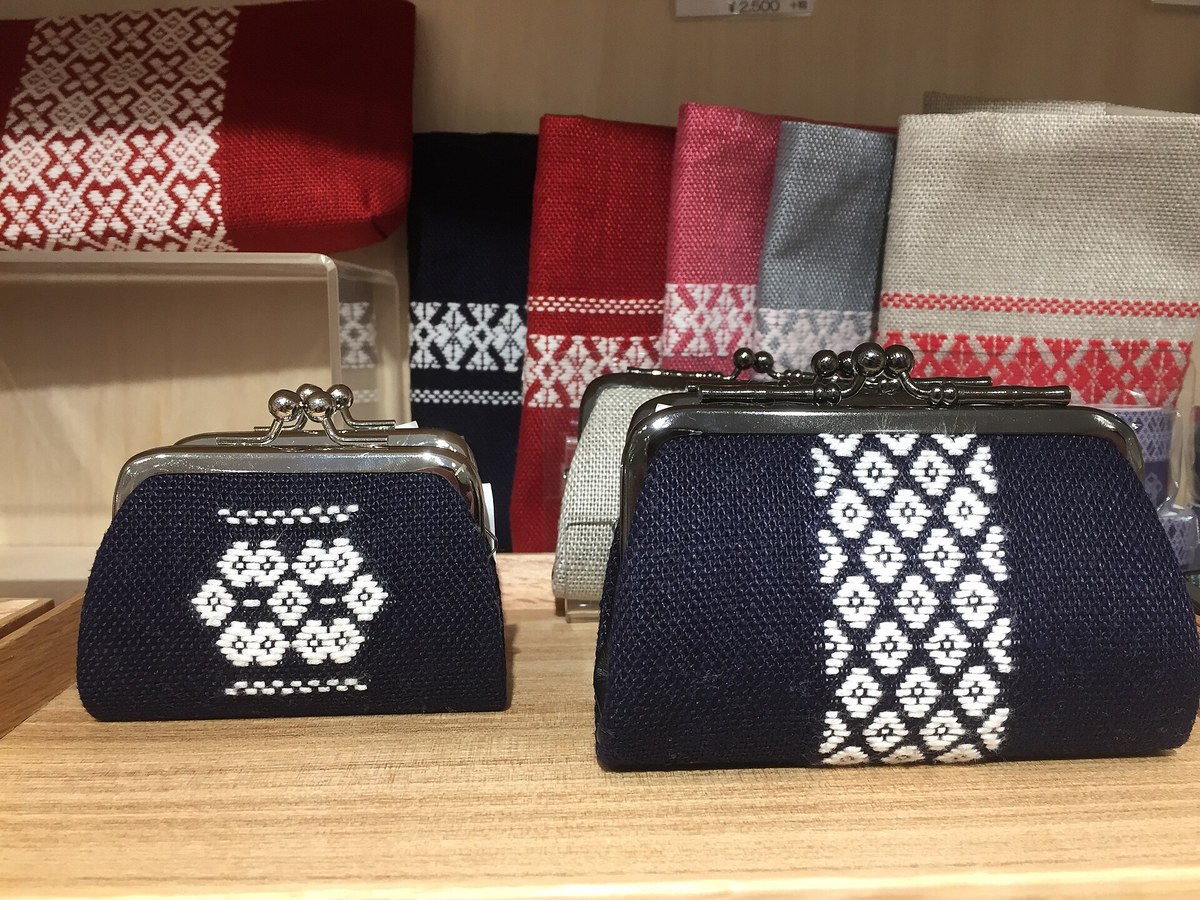
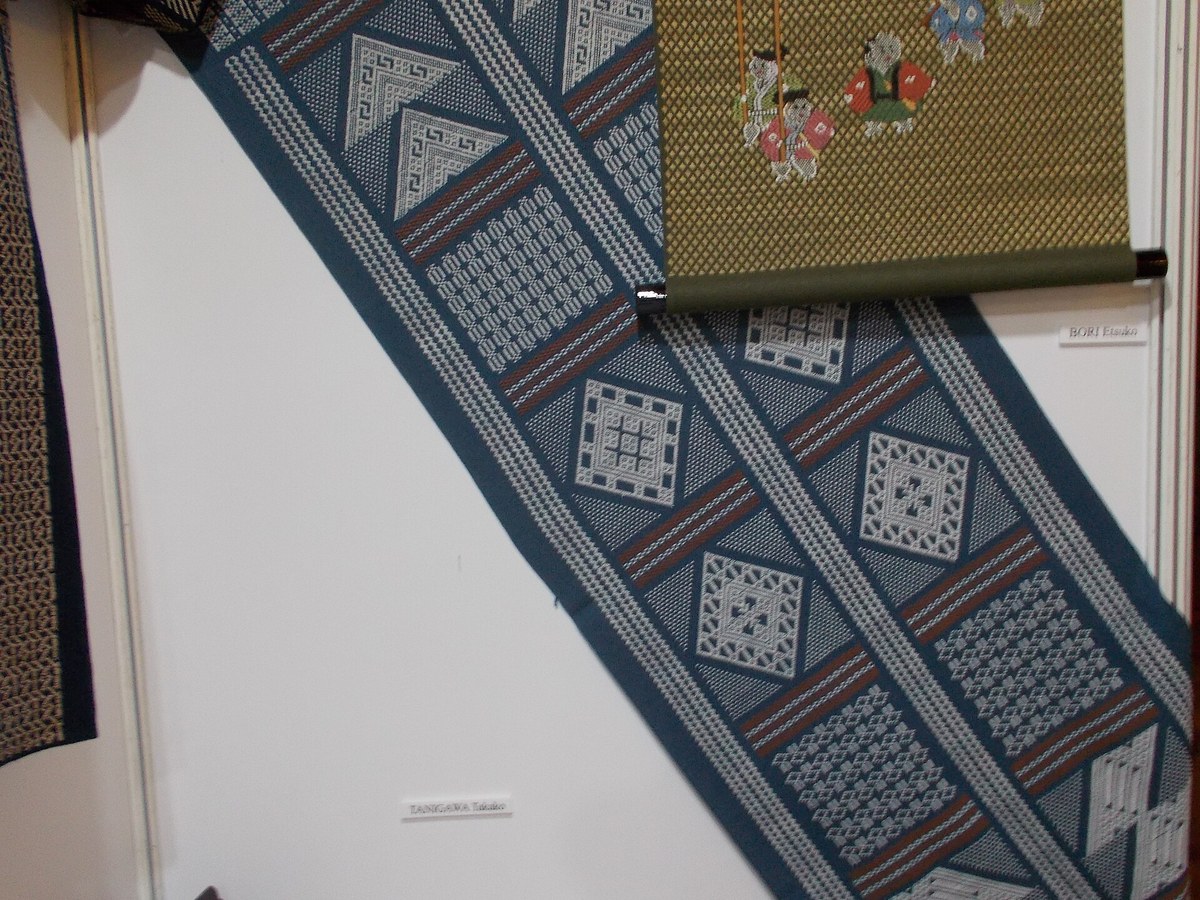
Every kogin pattern is built from modoko — base units named, in Tsugaru dialect, after the farm world that stitched them: tekona the butterfly, mamekko the bean, hanakko the flower, neko no manako the cat’s eye, bego the cow, uma no kutsuwa the horse’s bit. More than three hundred are recorded, and the Hirosaki institute’s holdings run past six hundred. Combined and repeated, the little diamonds build the large geometric fields our photographs show — on gamaguchi purses and cloths in the first, and on exhibition hangings carried as far as a Japanese festival in Budapest in the second.
The Iwaki river basin divides the stitch three ways. Nishi kogin, west of Hirosaki castle, works fine cloth with horizontal bands and a protective reversed-knot pattern on the back. Higashi kogin, to the east, stitches bold all-over patterns in thicker thread, with no stripes. Mishima kogin lays three broad stripes from the shoulders down — reinforcement where the carrying straps ran.
Buying kogin today
The living way in is to stitch it yourself: Olympus’s kogin kit for a round gamaguchi pouch — thread, congress cloth, lining, frame and pattern — is ¥2,420 at Yuzawaya’s official shop, an intermediate-level kit finishing at about ten by twelve centimetres. Finished work from Tsugaru makers runs from a ¥2,000 coaster to a ¥5,800 book cover at the maker shop koginpetit+, with tote bags and pouches between.
Judge a piece by its count: true kogin is counted thread-work on an even weave, the diamonds exact because the arithmetic is exact. In Hirosaki the institute and the city’s craft shops are the home ground; everywhere else, the kit and the small goods carry the stitch.
Sources — checked 15 November 2026
- Kogin-zashi — encyclopedia record (the odd-count rule, the 1724 edict, the three districts, the modoko names)
- Hirosaki Kogin Institute — Kinarino record (the modoko system, the 600-plus pattern holdings, the institute’s eighty years)
- Olympus kogin kit at Yuzawaya’s official shop, and koginpetit+ maker shop (the ¥2,420 kit, the ¥2,000–¥5,800 finished range)
Checked 15 November 2026 (stored links re-fetched and judged per product): reserved where the page says so, with an editorial review note kept per product. Press, PR and travel use stays outside the grant.
Editorial review 2026-11-15