Tie a Hakata-ori obi and it answers: kinunari, the silk rustle of a weave beaten so tight it holds a knot like a clamp. Fukuoka's fifth story is its first craft — a silk a Hakata merchant carried home from China in 1241, which the lords of Fukuoka then sent to the shogun every year for over two centuries.
A merchant, a monk, and a Chinese loom
The association's history begins with a journey. In the Kamakura period the Hakata merchant Mitsuda Yazaemon travelled to Song-dynasty China in 1235 with the monk Enni — later Shoichi Kokushi — and returned in 1241 having learned weaving techniques there; adding his own designs, he made the first Hakata-ori. Three centuries later his descendant Hikosaburo Mitsuda added Ming-dynasty techniques, producing the thick fabric with raised stripes and a pattern drawn from Buddhist ritual — the tokko implement and the flower tray.
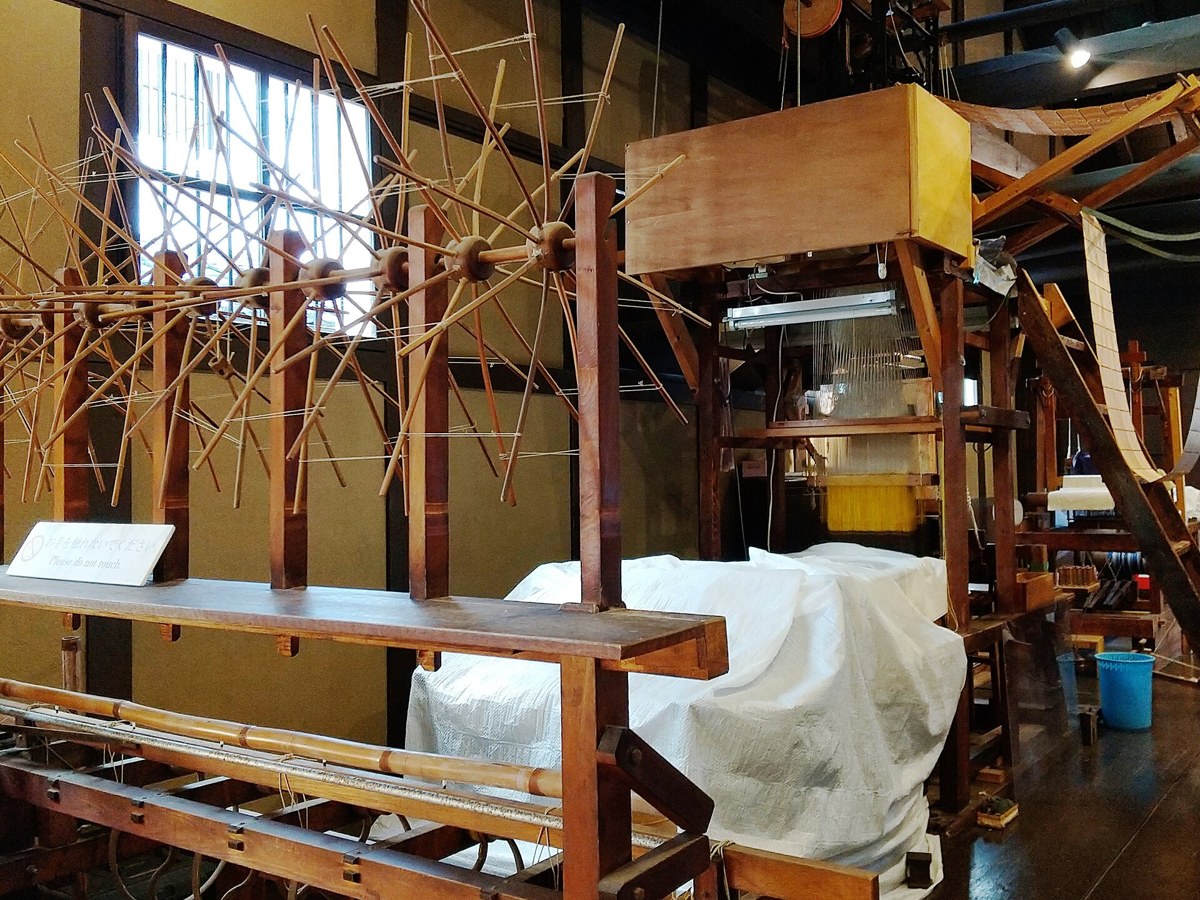
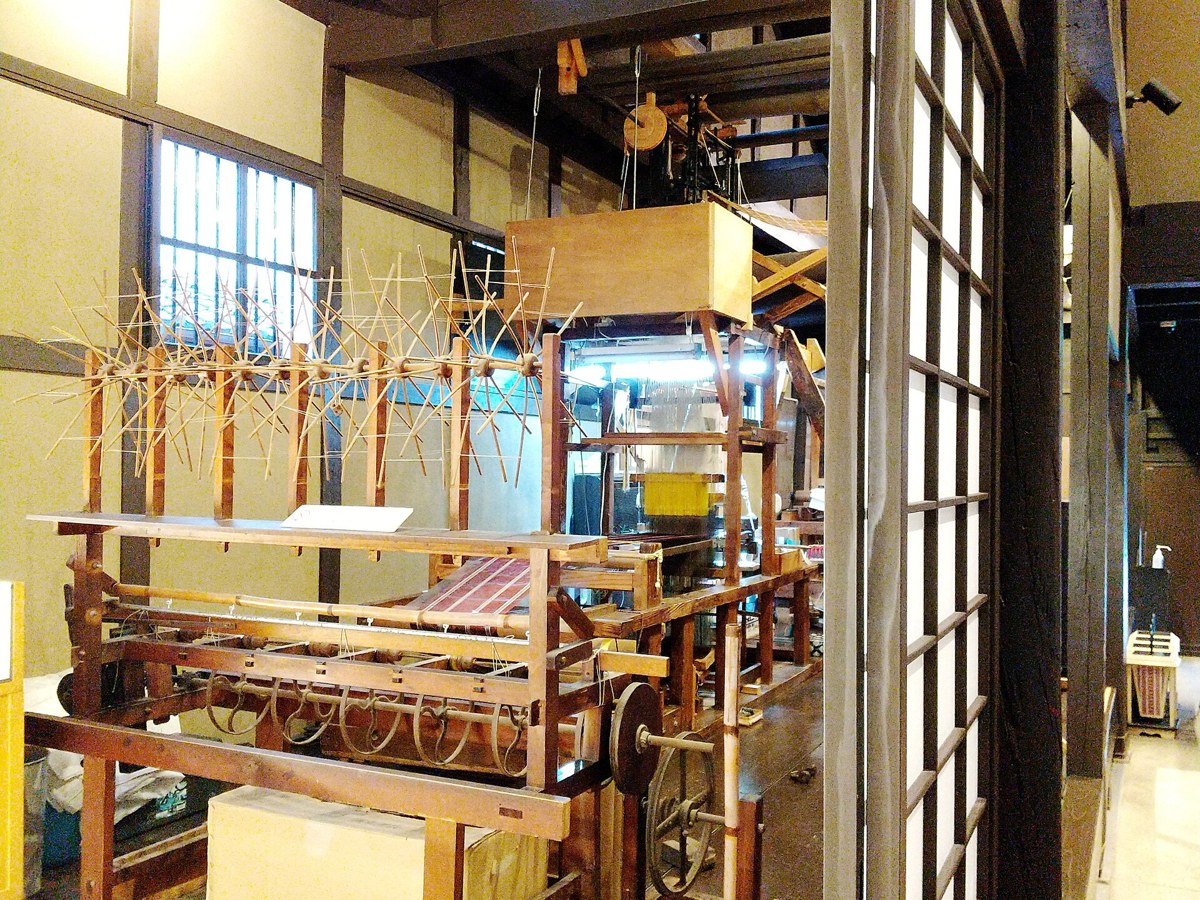
The weave itself is an inversion of ordinary cloth: a large number of fine warp threads, and a weft of several thin threads bundled together into one thick cord, beaten in hard. The association gives the result in one sentence — a silk textile made by strongly beating the thick weft into the many warps — and the craft account completes the mechanism: the many thin warps are drawn strongly by the thick wefts, raising the warps themselves into the pattern. That structure explains the cloth's famous tightness, thickness and durability.
Kenjo: the pattern the shogun received
From 1600, when Kuroda Nagamasa took Chikuzen, Hakata-ori was chosen as the Fukuoka domain's tribute to the Tokugawa shogunate and presented every March — and the name Kenjo Hakata-ori, 'presented Hakata-ori', dates from that presentation. The tribute fixed the pattern: the dokko, a Buddhist ritual implement said to crush worldly passions, and the hanazara, the dish that holds flowers scattered in offerings, set between stripes.
The stripes carry the family's ethic into the cloth. In the oyako-shima, parent-and-child stripes, a thick stripe flanks thin ones — a parent protects the child. In the koko-shima, filial stripes, thin stripes flank a thick one — a child yearns for the parent. Fukuoka City notes that the patterns presented to the shogunate by the Chikuzen Kuroda lord are still used today, in a craft it counts as 780 years old.
Ten thousand threads, half a year, two national treasures
The association counts what one hand-woven obi costs in time: more than 10,000 threads, each less than a millimetre wide, and production that normally takes several months — in some cases about half a year. Every process is divided among specialists and supported, it says, by extremely precise handwork. The weave's tightness had working uses beyond dress: the craft account records men's kimono obi, samurai sashes and sumo wrestlers' loincloths among its historic roles.
Mastery in Hakata-ori is formally recognised at the highest level the Japanese craft system gives. The association's history records two holders of the Important Intangible Cultural Property technique 'Kenjo Hakata-ori' — Living National Treasures: Ogawa Zenzaburo, designated in 1971, and his son Ogawa Kisaburo, designated in 2003. The weave was designated a national Traditional Craft in 1976, and Fukuoka Prefecture lists it among its seven designated crafts, with Fukuoka City as the main production area.
The sticker that proves it, and the sound that sells it
Hakata-ori polices its name in paper. Every product, the association states, carries a certificate sticker it issues from its headquarters in Narayamachi, Hakata-ku: gold where silk is fifty percent or more of the cloth, blue where silk is under fifty percent, with separate stickers for kimono and hakama cloth and for hand-woven work. Pieces made by traditional techniques that pass the association's strict inspection carry, in addition, the Traditional Mark — the proof of the national Traditional Craft designation. The craft account counts the traditional pattern types the inspectors judge: Kenjo and Kawari kenjo, Hira hakata, Kando, So-uke, Mojiri ori, Kasane ori and Enuki hakata.
And the cloth carries its own second proof, in sound: the craft account describes how tightening a Hakata-ori obi produces a silk rustling called kinunari, unique to Hakata-ori — the noise of warp ridges sliding under tension. Beyond the obi, the city records bags, neckties and business-card cases in the modern line. The checked obi below — pure silk, woven by the Kyowa factory and sold ready-tailored — is the tribute pattern's direct descendant.
Sources — checked 11 November 2026
- KOGEI JAPAN: Hakata Ori
- Hakataori Industrial Association: Hakata-ori, the kenjo pattern, certificates
- Kisste: Hakata-ori Nagoya obi (Kyowa weaving)
Original prose and official links only; no source text or maker media reproduced. Photos are credited Creative Commons works, not product photographs.
Editorial review 2026-11-11