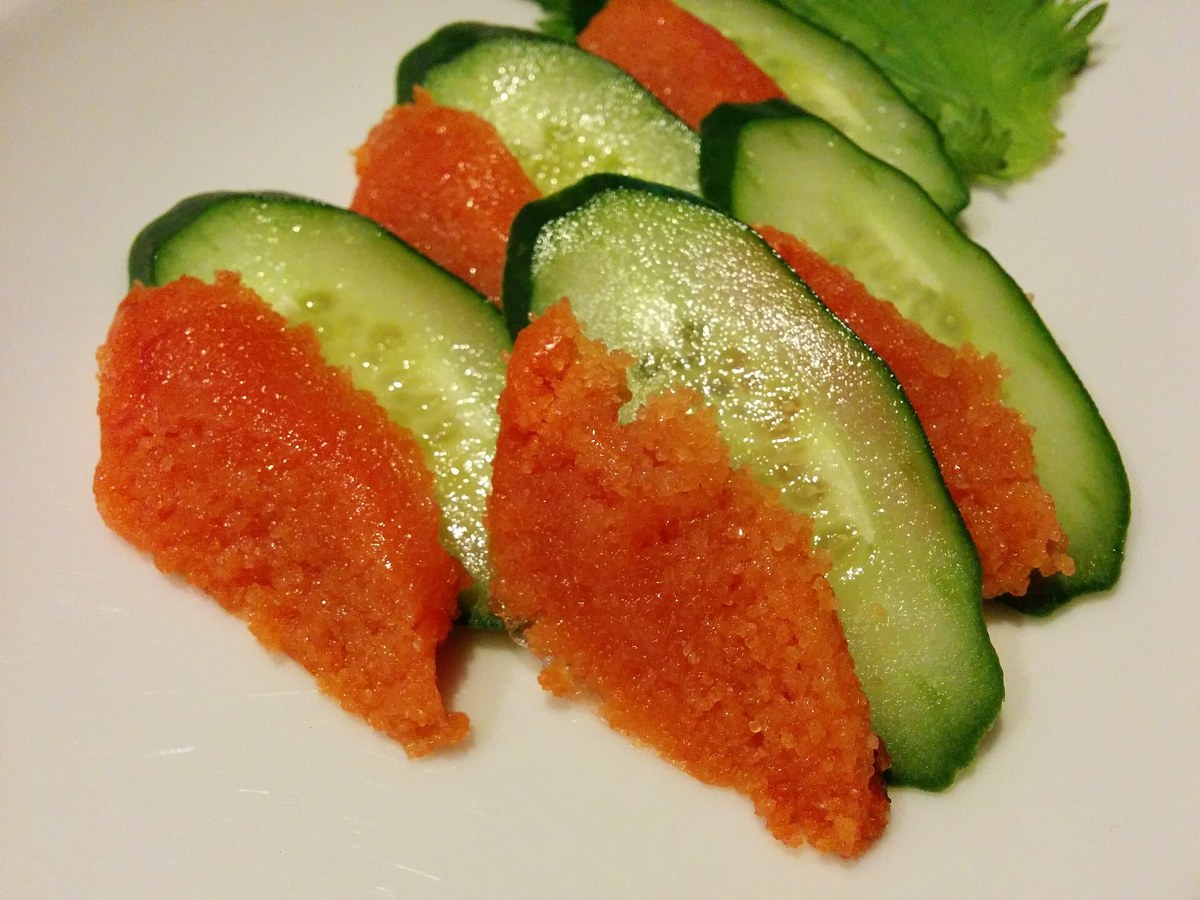
Fukuoka's most famous taste was invented from a memory of somewhere else. Toshio Kawahara grew up in Busan, Korea, eating seasoned pollock roe; back in postwar Hakata he spent months recreating it — roe salted, then steeped in a chilli seasoning liquid rather than a paste — and on 10 January 1949 his little Nakasu grocery, Fukuya, sold Japan's first karashi mentaiko. It became Hakata's defining souvenir: Fukuya's official 100-gram box today costs ¥1,296.
From Busan to Nakasu
Hakata is Japan's old gateway to the continent, and its food has always carried imports home. Kawahara's family ran a trading business in Busan, where myeongnanjeot — kimchi-style seasoned pollock roe — was everyday food. Returning to a ruined Hakata after the war, he and his wife Chizuko opened a small grocery in Nakasu in October 1948, and he set out to rebuild the flavour he remembered as the shop's signature.
Rather than pickling the roe in chilli paste, he developed his own method — steeping the salted roe in a seasoning liquid of chilli, sake and kombu — and the first 'aji no mentaiko' went on sale on 10 January 1949, during the Toka Ebisu festival. Fukuya and its fans now mark 10 January as Mentaiko Day. Sales were poor at first; the refinement took the better part of a decade.
A recipe given away, a city that adopted it
The turning point was generosity: when the improved recipe settled around 1959, it was distributed freely among Hakata makers, and mentaiko became a city industry rather than one shop's secret — Fukuya, Kanefuku, Yamaya, Shimamoto and dozens more, each with its own marinade. Shimamoto, founded 1976, even restricts itself to rare domestic roe, under a tenth of the market, finished by hand without colouring.
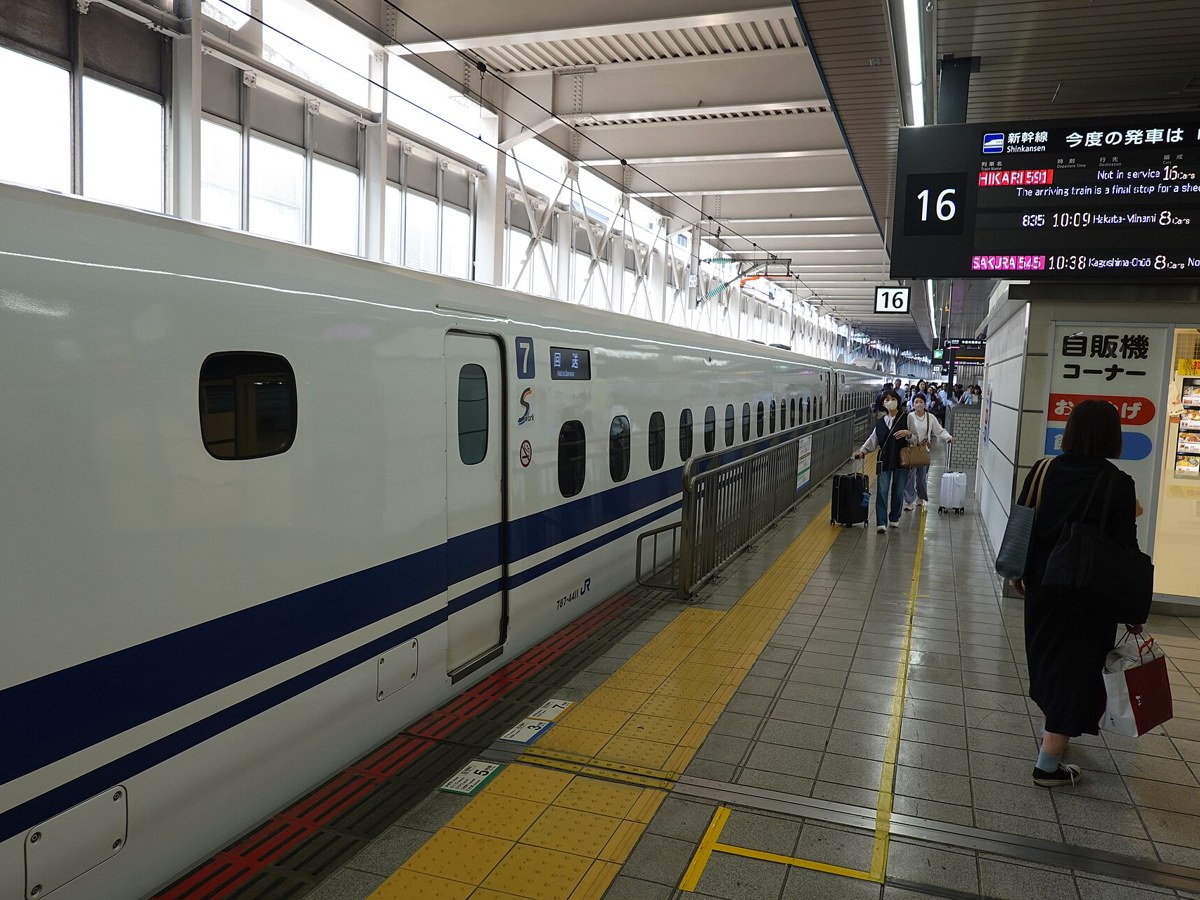
National fame waited for the railway: when the Sanyo Shinkansen reached Hakata in 1975, travellers began carrying the chilled boxes home, and karashi mentaiko took its place beside Hakata ramen as the city's culinary signature. The distinction to hold at the counter is simple — tarako is the plain salted roe; mentaiko is the chilli-steeped one. Buying the wrong one is the classic souvenir error.
Practical details: prices, grades, where to buy
Prices (Fukuya's official store, tax included, checked 2026-11-09): 100 g is ¥1,296, 200 g ¥2,322, 290 g ¥3,348, in spicy or medium-spicy. Across Hakata's makers, a 100 g box of intact-lobe gift mentaiko runs from about ¥800 at the standard end to ¥2,500–3,500 for top seasonal grades; the broken-membrane cuts (kireko) carry the same flavour for home use at lower prices.
Where to buy: Fukuya's Nakasu main store first, then the mentaiko counters of Hakata Station's Ming market and the airport, where nearly every major house stands side by side for comparison. Keeping: about two weeks refrigerated, around two months frozen. Type of edition: regional edition — a Hakata-created food and its founding house.
Eat it warm, on rice, once in Hakata
Mentaiko's home form is the simplest: a whole lobe, just warmed through, laid over hot rice, so the marinade's heat and the roe's pop arrive together. Everything else — the pasta, the toast, the mayonnaise — is the food's second career, and Hakata is cheerfully responsible for all of it.
For the suitcase, buy the intact lobes for gifts and a pack of kireko for yourself: same marinade, same roe, half the ceremony. And buy it in Hakata if you can — not because it cannot travel (the free recipe saw to that), but because this is the city that chose to give its invention away and then out-make everyone with it.
Scope: what 'limited' means here
Karashi mentaiko is documented as the chilli-steeped pollock roe created in Hakata in 1949 by Fukuya's founder, whose official prices anchor this page; the wider Hakata industry and nationwide sales are stated. Checked 2026-11-09.
Sources — checked 9 November 2026
- Fukuya (official): Aji no Mentaiko — product prices and the house history since 1949
- Food in Japan: Karashi mentaiko — Fukuoka's spicy cod roe, from Busan to Nakasu
- Japan Activity: Fukuoka mentaiko guide 2026 — tasting and shopping
Original prose and official links only; no source text or maker media reproduced. Photos are credited Creative Commons works, not product photographs.
Editorial review 2026-11-09