For more than two hundred years, this was a vegetable only samurai could eat. Karashi renkon — a lotus root whose natural holes are packed with fiery mustard miso, battered yellow with turmeric and deep-fried — was devised in Kumamoto in 1632 as a health food for an ailing lord, and kept as a house secret through the whole Edo period. Today it completes Kumamoto's three great specialties alongside basashi and ikinari dango, and a roll costs between ¥788 and ¥1,620.
1632: a prescription disguised as a delicacy
In 1632 Hosokawa Tadatoshi arrived to take over the Higo domain — Kumamoto — in his late forties and so anaemic he struggled to perform his duties. A Zen monk, Genchaku, pointed him to the old texts: lotus root builds blood. The lord's official food purveyor, Mori Heigoro, turned the prescription into a dish — filling the root's holes with a paste of hot mustard and miso, dunking it in turmeric-flavoured batter and frying it crisp.
Then the dish vanished into privilege. Sliced, the root's pattern of holes ringed by golden batter resembled the Hosokawa family crest, and the recipe was passed down as a family secret; through the Edo period, eating karashi renkon was restricted to those 'permitted to have a surname and carry a sword' — the samurai. Only with the Meiji era, when the samurai lost their status, did ordinary people finally taste it. Mori's company, in Kumamoto's Shinmachi, sells the dish he invented to this day.
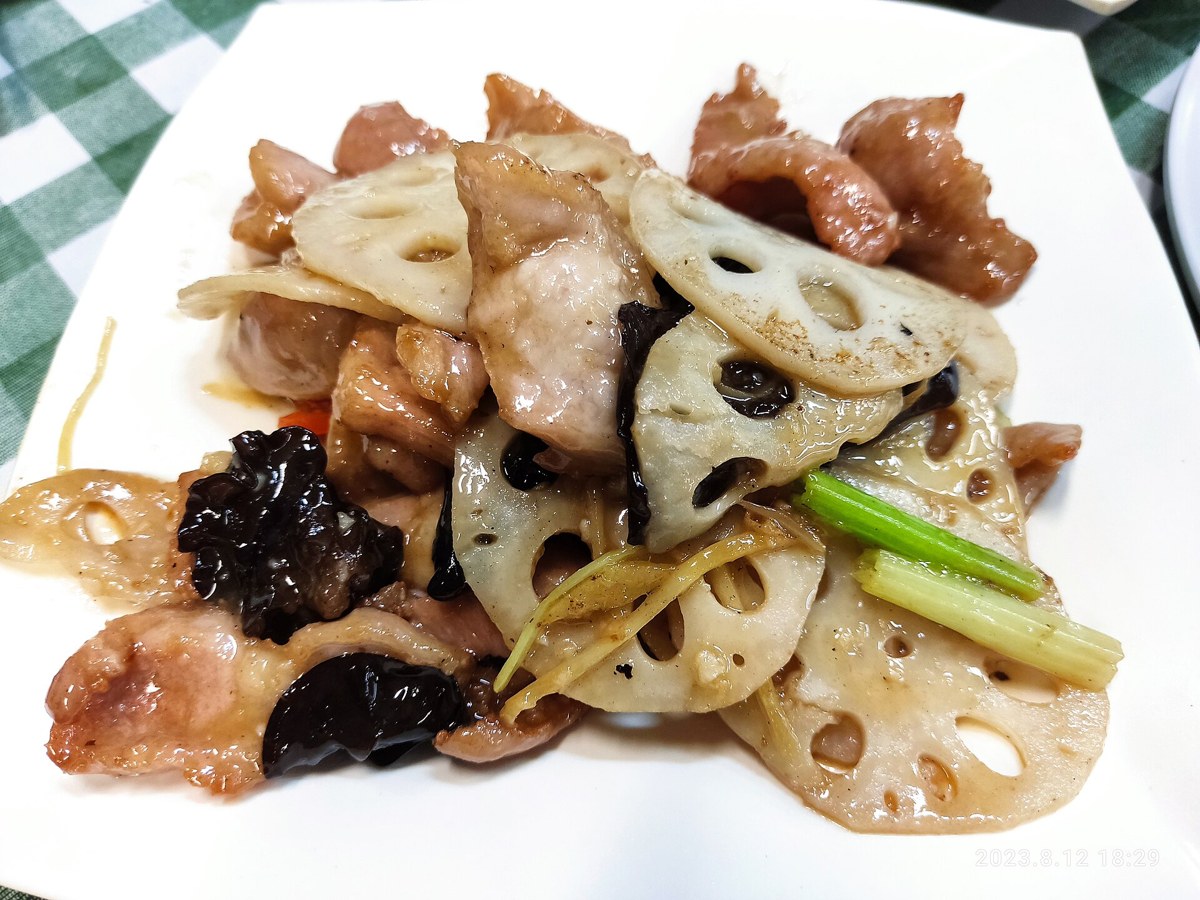
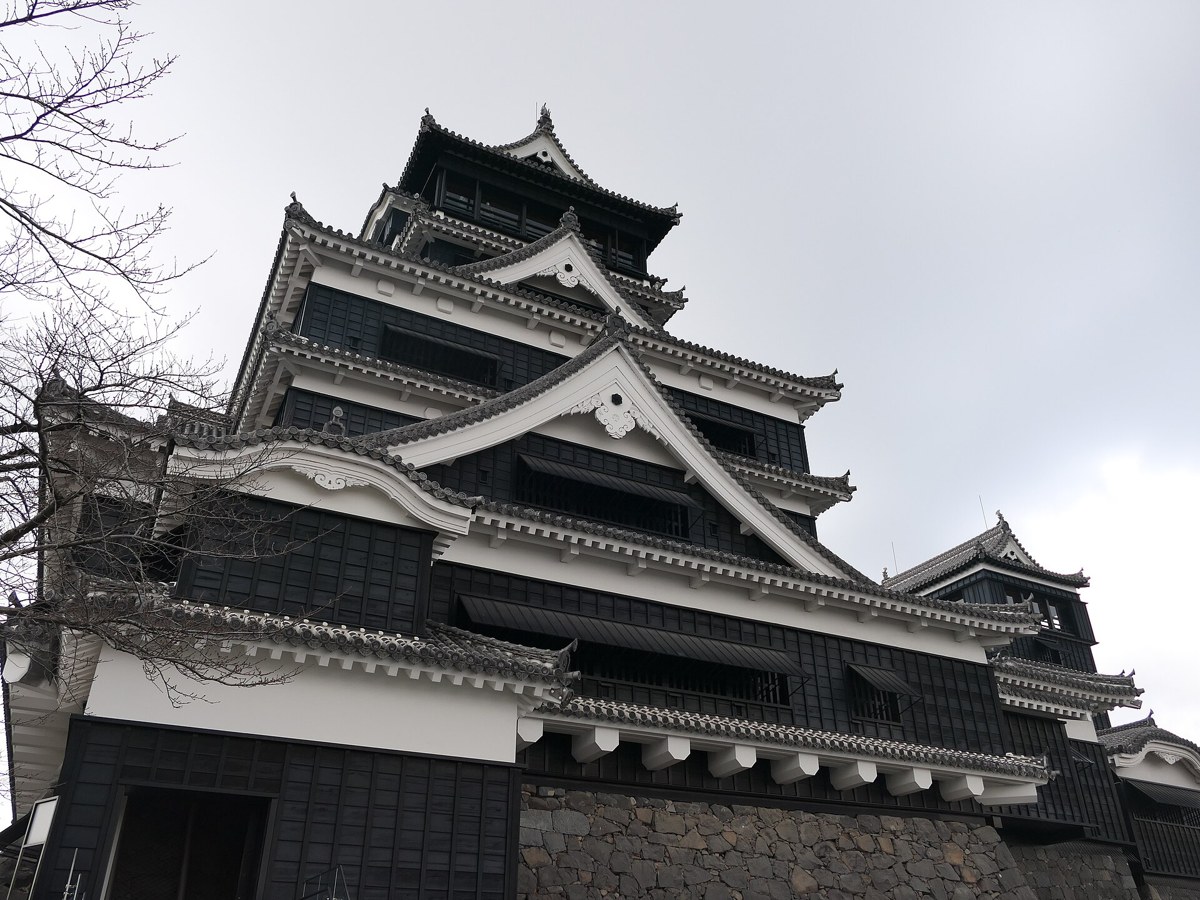
Holes, mustard and a yellow batter
The construction is exact: a firm lotus root is chosen for clean, even holes; the mustard-miso — barley miso and powdered karashi mustard, sometimes with okara or breadcrumbs for body — is packed into every hole; the whole root is rested, coated in a turmeric-yellow batter and deep-fried, then sliced into rounds so each piece shows the pattern: white root, dark filling, golden crust.
The eating is a small ambush, in the best way: crunch first, the root's sweetness second, and then the karashi arrives — not chilli heat but the clean, nasal fire of Japanese mustard, gone in seconds. It is built for drinks — beer and shochu are the local pairings — and for ceremony: in Kumamoto it is a must-serve at formal occasions, the prefecture's edible crest.
Practical details: prices, where to buy, keeping
Prices (checked 2026-11-09): a roll of karashi renkon at Kumamoto's shops runs about ¥788 to ¥1,620, by size and maker; the specialist houses — Mori's among them — sell whole rolls to slice at home, and the airport and station shops sell them alongside milder and flavoured variants (wasabi, curry, chips) for the mustard-shy.
Where to buy: Kumamoto City's specialist shops first, then JR Kumamoto Station and Aso Kumamoto Airport souvenir floors. It is a fried fresh food — eat it within days, chilled, and slice it thick. Type of edition: regional edition — one of Kumamoto's three great specialties, with a documented 1632 origin.
The third of the three
This collection already carries Kumamoto's ikinari dango, the sweet-potato dumpling made for sudden guests; karashi renkon is its opposite number — the savoury, ceremonial, once-forbidden third of the prefecture's great three (the remaining member, basashi, is horse sashimi, and stays a restaurant dish rather than a souvenir). Together the two pages give the prefecture's table its full range: the farmhouse sweet and the lord's secret.
Buy a whole roll rather than a pre-sliced pack if you can: slicing it yourself shows the crest pattern the Hosokawa guarded, and the mustard is at its fiercest in the first day. It is the rare souvenir whose story — prescription, secret, samurai privilege — is entirely documented, and entirely edible.
Scope: what 'limited' means here
Karashi renkon is documented as Kumamoto's mustard lotus root — its 1632 Hosokawa account, samurai restriction and great-three standing — per the Japan Tourism Agency and the cited sources. Wider izakaya serving is stated. Checked 2026-11-09.
Sources — checked 9 November 2026
- Japan Tourism Agency (MLIT): Spicy deep-fried lotus root (karashi renkon) — Kumamoto's great-three specialty
- Food in Japan: Karashi renkon — Kumamoto's spicy lotus root specialty, ¥788–1,620 per roll
- MAFF Our Regional Cuisines: Karashi renkon (lotus root with Japanese mustard) — Kumamoto recipe record
Original prose and official links only; no source text or maker media reproduced. Photos are credited Creative Commons works, not product photographs.
Editorial review 2026-11-09