Most tea is graded. This one is legislated. In the mountains of Yame in Fukuoka, a few hundred growers make a shaded green tea under rules strict enough to earn Japan's first tea geographical indication — and the resulting leaf accounts for a ten-thousandth of the country's tea. It gives Fukuoka its third story in this collection.
Six hundred years to a protected name
Yame's tea story begins, by the maker's account, in 1423, when the monk Eirin Shuzen brought tea seeds back from Ming China and planted them at Reiganji Temple in Kuroki, in what is now Yame City; 2023 marked six hundred years of Yame tea. Production spread through the mountain districts in the early nineteenth century, and Yame's shaded teas rose to the top of the national competition table — the hardest table in Japanese tea to stay on, judged on taste, aroma, colour and the beauty of the leaf's shape together.
The name at the very top of that table is now protected. Yame Dento Hon Gyokuro — 'Yame Traditional Authentic Gyokuro' — was the first tea in Japan to receive Geographical Indication certification, and it remains the only GI gyokuro. The GI system protects a product name whose quality is bound to its place and method, and here it works as a lock: only tea that meets the criteria, grown in Yame and made the traditional way, may bear the name at all.
The four rules
The criteria are four, and each one refuses a modern shortcut. First, shade: the bushes are not covered directly but grown under a shelf — a raised frame — so the cover never touches the leaf. Second, shape: the trees are left in natural posture, untrimmed, where ordinary gyokuro bushes are clipped into curves. Third, materials: the covering is natural only — rice straw and reed, never the chemical fibre used elsewhere — which the growers credit for the temperature and humidity the buds develop in, and for the leaf's covered aroma, the nori-like scent carried by dimethyl sulfide at over five times sencha's concentration in the maker's analysis. Fourth, harvest: no machines. Skilled hands pick only the softest parts of the new buds.
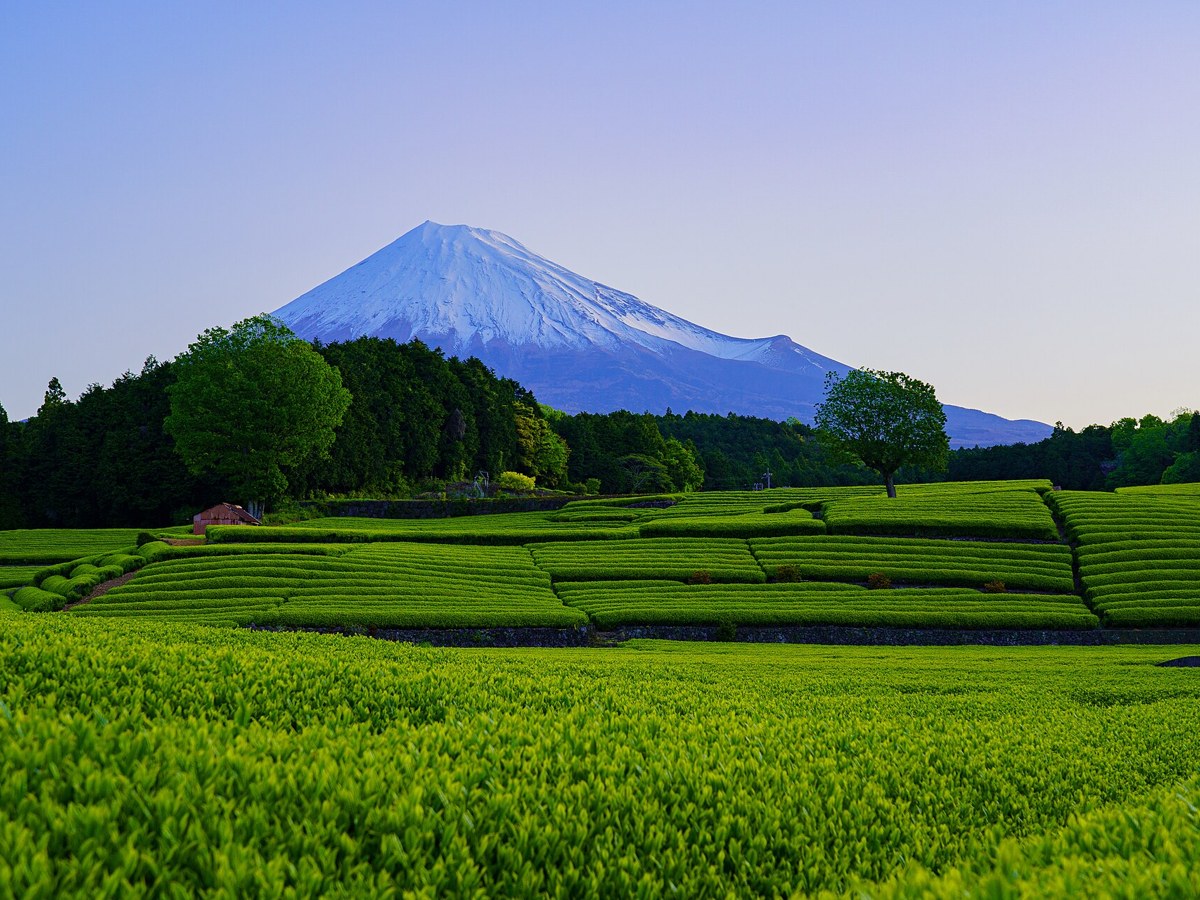
The fields sit in Yame's mountains — the maker's account gives an average annual temperature of 15.2 degrees and 2,019 millimetres of rain — where the swing between morning and evening temperatures and the morning mists store amino acids in the leaf: high theanine, suppressed catechin bitterness, a mellow umami that is the style's signature. The result is measured in rarity as much as in flavour: Dento Hon Gyokuro is about 0.013 percent of Japan's total tea production.
Prices: leaf, and a bottle priced like wine
At the top of the market the figures leave ordinary tea behind. A specialist seller's listing of 100% Yame-produced Dento Hon Gyokuro leaf — read in full for this story — is priced at ¥50,000. In spring 2023 the producers' own council bottled the tea like wine: a 500-millilitre bottle of brewed Yame, made from the GI leaf, produced in a run of only 100 bottles and priced at ¥25,000 per bottle, aimed at high-end restaurants in Japan and abroad.
Keep the tiers straight, because the honest version is more interesting than the headline. Yamecha as a whole — the region's sencha, kabusecha, standard gyokuro and matcha leaf — sells at ordinary fine-tea prices, and very good Yame gyokuro can be bought for a small fraction of the figure above. The ¥50,000 leaf and the ¥25,000 bottle belong to the Dento Hon tier only: the GI name, the four rules, the hand-picking. That tier, and only that tier, is the edition this page documents.
How to drink it, and how to buy it
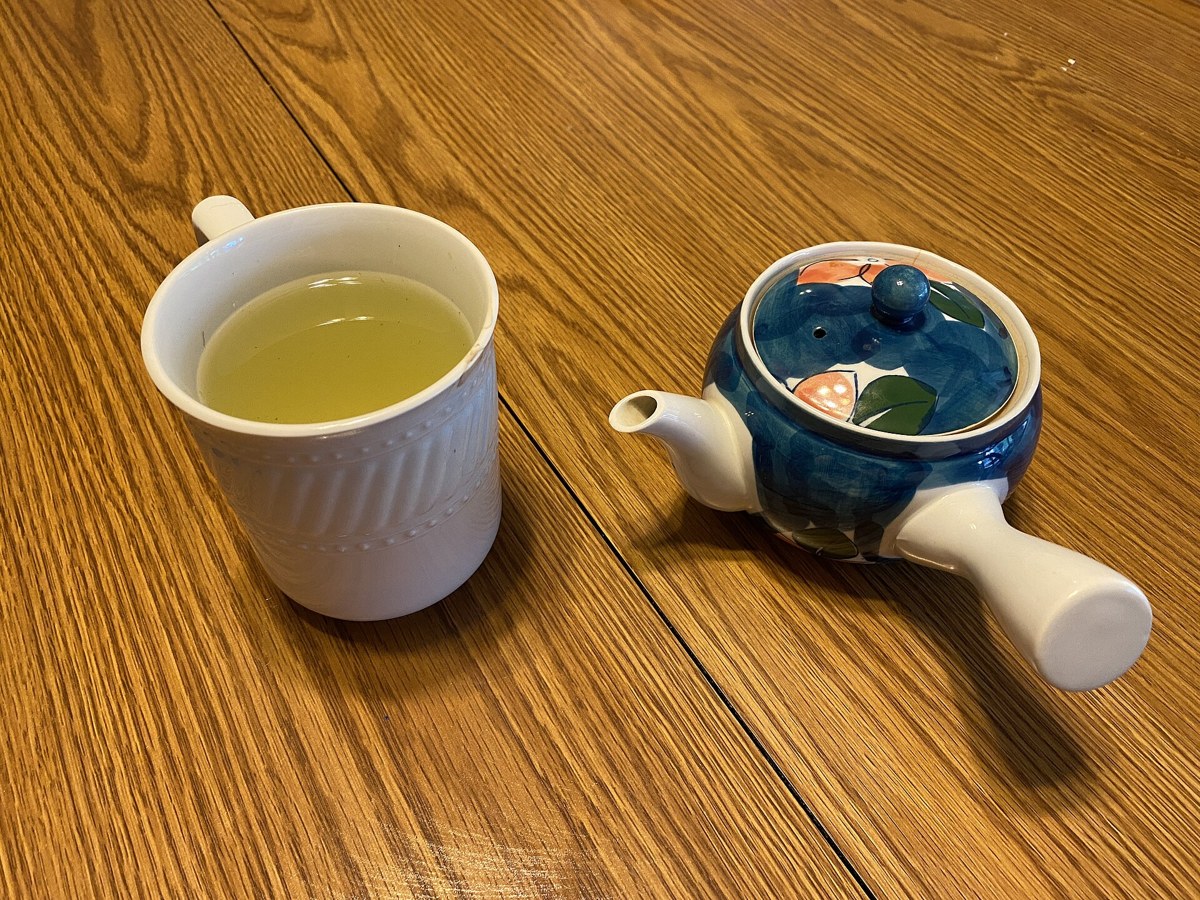
Brew it as the makers direct: water cooled to around 60 to 70 degrees, a short steep of one to two minutes, small cups, and every last drop poured out — gyokuro at this level is drunk in concentrated sips, not mugfuls, and the leaf can be steeped again. The seller's own guidance runs the same way: cool the water first in a bowl, then brew briefly and pour in small portions to the final drop.
Buying is a specialist act. Look for the full name — Yame Dento Hon Gyokuro — and the GI mark, rather than 'Yame gyokuro' alone, which names the wider and far larger category. In Yame itself, Hoshino village is the name the council's own work centres on; elsewhere, buy from a seller who can state the tier and the rules behind it. If they cannot describe the shelf, the straw and the hand-picking, what is in the packet is probably the region's good ordinary tea wearing its famous cousin's name.
Sources — checked 10 November 2026
- Mukoh Matcha: Yame Dento Hon Gyokuro leaf (Yame Traditional Authentic Gyokuro)
- Mukoh Matcha: 'The Gyokuro' — Yame Traditional Authentic Gyokuro, single origin
- The Japan News (Yomiuri): Yame aims to expand overseas sales for its wine-like ultra-premium green tea
Original prose and official links only; no source text or maker media reproduced. Photos are credited Creative Commons works, not product photographs.
Editorial review 2026-11-10