Keichan is what happened when a mountain county that could not keep sheep copied jingisukan with the bird it had. In the high valleys of Gifu — Gujo, Gero, the south of Takayama — chicken is rubbed in a garlic-spiked miso or soy sauce and grilled on an iron plate with a heap of cabbage, each butcher, inn and farmhouse keeping its own marinade. It began around 1950 as a feast of spent hens too precious to waste; it is now the soul food of the Meiho hills, with its own research association and a map of where to eat it.
A jingisukan that met a chicken
The agriculture ministry’s Gifu record dates keichan plainly: born about 1950, modelled on the jingisukan — the mutton grill — eaten in parts of Gifu, and rebuilt around the protein the mountains actually had. From about 1960 the local butchers and izakaya each took it up and bent it their own way, so regional keichan multiplied rather than standardising: miso here, soy there, salt in the next valley, every shop’s sauce a small guarded recipe. The recorded home region is a mountain arc — Gujo City, Gero City and the south of Takayama City.
Under the grilled dish sits an older thrift. Farmhouses kept hens for eggs, and a hen that had stopped laying was precious protein, eaten only on feast days — for honoured guests, at Obon and New Year gatherings. Keichan’s marinade and fierce grilling were how a tough, flavourful spent hen became the centrepiece of the table rather than a soup afterthought.
The marinade is the maker
The ministry recipe, provided by Gifu’s school dietitians, shows the home form at its simplest: chicken breast cut bite-size and rubbed with a mix of miso, sake, light soy sauce and grated garlic — 200 grams of chicken to 32 grams of mixed miso — then stir-fried with cabbage, carrot and green pepper. But the record is careful to say the seasoning is various by district, house and shop; miso, soy and salt are the three standing families, and garlic is the accent that survives every version.
Even the name refuses to settle. The ministry records both theories without choosing: from tonchan, the pork-offal grill, by analogy — keichan, the chicken one — or from keijan, chicken joined with jan, the word for a fermented seasoning paste. A dish whose etymology argues between the grill and the marinade is a dish defined by both, which is exactly how Gifu cooks it.
On the iron plate
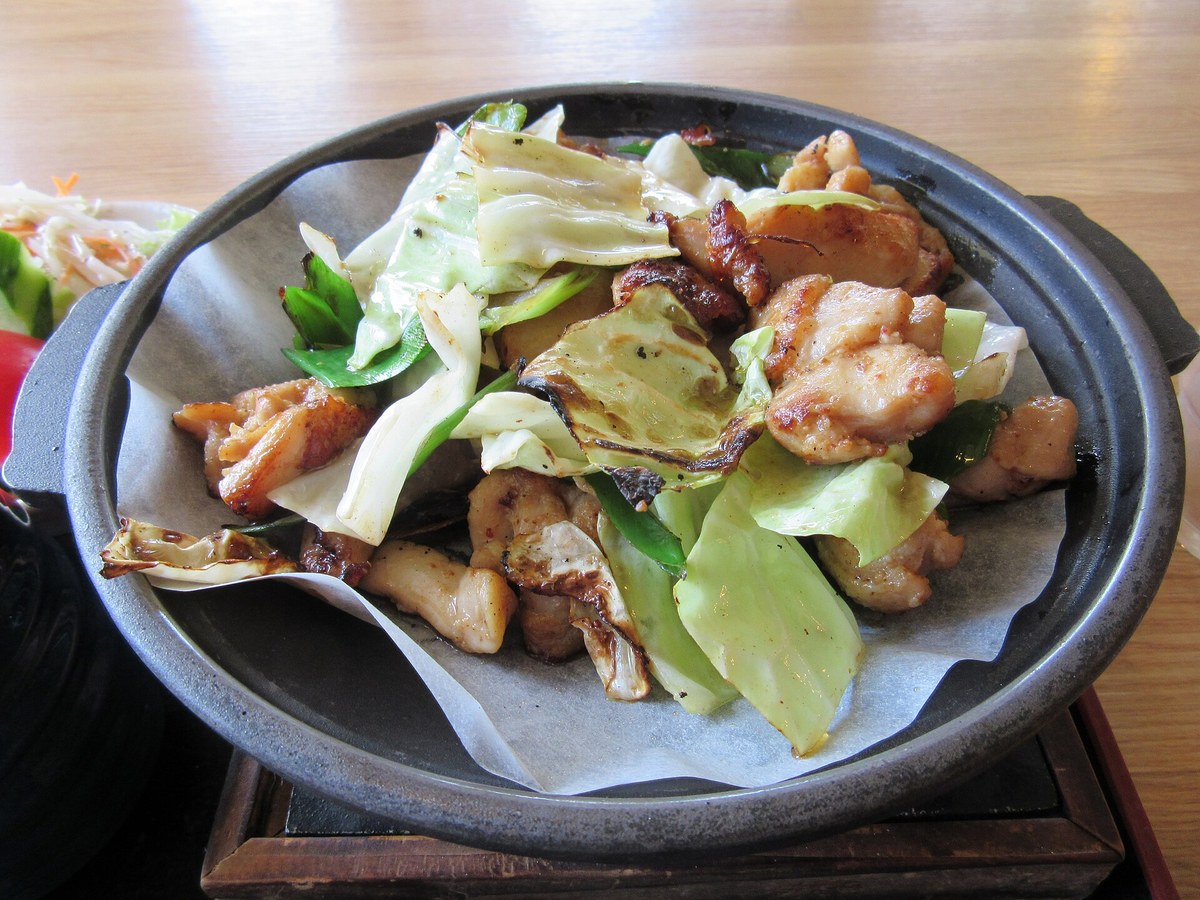
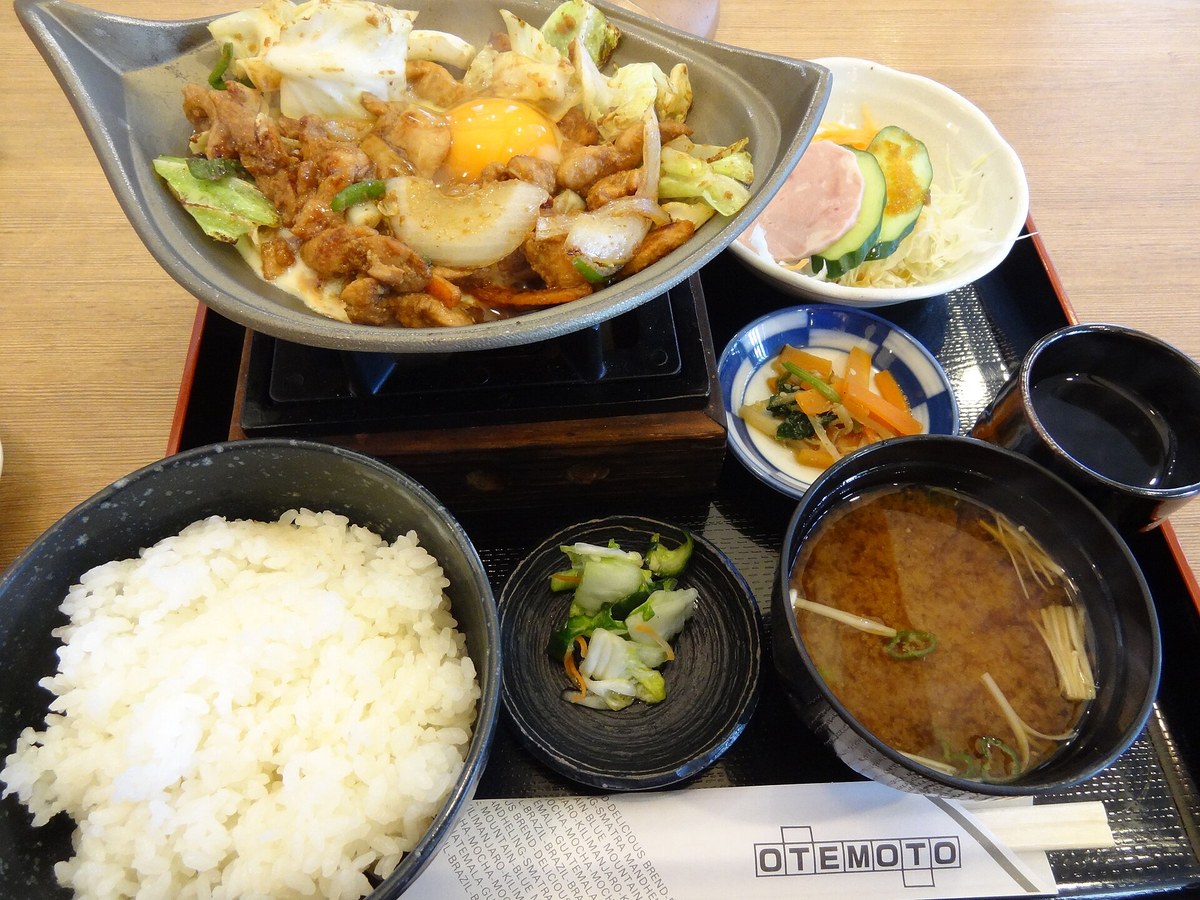
Keichan is eaten cooking, not cooked: the marinated chicken and a mound of cabbage — with moyashi and whatever seasonal vegetables the house uses — are grilled together on a teppan or a jingisukan pan at the table, the cabbage wilting into the sauce as the chicken browns. Both of this story’s photographs are that moment: the chicken and cabbage sizzling on the domed plate, and the Meiho set meal, where the pan arrives with a cracked-in egg beside rice, miso soup and pickles.
In Meiho, Gujo’s high district, the dish has an institution: the Meiho Keichan Research Association publishes a map of the restaurants serving the local style, serves keichan at festivals and events, and has made it a pillar of the town’s promotion — the association certifies the 260 g marinated pack, made for it, that home cooks across Japan now order. A farmhouse feast has become a county’s flag, without losing the farmhouse form.
Packs and prices
The marinade-first form of the dish is what travels: chicken already rubbed in sauce, needing only cabbage and a hot pan. Wasabi-ya of Gujo sells its marinated packs — thigh and breast; skin and liver, the Gujo speciality; heart and gizzard — at 583 yen a bag including tax on the maker’s price list, with the house keichan sauce itself at 410 yen a bag, enough for about 800 grams of chicken. At the stocked-freezer end, Shirakawa Town’s hometown-tax shelf carries Kurokawa Keichan in the salt style: five 300 g vacuum bags, 1.5 kg in all, at a 13,000 yen donation, in stock.
In the valleys, eat it where the research association’s map points in Meiho, or at the butchers and inns of Gero and southern Takayama that each keep a house sauce. The dish rewards loyalty poorly and curiosity well: two shops on the same road will give you two different marinades, and Gifu considers that the entire point.
Sources — checked 13 November 2026
- MAFF, Our Regional Cuisines — Keichan (Gifu)
- Wasabi-ya — Gujo Keichan price list
- Furu-lab (Asahi) — Kurokawa Keichan salt, five bags (Shirakawa Town)
Checked 13 November 2026 (stored links re-fetched and judged per product): reserved where the page says so, with an editorial review note kept per product. Press, PR and travel use stays outside the grant.
Editorial review 2026-11-13