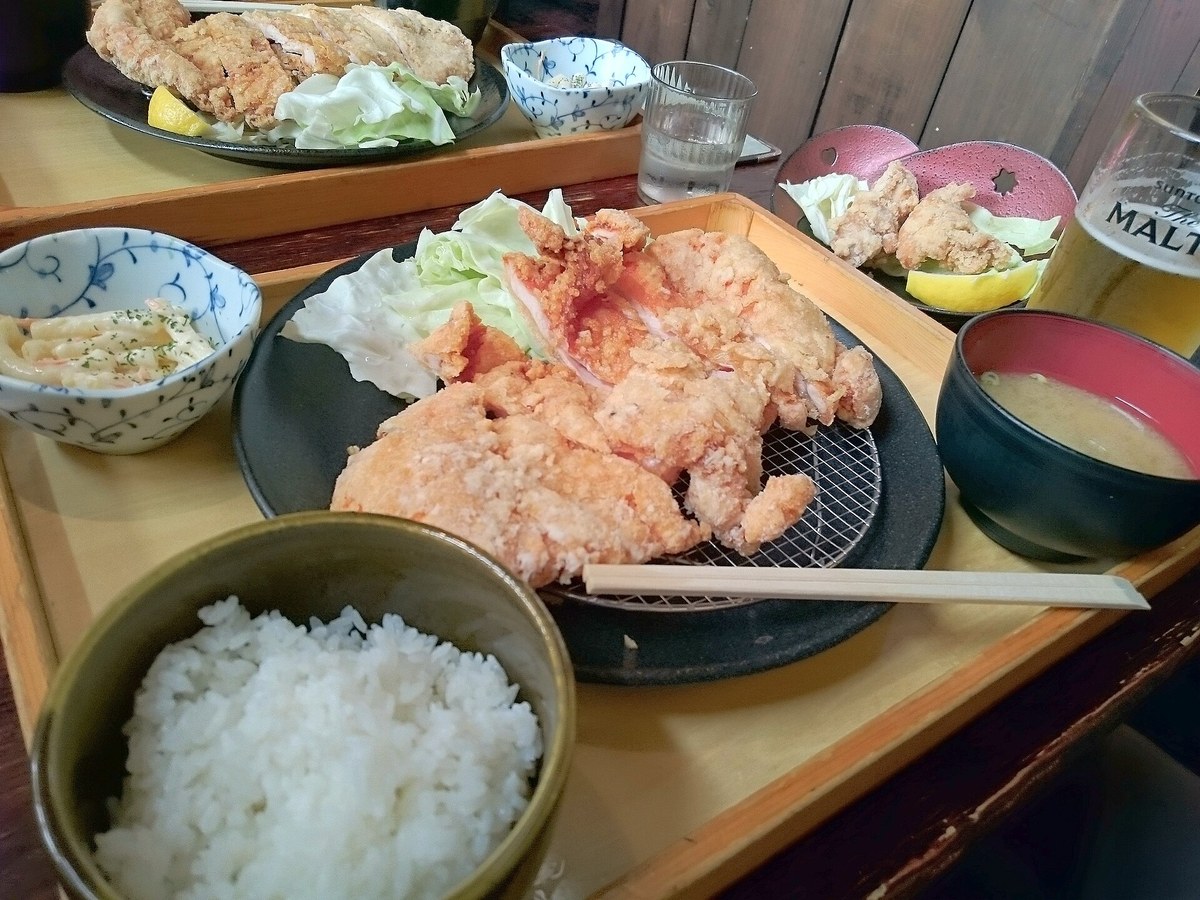
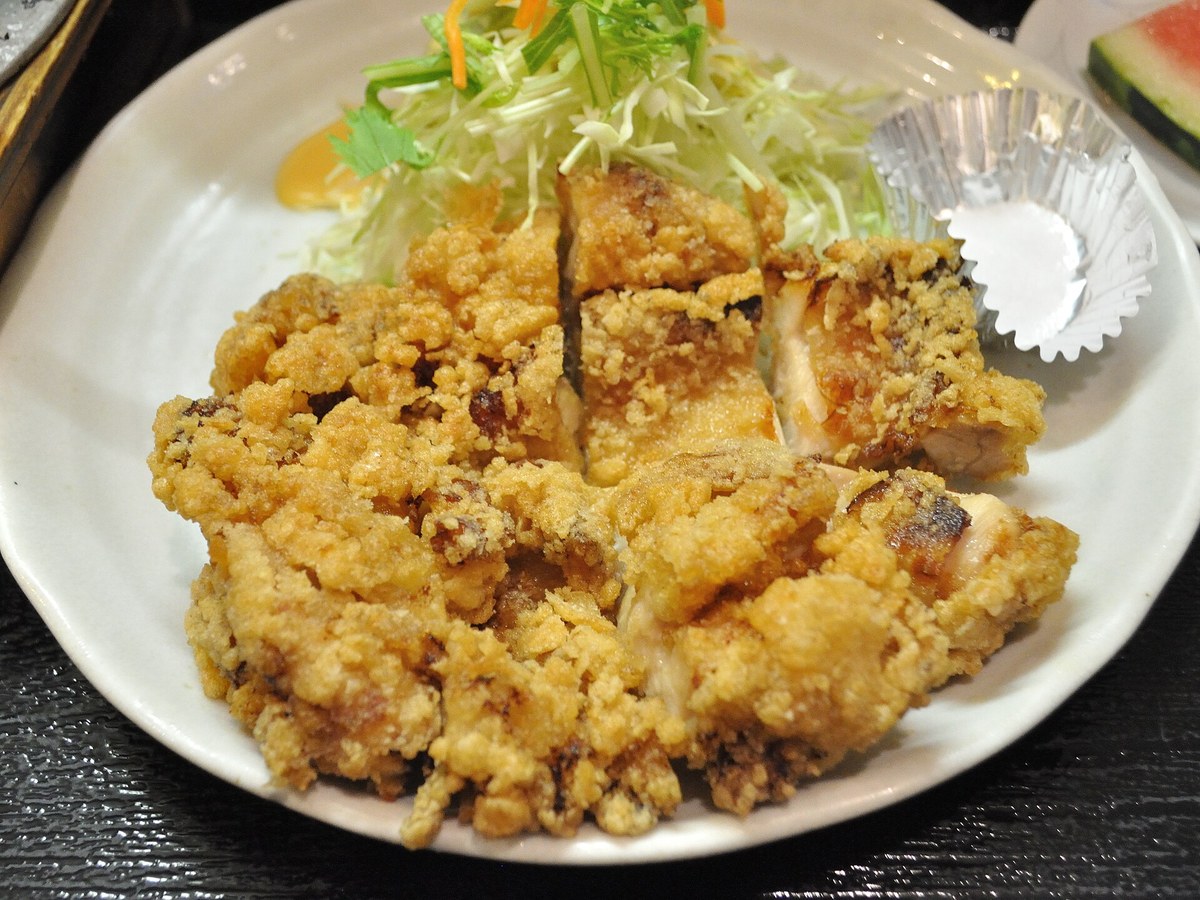
Karaage comes in bites. Sanzokuyaki comes in one enormous piece — a whole chicken thigh, marinated in garlic soy, crusted with potato starch and deep-fried until it crackles. The name is a pun: tori-age, fried chicken, also means 'to steal', so this is the bandits' chicken, sanzoku-yaki, from the Matsumoto and Shiojiri country under the Japan Alps. It has a standards body, a support team and its own day — March 9, the san-zoku date — and a Frisbee-size portion near Matsumoto Station costs less than most café lunches.
The chicken named after bandits
The name is a pun that stuck. Tori-age, fried chicken, also reads as 'to steal' — so the dish was named for the sanzoku, the mountain bandits of old (MATCHA). The format is unmistakable: instead of bite-size karaage, sanzokuyaki fries one whole large piece of chicken — typically the thigh — marinated in a garlic-infused soy sauce, coated with potato starch and deep-fried until the crust crackles and the inside stays juicy (Japan Travel / BESPES).
It belongs to the Matsumoto and Shiojiri area of Nagano. Shiojiri City's own website describes sanzokuyaki as a local dish that originated in Shiojiri, and both cities claim and feed it with pride — brown 'Matsumoto Sanzokuyaki' signs hang across Matsumoto, and March 9 is officially Matsumoto Sanzoku-yaki Day, built on the 3-9 reading of san-zoku.
A dish with standards
Sanzokuyaki is promoted, not just cooked. The Youth Division of the Matsumoto Restaurant Business Cooperative began pushing it in 2004, and in 2012 the Matsumoto Sanzoku-yaki Support Team was formed and set its own standards for what may carry the name (Japan Travel / BESPES). That is why the Matsumoto version is so consistent: garlic in the marinade, starch for the coating, one big piece, fried — not grilled, not baked.
Shops still improvise at the edges. Showa Shokudo, near Shiojiri Station, serves two pieces — a bone-in thigh and a breast — while Matsumoto houses lean on the single dramatic thigh, served over a bed of shredded cabbage or lettuce with a wedge of lemon to cut the richness.
Where to eat it, with prices
MATCHA's Matsumoto guide sends travellers to Karaage Center, which has two locations by Matsumoto Station and serves a Frisbee-size portion; prices across its menu run from 700 to 1,500 yen, with an English menu and takeout (MATCHA, updated 20 August 2025). In Shiojiri, Showa Shokudo's two-piece serving is the classic sit-down version.
Order it as a set with rice and miso soup and the economics are hard to beat: a full bandit's portion of fried chicken for the price of a station coffee-and-cake. It travels well, too — takeout boxes of sanzokuyaki are the Shinshu souvenir nobody regrets.
Why sanzokuyaki is Shinshu-only
Fried chicken is universal; sanzokuyaki is not. The name, the whole-piece format, the garlic-soy marinade and the starch crust were codified in the Matsumoto–Shiojiri corridor, with a support team, written standards, an official day and a city website claiming the origin. Karaage elsewhere in Japan is a different, bite-size product.
It also fits its landscape: a mountain province's pub dish, big enough to share, seasoned hard, designed to be eaten with beer after a day in the Alps foothills — bandit food, standardised by committee, exactly as Nagano likes it.
Sources — checked 13 November 2026
- Japan Travel (BESPES) — Nagano Gourmet Guide (published 25 March 2026, updated 13 October 2026)
- MATCHA — The 5 Best Local Dishes to Enjoy in Matsumoto (updated 20 August 2025)
Checked 13 November 2026 (stored links re-fetched and judged per product): reserved where the page says so, with an editorial review note kept per product. Press, PR and travel use stays outside the grant.
Editorial review 2026-11-13