In the heaviest snow country in Japan, one family firm does something no one else on earth does: it spreads salt-cured chillies out on the snow for three or four days, then ferments them with koji and yuzu for three years. The result is kanzuri — a bright red paste, milder and sweeter than its colour promises. The name is a trademark. The maker, in Myoko, Niigata, is the only one there has ever been.
Written with snow: kanzarashi
The agriculture ministry’s regional-cuisine record, whose recipe and process notes are provided by the maker itself, lays out the year. Chillies are planted in May, harvested from August to November and salt-cured. Then, around Daikan — about 20 January, the coldest point of the year — the salted chillies are spread out on the snow for three to four days. The step is called kanzarashi, or yuki-sarashi, snow-bleaching: the snow draws out the chillies’ bitterness, softens their fibres and raises their umami. The paste is even written 寒造里, “made in the cold”, after the season of its making.
After the snow, the chillies are ground and mixed with rice koji, yuzu and salt — the full ingredient list is just those four, with salt at 11 percent — and the mixture ferments and ages for three years before it is jarred. Myoko, in Niigata’s Joetsu region on the Nagano border, is a designated heavy-snowfall area; the ministry record says the paste was eaten to warm bodies chilled by the severe cold, and a local tradition traces the chilli itself to the warlord Uesugi Kenshin, said to have brought the precious plant back from Kyoto and shared it with farmers.
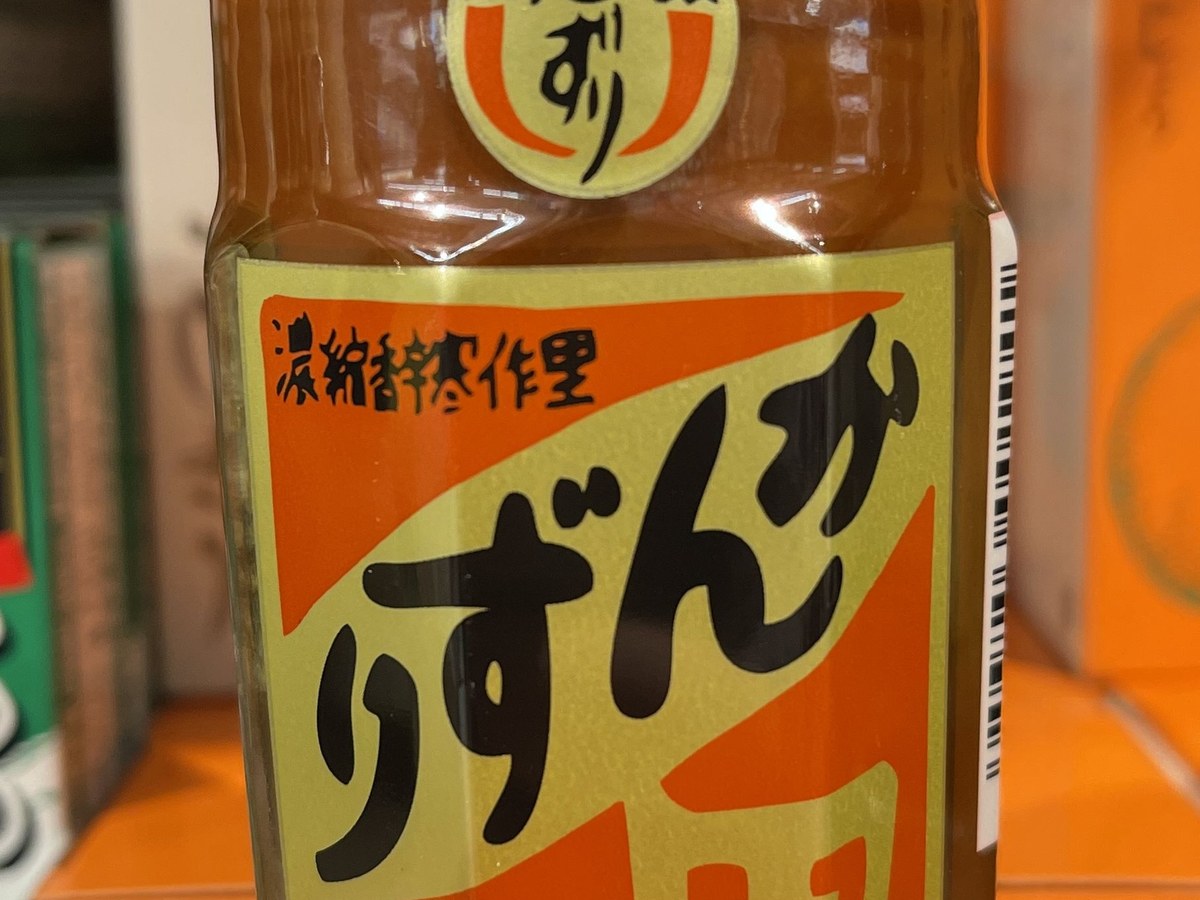
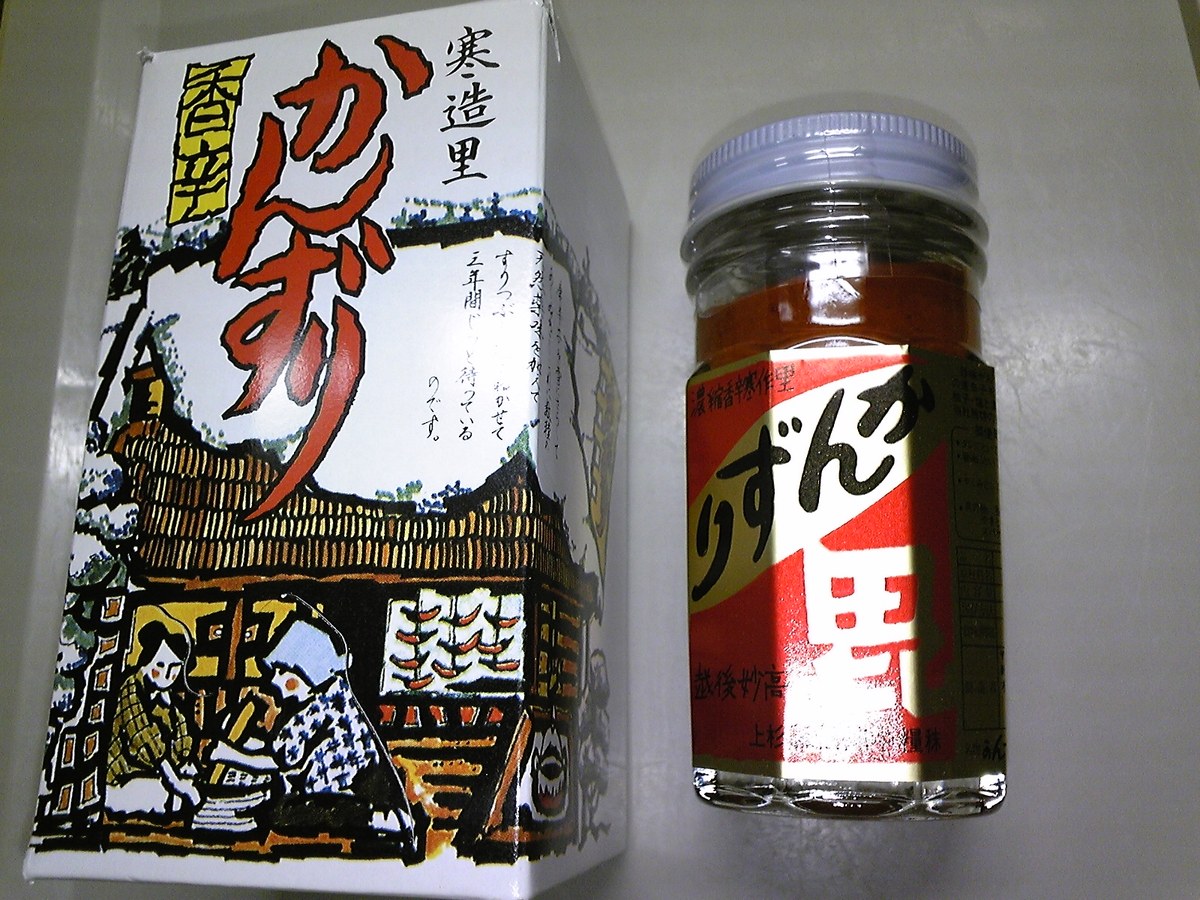
One maker, one trademark
Kanzuri is not a style that any producer may copy. The national industrial-property centre’s case record for Kanzuri Co. Ltd. states it plainly: the company, founded in 1966 in Myoko (the old Arai City), makes the paste from local chillies, koji, yuzu and salt and is the only maker of kanzuri in Japan. “Kanzuri” is the company’s registered trademark, and the chillies themselves are grown by local contract farmers — the prefecture’s record adds, 100 percent local.
That single-maker structure is why the paste survived as a curiosity instead of a commodity. The same case record shows the firm now supplying kanzuri as an ingredient to major food makers for crisps, ramen and liquid seasonings — collaborations that run on the trademark’s strength. A fresh variant, nama kanzuri, finished without stopping the koji’s fermentation, is served in high-end restaurants for its fresher yuzu aroma.
A 70-gram jar, priced
The standard jar is small because a little goes a long way and three years went into it. The maker’s Kanzuri Large, 70 grams, lists at 873 yen including tax at Yodobashi’s maker store, in stock on the day of checking; longer-aged and gift lines sit above it, including a seven-piece Myoko kanzuri set built around the same 70-gram jar. Abroad the same paste changes hands at several times the price — the three years and the snow are what is being paid for.
In the kitchen kanzuri behaves like a warmer, rounder yuzu kosho: the ministry record lists it stirred into nabe, ramen and pasta, dabbed beside sashimi and yakitori, and worked into dip sauces. The snow-bleaching is the difference you taste — the aggressive edge of the chilli is gone, and what remains is heat with sweetness under it.
Why kanzuri can only come from Myoko
Chilli pastes are made across Japan, and yuzu kosho — kanzuri’s closest relative, built from the same principal ingredients — is made across Kyushu. The article documented here is defined by a chain that exists in one place only: one heavy-snow city, one midwinter snow-bleaching step that needs that snow, one three-year fermentation, one trademark, and one maker. No second address can produce kanzuri, because the name and the method belong to the same single company in Myoko.
It is also a product the snow itself co-authors. Move the process somewhere milder and the defining step disappears; shorten the three years and the flavour does. Kanzuri is what happens when a snow-country pantry habit is industrialised just enough to be bottled, and not one degree more.
Sources — checked 13 November 2026
- MAFF, Our Regional Cuisines — Kanzuri, Niigata (record provided by Kanzuri Co. Ltd.)
- INPIT support case — Kanzuri Co. Ltd., Myoko (sole maker; trademark)
- Niigata Prefecture — Kanzuri Co. Ltd. (maker profile and workshop visits)
- Yodobashi.com maker record — Kanzuri Large 70 g
Checked 13 November 2026 (stored links re-fetched and judged per product): reserved where the page says so, with an editorial review note kept per product. Press, PR and travel use stays outside the grant.
Editorial review 2026-11-13