Order "Italian" in Niigata and no pasta arrives. What arrives is a mound of thick, chewy yakisoba noodles — stir-fried in sauce with cabbage and bean sprouts — drowned in a tomato meat sauce and served with white pickled ginger, to be eaten with a fork. It was invented in 1960 by the Mikazuki sweet-shop chain as a cheap, filling snack for the young, and Niigata has argued about it ever since, because the prefecture's other great house, Friend of Nagaoka, makes it completely differently. This is the story of Japan's most misleading menu word.
Yakisoba wearing a meat sauce
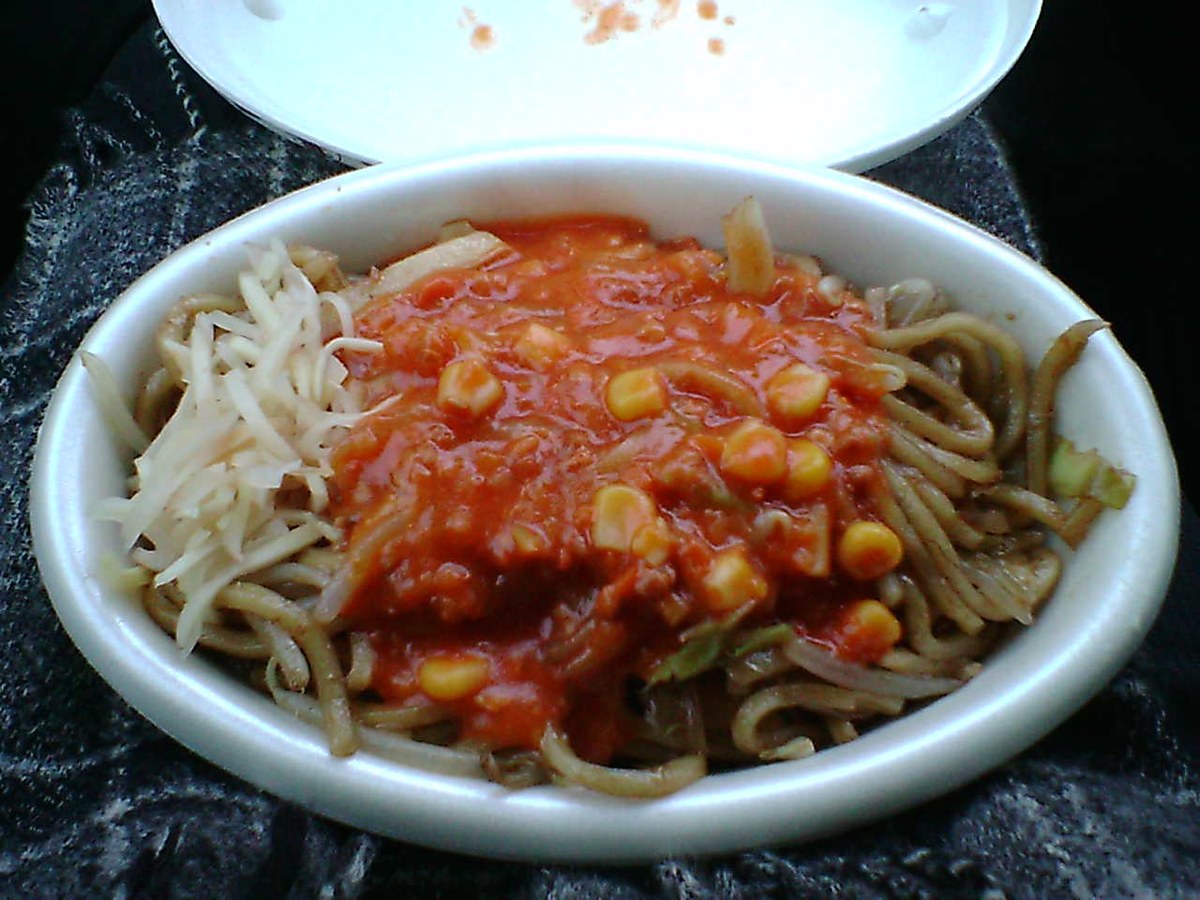
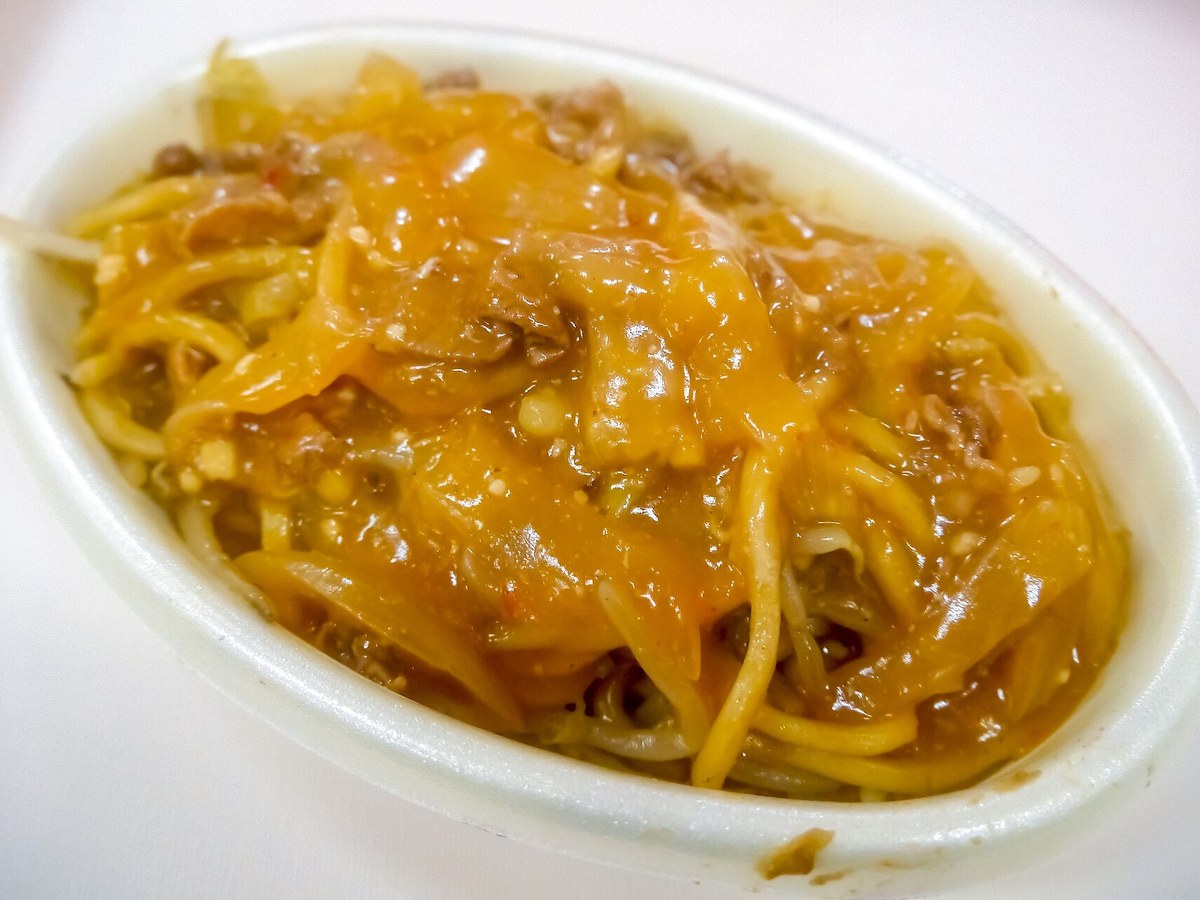
Italian, in Niigata, is a plate of thick house-made Chinese noodles stir-fried as sauce yakisoba with cabbage and moyashi bean sprouts, then covered with a generous ladle of tomato meat sauce (Mikazuki record, guides of 26 October 2026). At Mikazuki, the Niigata City chain that defines the dish, it is garnished with white salt-pickled ginger — not the red kind — and eaten with a fork, like the pasta it imitates. The noodles themselves are the point: part durum wheat, mixed to be exceptionally thick and chewy, so they stand up to two sauces at once.
The name is the whole joke and the whole history. In 1960 Italian food still read as novel and smart in Japan, and a meat-sauce topping was enough to earn a yakisoba the name "Italian". Nothing else about the plate is Italian at all — which is precisely why Niigata claims it so fiercely as its own.
A sweet shop invents a soul food, 1960
Mikazuki's roots reach back to a sweet shop founded in Furumachi, Niigata City, in 1909, selling the era's gentle treats. After the war it became a popular sweet cafe, and in 1960 its second-generation owner devised Italian: inspired by the sauce yakisoba popular in Tokyo and by the still-rare idea of Italian meat sauce, he wanted a new Western-style light meal that was cheap, filling and easy for young people to eat (Mikazuki record). The combination — teppan yakisoba below, simmered tomato sauce above — has been served ever since.
The dish grew with the chain into shopping centres and food courts across Niigata City; the Bandai Bus Center shop is the one travellers aim for, ten minutes from Niigata Station. Generations of Niigata schoolchildren have eaten Italian as an after-school snack, which is how a fast-food plate becomes a prefecture's soul food.
Two houses, two Italians — and what they cost
Niigata's Italian is a tale of two chains. Mikazuki rules the Kaetsu side around Niigata City: thicker noodles, a fruity tomato sauce, white ginger, a fork, and sweet-shop sides like soft-serve ice cream. Friend rules Chuetsu around Nagaoka: somewhat thinner noodles, a demi-glace-leaning meat sauce heavy with minced meat, red ginger, chopsticks — and a signature set pairing Italian with the chain's grilled gyoza (Mikazuki record). Locals defend their home house the way other prefectures defend baseball teams.
It remains fast-food cheap. The classic Italian in store runs about 440 to 480 yen, the curry Italian about 550 to 600 yen and the white (cream-sauce) Italian about 560 to 610 yen (guides, October 2026). For homesick Niigata natives, Mikazuki's frozen Italian is sold online: the Niigata Prefecture official shop on Rakuten lists three servings, about 318 g each, for 2,810 yen with free shipping.
Why Italian is Niigata-only
Yakisoba with meat sauce has occasionally been imitated elsewhere, but "Italian" as a codified dish — the fork, the white ginger, the thick durum-blended noodles, the two rival chains dividing one prefecture between them — exists only in Niigata. It was invented there in 1960, named there, and fought over there ever since; outside the prefecture the word on a menu means pasta.
It is also a document of 1960s Japan: a sweet shop in a snow-country port city reaching for a fashionable foreign word and building, under it, something entirely local that outlasted the fashion by sixty years.
Sources — checked 13 November 2026
- Mikazuki Italian records — two Niigata guides (published 26 October 2026)
- Rakuten — Niigata Prefecture official shop: Mikazuki frozen Italian (listing read November 2026)
Checked 13 November 2026 (stored links re-fetched and judged per product): reserved where the page says so, with an editorial review note kept per product. Press, PR and travel use stays outside the grant.
Editorial review 2026-11-13