In Murakami, salmon is not a specialty; it is the town's biography. The castle town in northern Niigata has a salmon word of its own — iyoboya, in the local dialect — a salmon museum of the same name, and a river, the Miomote, where townspeople achieved something the world had not done before: they brought a wild salmon run under management, fencing its spawning grounds in the Edo period so the fish would return forever. The product of that millennium is shiobiki, a whole salmon rubbed with salt and hung to dry in the winter wind until the flavour concentrates — still made by houses founded when the town's castle stood.
Tax for the emperor, a thousand years ago
The documentary trail begins at the imperial table. The history kept by Sennen Sake Kikkawa — Murakami's emblematic salmon house, established in 1626 and now in its fifteenth generation — records that ancient documents show Murakami salmon offered to the imperial court in Kyoto as tax payment at the beginning of the Heian period, giving the town's salmon culture a documented history of at least a thousand years. The Engishiki, the Heian court's own book of procedures, names salmon among the tax goods of Echigo Province, the old province Murakami belonged to.
That early value set the pattern: salmon was wealth. Kikkawa's account notes that in cold-summer years when the rice failed, great runs of salmon returned and saved the townspeople — a fish reliable enough to function as insurance, and later almost as currency, its tax revenues in strong years paying for schools and orphanages. A town that owes its survival to a fish organises itself around that fish, and Murakami did.
The samurai who fenced the river
The crisis came in the 18th century: overfishing thinned the Miomote's runs and poverty followed. The domain's answer was a samurai, Aoto Buheiji, who read the salmon's homing instinct — each fish returns to the river of its birth — and built a system on it: stretches of the Tanegawa, a Miomote tributary, were fenced as spawning-only reserves, other stretches divided between fishing and closed water, and fishing in the protected zones made illegal. The maker's history calls the result plainly: in the Edo period Murakami succeeded in the world's first natural hatching and breeding undertaking for salmon.
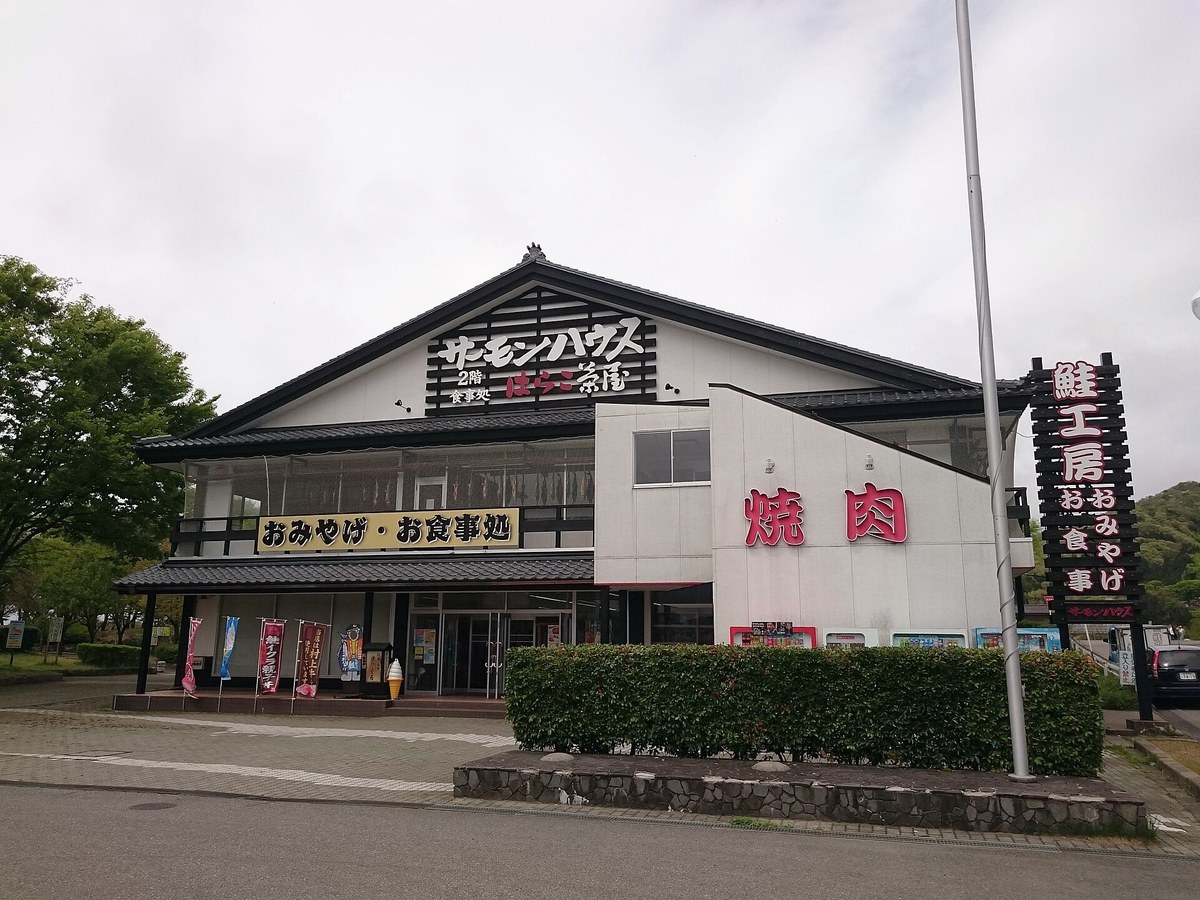
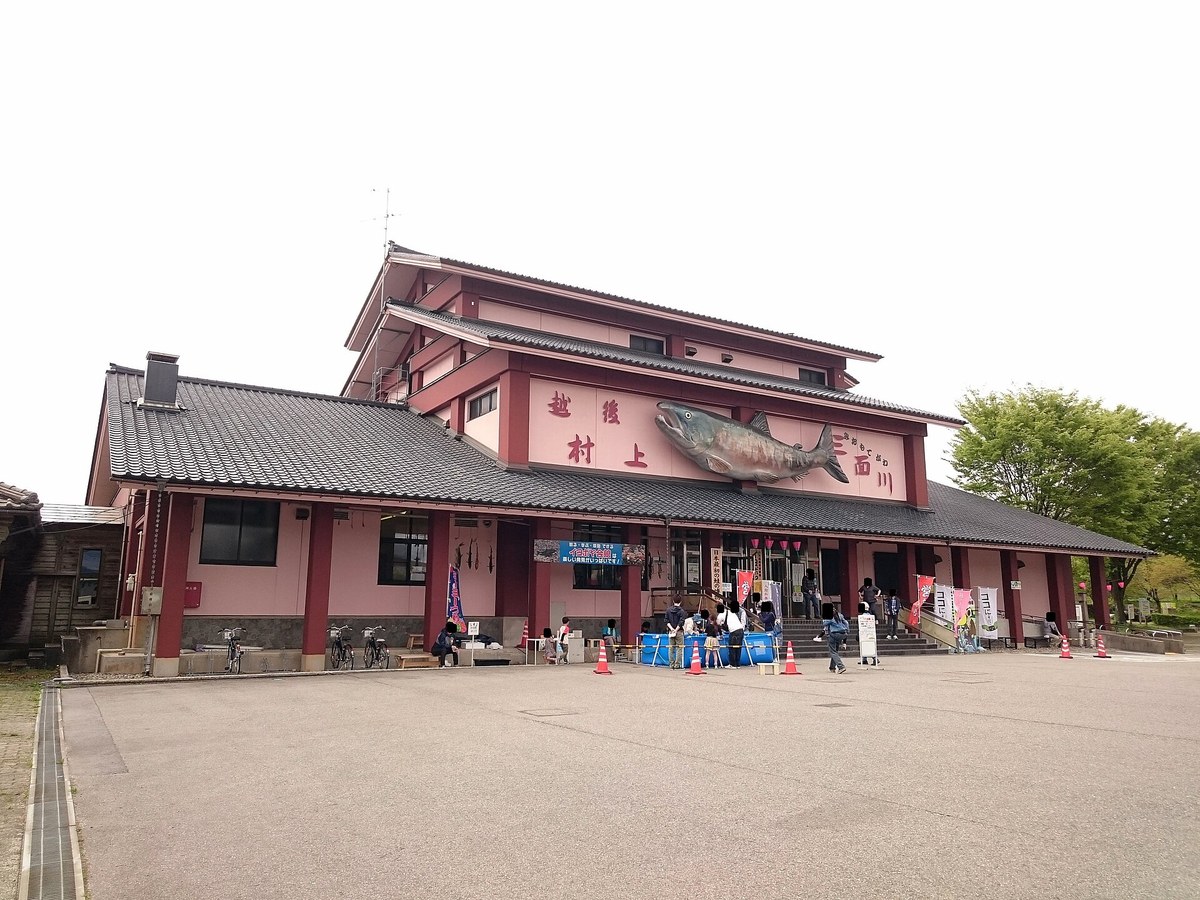
The scheme is still legible in the town. The traditional iguri-ami fishing on the Miomote runs each year from late October into December, the salmon park keeps Buheiji's statue, and the Iyoboya Museum by the river teaches the cycle the fences protected. Modern returns have fallen with a warming sea — national reporting in 2026 put the Miomote catch far below its level of a decade earlier — which makes the conservation half of Murakami's tradition the live one again.
Shiobiki: one fish, salt, winter wind
The preparation the town is eaten by is shiobiki-zake. A whole salmon is rubbed with salt by hand, rested, then hung head-up in the cold dry wind of the Murakami winter until fermentation and drying deepen it into something between a cured fish and a ham. Kikkawa's shop — its building a registered tangible cultural property — hangs its shiobiki from the ceiling beams in rows, and visitors walk under a canopy of salmon. The hometown-tax listing for Kikkawa's cut set describes the work line in the town's own words: selection, hand-salting, fermenting, maturing, cutting and packing, all done by Murakami craftsmen.
Around the flagship stands the cuisine the town counts at a hundred dishes: sake-bitashi (salmon steeped in sake), harako the roe, head and cheek and skin each with its dish. Kikkawa's restaurant house Izutsuya serves set courses that climb from seven salmon dishes to over twenty — the fullest edible statement of the iyoboya idea, that in Murakami the salmon is not an ingredient among others but the whole menu.
Buying a whole fish
The standard grand purchase is the whole shiobiki: the Japan Post online shop lists a Murakami shiobiki salmon, one whole fish of 1.7 kg, frozen, at ¥12,200 including tax (shipping extra), from a Niigata processor — the form in which the fish leaves town for New Year tables across Japan. For a first taste, Kikkawa's own cut set — three 50 g slices of its shiobiki — circulates through the hometown-tax catalogues, and the maker's Murakami shop sells the full range under the hanging fish themselves.
What to check on any 'Murakami salmon' listing: the maker and the method. Shiobiki in the Murakami manner means salt-rubbed and wind-dried by a named town house; a generic salted salmon fillet using the town's name borrows the thousand years without doing the work. And buy the season's story with open eyes — the town's wild runs are diminished, which the honest listings acknowledge, and the culture, the curing and the craft are what the price is actually for.
Sources — checked 12 November 2026
- Sennen Sake Kikkawa — About Kikkawa / History of the Miomote River and Salmon (maker's official history)
- MATCHA (official Japan travel guide, locally) — Salmon fishing in Murakami, Niigata
- JAL Furusato Nozei — Sennen Sake Kikkawa shiobiki salmon set (Murakami City, Niigata)
- Japan Post Shop — Murakami shiobiki salmon, whole fish 1.7 kg (checked 12 November 2026)
Original prose and official links only; no source text or maker media reproduced. Photos are credited Creative Commons works, not product photographs.
Editorial review 2026-11-12