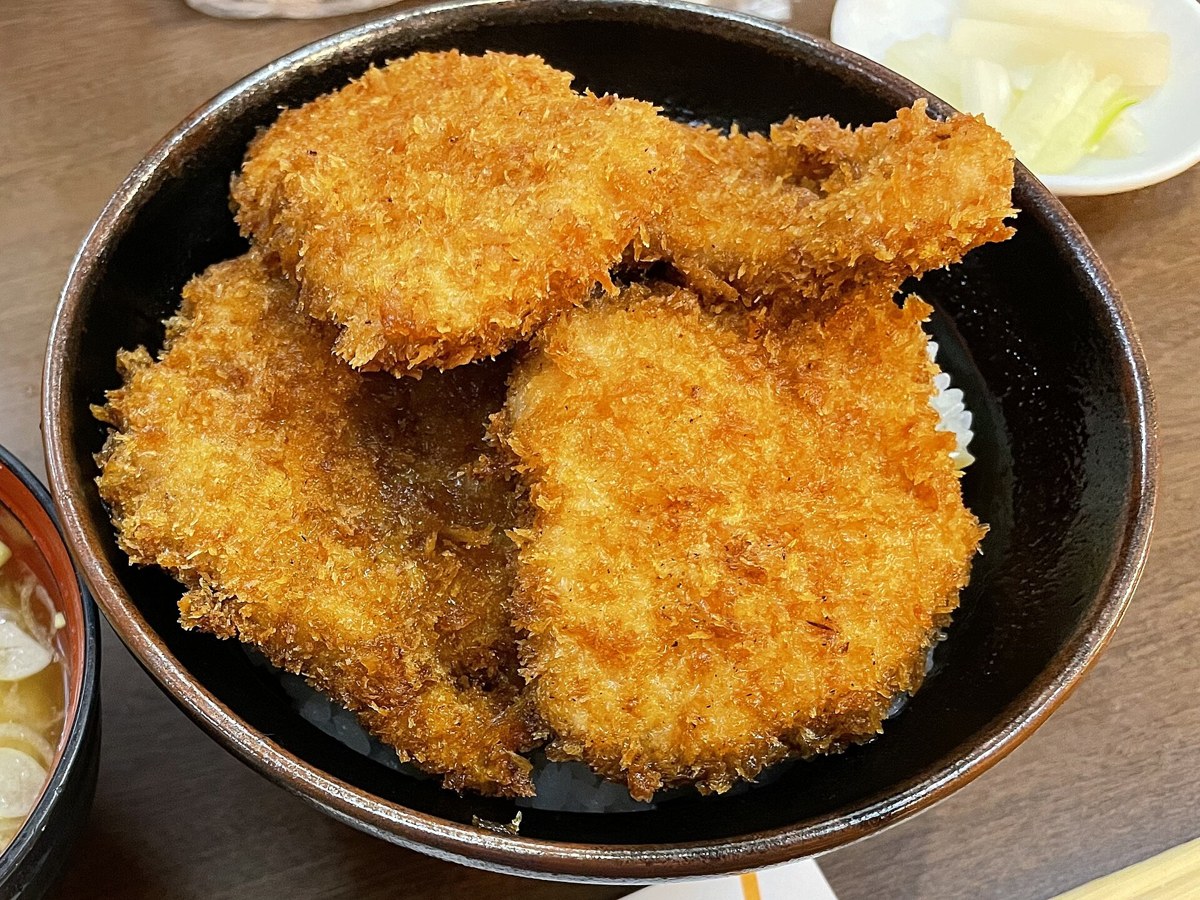
Every other katsudon in Japan arrives under a blanket of egg. Niigata's does not. Tarekatsu don is a bowl of plain white rice covered with thin pork cutlets that were fried seconds earlier, dipped — not simmered, dipped — in a warm sauce of soy, mirin, sugar and sake, and laid down still crackling. No egg, no onion, no cabbage. It is the simplest bowl in this collection, and one of the most exactly local: one city, one district, one sauce.
Furumachi, the port district that fried
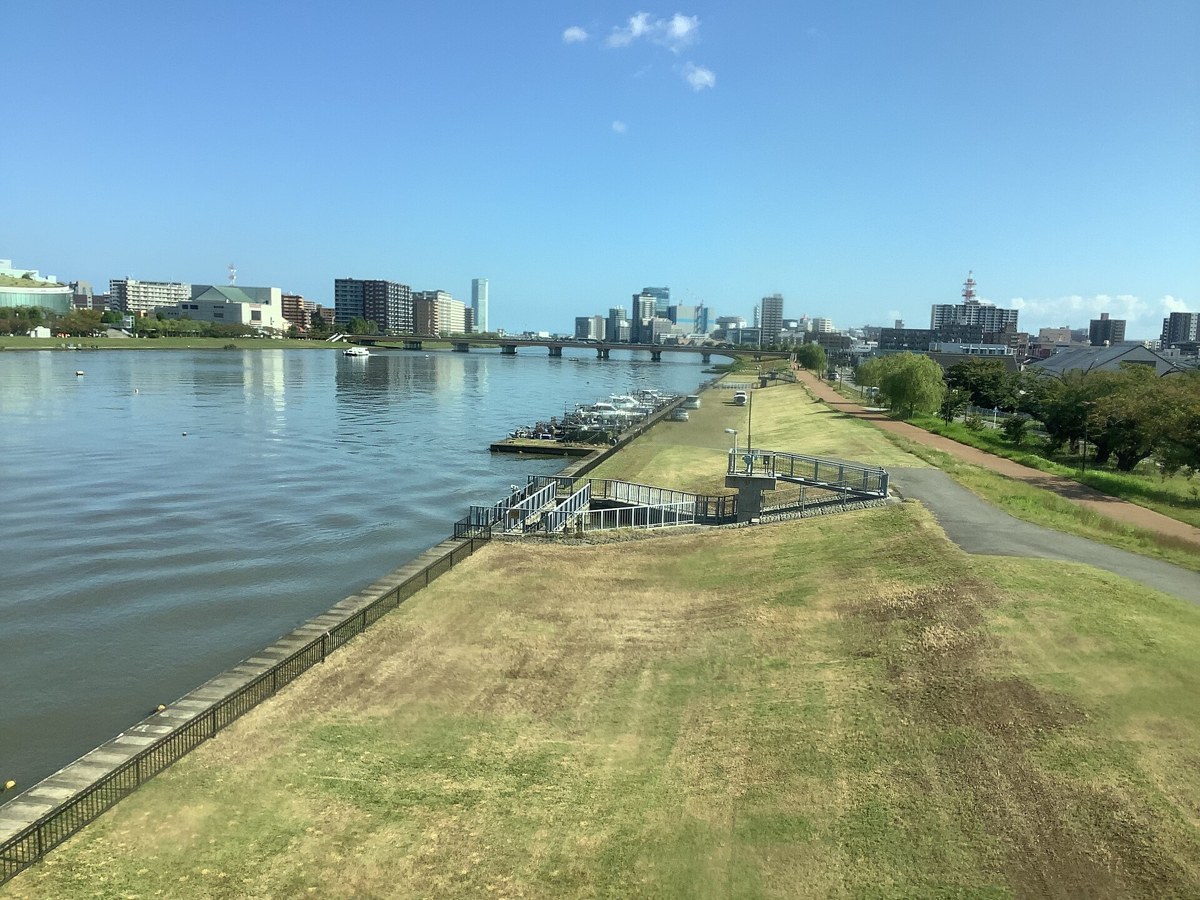
Niigata grew rich as a Kitamae-bune trading port, and its Furumachi district grew up serving the port: restaurants, entertainment, and some of the city's earliest Western-style cooking. Fried cutlets were a modern novelty in the early Showa period, and in Furumachi — at the shop now recognised as Tonkatsu Taro, on Furumachi-dori 6-bancho — a cook began dipping freshly fried thin cutlets in a soy-based sauce and laying them over rice. The checked guide, citing the prefecture's tourism association and the shop's own standing, credits that counter as the dish's birthplace.
The idea travelled the way restaurant ideas do: through apprentices. Cooks trained at the original shop opened their own, each carrying the method — thin cutlet, brief dip, plain rice — and for years the city simply called the bowl sauce katsudon, the same generic name used in Fukui and Fukushima. A second-generation owner eventually coined tarekatsu don to mark the difference, and the name stuck: Niigata's sauce is a light soy tare, not the thick Worcestershire style of Aizu or Fukui, and there is no cabbage bed and no egg anywhere in it.
Thirty grams at a time
The farm ministry's regional-cuisine register preserves the dish in Niigata City's own submitted recipe, and its proportions are the dish in miniature: sixteen slices of pork at thirty grams each for four servings, a tare of eighty millilitres each of soy sauce, mirin and sake with sugar and a square of kombu, simmered for a minute. Four thin cutlets a bowl is the register's arithmetic — the cutlet is deliberately thin, about five millimetres before coating, so it fries fast, stays tender and carries the tare on its surface instead of drowning in it.
The eating order is part of the form. Regulars, the guide notes, try the first cutlet plain, before extra sauce, so the pork speaks first; the rice underneath — Niigata's own Koshihikari, the prefecture's pride — absorbs the tare that runs off the cutlets and becomes the bowl's second course. Nothing else is added. That restraint is why locals file tarekatsu don under weekday lunch rather than celebration food, however famous it has become.
What a bowl costs
The founding line prices by the cutlet, which makes choosing easy. At Tonkatsu Masachan — whose founder trained at Tonkatsu Taro and opened in Nuttari in 1965 — the official menu, as carried by a checked travel note, runs from a two-cutlet mini bowl at ¥880 through three cutlets at ¥1,133 and the regular four-cutlet bowl at ¥1,386 to the five-cutlet special at ¥1,771, tax included, with a three-piece tenderloin bowl at ¥1,518. At the origin itself, Tonkatsu Taro serves lunch only, 11:30 to 14:30 until the stock runs out, closed Wednesdays and Thursdays, with bowls in the ¥1,300–2,000 range — a shop small enough to have been named a Michelin Bib Gourmand in the guide's Niigata 2020 special edition.
Go early and go hungry in proportion to your ambition: the five-cutlet special covers the rice entirely, which is the point of it. Niigata's standing stories in this collection are a snow-aged sake storehouse and a bamboo-leaf dumpling; tarekatsu don gives the prefecture its savoury centre — the lunch its own city submitted, recipe and all, to the national register of regional cuisines.
Niigata's shelf, filled in the middle
Set the bowl beside Niigata's two standing stories and the prefecture's table finally has a centre. The snow storehouse gave it patience and the sasa dango gave it sweetness; tarekatsu don gives it appetite — the everyday, repeatable, ninety-year-old lunch that the city itself chose to submit to the national register. Regional dishes often survive as festival food. This one survived as Tuesday.
Order the regular four-cutlet bowl first, plain rice, no extras, and eat the first cutlet before the sauce soaks through. That single bite is the whole argument of Furumachi: a modern cutlet, a traditional tare, and Japan's most famous rice, meeting without anything in between.
Sources — checked 10 November 2026
- Tarekatsu Don: Niigata's Soy-Sauce Katsudon Guide (checked guide citing the Niigata Prefecture Tourism Association and the founding shops)
- MAFF, Our Regional Cuisines: Tare Katsu Don (Niigata City submission)
- Tonkatsu Masachan menu prices (checked travel note carrying the shop's official menu)
- GOOD LUCK TRIP: Tonkatsu Taro, birthplace of tarekatsudon
Original prose and official links only; no source text or maker media reproduced. Photos are credited Creative Commons works, not product photographs.
Editorial review 2026-11-10