Iya soba breaks, and that is the point. In the Iya valley of western Tokushima — a gorge country of vine bridges and near-vertical farms, where rice barely grows — the soba is made from the valley’s own buckwheat with no binder at all, so the noodles come out thick, dark and short, snapping where an ordinary noodle bends. Locals call it soba-kiri, cut soba, without embarrassment: the fragility is the certificate that nothing but buckwheat and water went in.
No binder: the noodle that cuts short
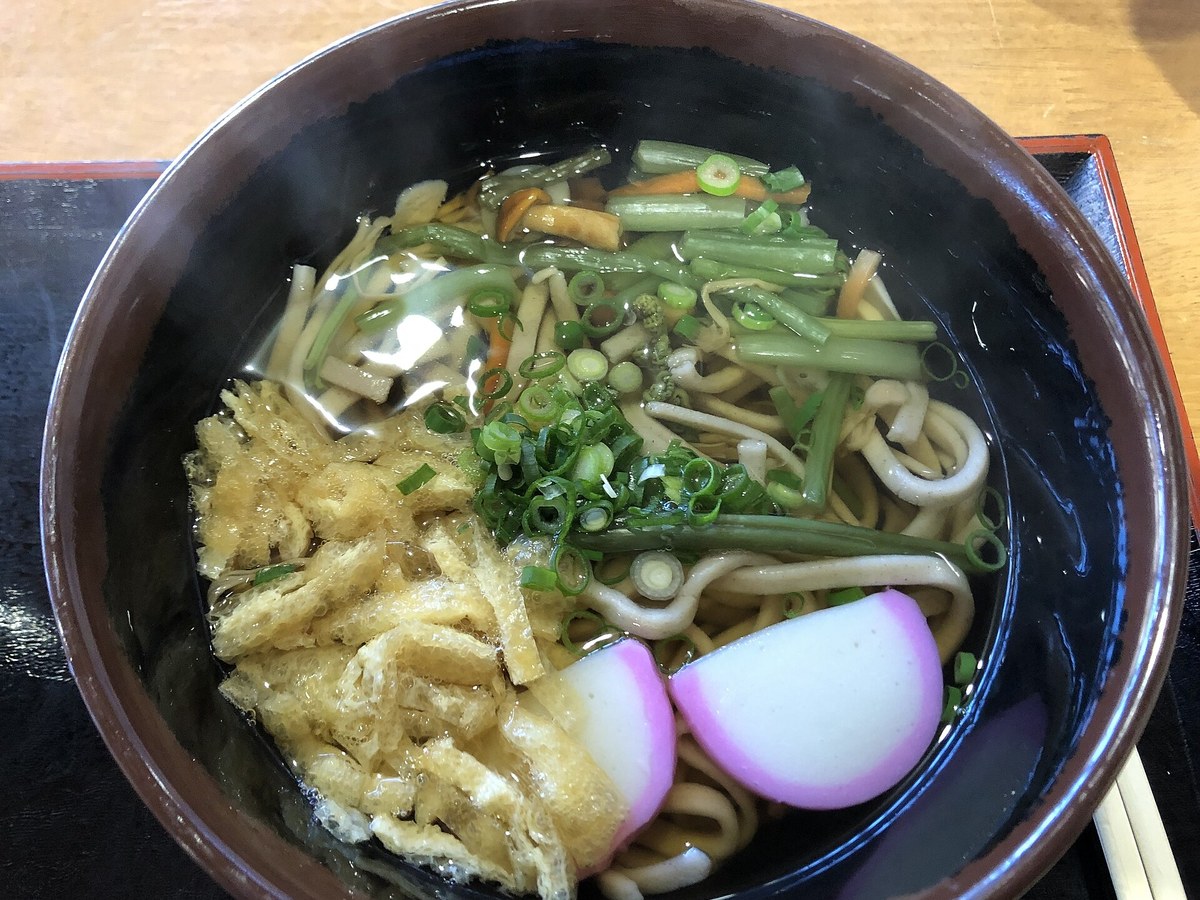
The agriculture ministry’s regional-cuisines record gives the Iya method in full, and it is a study in what is left out. Sifted buckwheat flour is worked with water alone — no wheat, no yam, no binder of any kind — kneaded again and again until it firms, rolled to about two millimetres and cut about two millimetres wide. Boiled for just two to three minutes and rinsed cold, the noodles go into a dashi of kombu, niboshi and katsuobushi sharpened with light soy sauce and mirin, under toppings of thin-sliced kamaboko, aburaage cut in short strips and chopped leaf negi.
Because nothing binds them, the noodles are thicker and far more fragile than ordinary soba, and they reach the bowl short. The valley embraces the fact in the dish’s second name: soba-kiri, cut soba. A noodle that never breaks would be the suspect one in Iya — it would mean someone had helped the buckwheat behave.
The valley that buckwheat fed
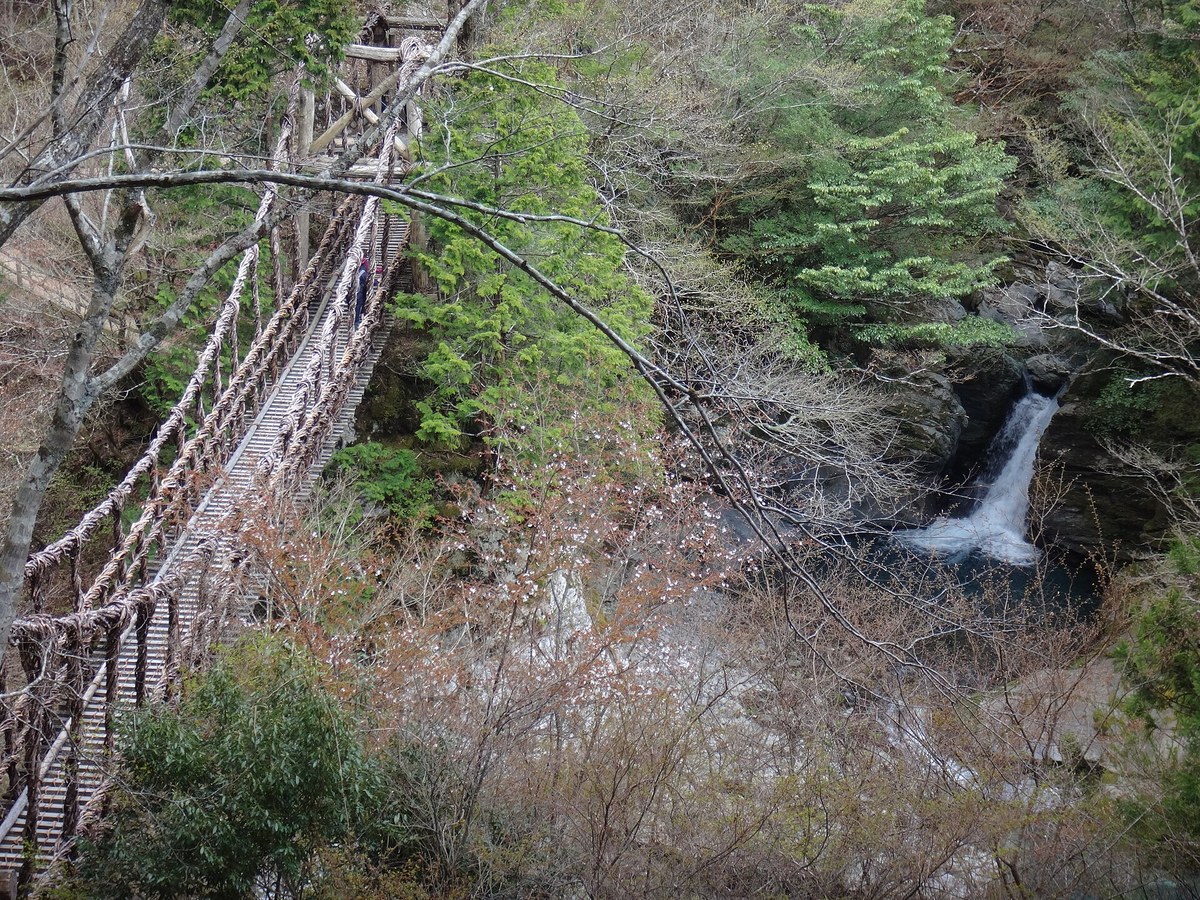
Iya is one of Japan’s famous hidden valleys: a deep gorge of the Iya River in Miyoshi City, crossed for centuries by kazurabashi — bridges woven from mountain vines — and farmed on slopes so steep the fields look tipped. Rice grows poorly in such country, and the ministry’s Tokushima record files Iya soba among the soba dishes, alongside soba-mai zosui, that a rice-poor valley built its food culture on. Buckwheat tolerates the thin soil and the sharp day-night temperature swings of the gorge, and Iya made it a staple and then a speciality.
The origin the valley tells, and the ministry record repeats, reaches back to the Genpei War: Heike fugitives who fled into Iya after their house fell are said to have first grown buckwheat there. Whatever the seed’s first sowing, the dish is now the city’s certified taste of itself — a Miyoshi City speciality, recognised under the agriculture ministry’s SAVOR JAPAN programme in 2016, and made, in the local telling, with 100 percent valley-grown flour.
Eating it in the gorge
The bowl in this story’s first photograph is the valley standard: the dark noodles in hot broth under aburaage, twin slices of kamaboko, negi and mountain greens, steam still rising. Valley restaurants, inns and hotels serve it within sight of the river that cut the gorge, often beside the valley’s other soba dishes and river fish; the second photograph is the place itself, the double vine bridges of Oku-Iya slung over the gorge — the crossing generations of soba growers used to reach their slope fields.
Go in knowing the etiquette of a fragile noodle: lift gently, eat promptly, and do not wait for the photograph while the broth softens the strands. The shortness in the bowl is not the kitchen’s failure. It is the recipe, served as written since long before the road tunnel made the valley easy to reach.
Taking Iya home, and what it costs
The dried form travels well, and Tokushima’s noodle makers sell the valley in packets. Okamoto Seimen’s Iya Soba — the yamabound dried noodle — lists at Yodobashi at 411 yen including tax for 300 g, in stock; the same maker’s stone-milled 100 percent Iya soba, 200 g of pure buckwheat, lists at 442 yen, and the Japan Post shop’s year-end gift listing prices the stone-milled set with tsuyu at 2,980 yen including tax and shipping against a 3,320 yen list price.
Buy the pure form if you want the valley’s own test at home: 100 percent buckwheat, no salt, boiled briefly and rinsed cold, exactly as the ministry record sets out. In the valley itself, the restaurant bowl is the standard lunch of the gorge road — order it where the vine bridges are on the itinerary, and the place and the dish explain each other.
Sources — checked 13 November 2026
- MAFF, Our Regional Cuisines — Iya Soba (Tokushima)
- Wikipedia — Iya Soba (definition, origin tradition and certification)
- Yodobashi — Okamoto Seimen Iya Soba (300 g)
Checked 13 November 2026 (stored links re-fetched and judged per product): reserved where the page says so, with an editorial review note kept per product. Press, PR and travel use stays outside the grant.
Editorial review 2026-11-13