While the rest of Japan bred its wagyu ever fattier, Iwate kept a red one. Iwate Tankaku is the beef of the Japanese Shorthorn — a breed that makes up two tenths of one percent of the beef sold in Japan — raised the old northern way: calves go up to mountain pasture with their mothers for the summer and come down to the barn for the winter. The meat barely marbles. What it has instead is fibre, chew and a deep beef flavour that chefs keep rediscovering.
A trademark on a red breed
"Iwate Tankaku Wagyu" is a regional collective trademark (No. 5029320, held by the JA Zennoh federation) that may be carried only by Japanese Shorthorn cattle fattened inside Iwate Prefecture. Iwate is the breed’s stronghold by a wide margin: about 1,500 shorthorn calves are born there each year, and more than 1,300 of them are raised within the prefecture.
The breed itself was fixed in 1956 by crossing the Nanbu cow — the short-legged draught cattle of the old Nanbu domain, long used to haul ore and goods through central and northern Iwate — with the imported Shorthorn. The result is a big, quiet, reddish-brown animal, and a very rare one: Japanese Shorthorn is about 0.4 percent of Japan’s wagyu breeds and about 0.2 percent of all beef sold in the country.
Summer mountain, winter village
The Iwate method has a name of its own: natsuyama-fuyusato, summer mountain, winter village. Calves born in the barn in late winter spend their first months indoors, then go up to open pasture with their mothers — the yama-age, the mountain raising — where they graze, and mate naturally, through the green season. When the snow comes they return to the barn in the village to be finished. No growth or hormone agents are used under the trademark.
That life writes itself into the meat. Pasture-raised shorthorn is firm-fibred and lean, and its red meat is rich in the amino acids that read as pure beef flavour. Where a Japanese Black steak is about rendered fat, a tankaku steak is about the meat itself — which is why French and Italian chefs in the capital have become some of its loudest advocates, and why sub-brands such as Iwaizumi Tankaku and Morioka Tankaku sit under the prefectural name.
What it costs, and the bento that proves it travels
A Tokyo wagyu wholesaler’s priced record gives the scale: shorthorn shoulder and shoulder loin for sukiyaki, drawn from Hokkaido and Iwate production, sells at 5,400 yen including tax for 500 grams, shipping included. In Morioka itself, tankaku steak and sukiyaki at the city’s beef restaurants run from about 5,000 yen.
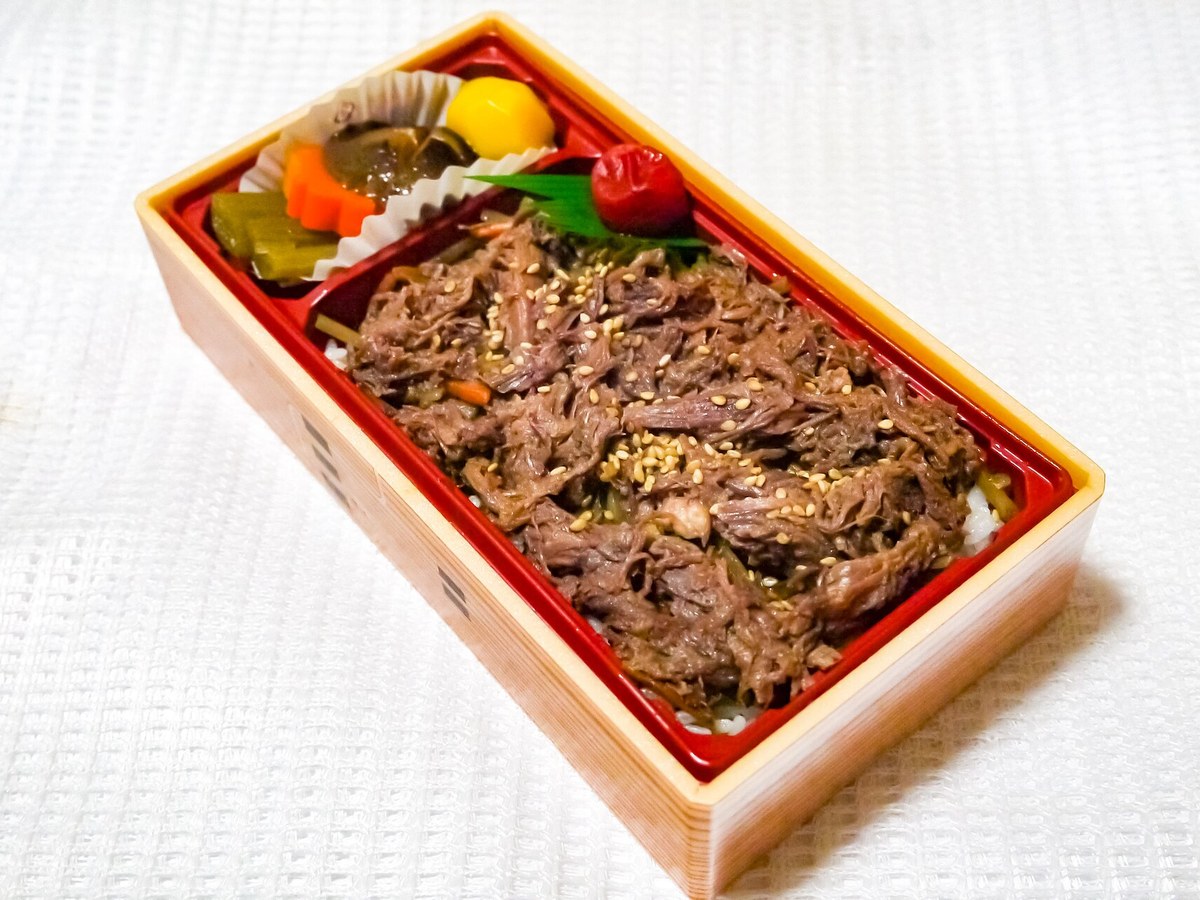
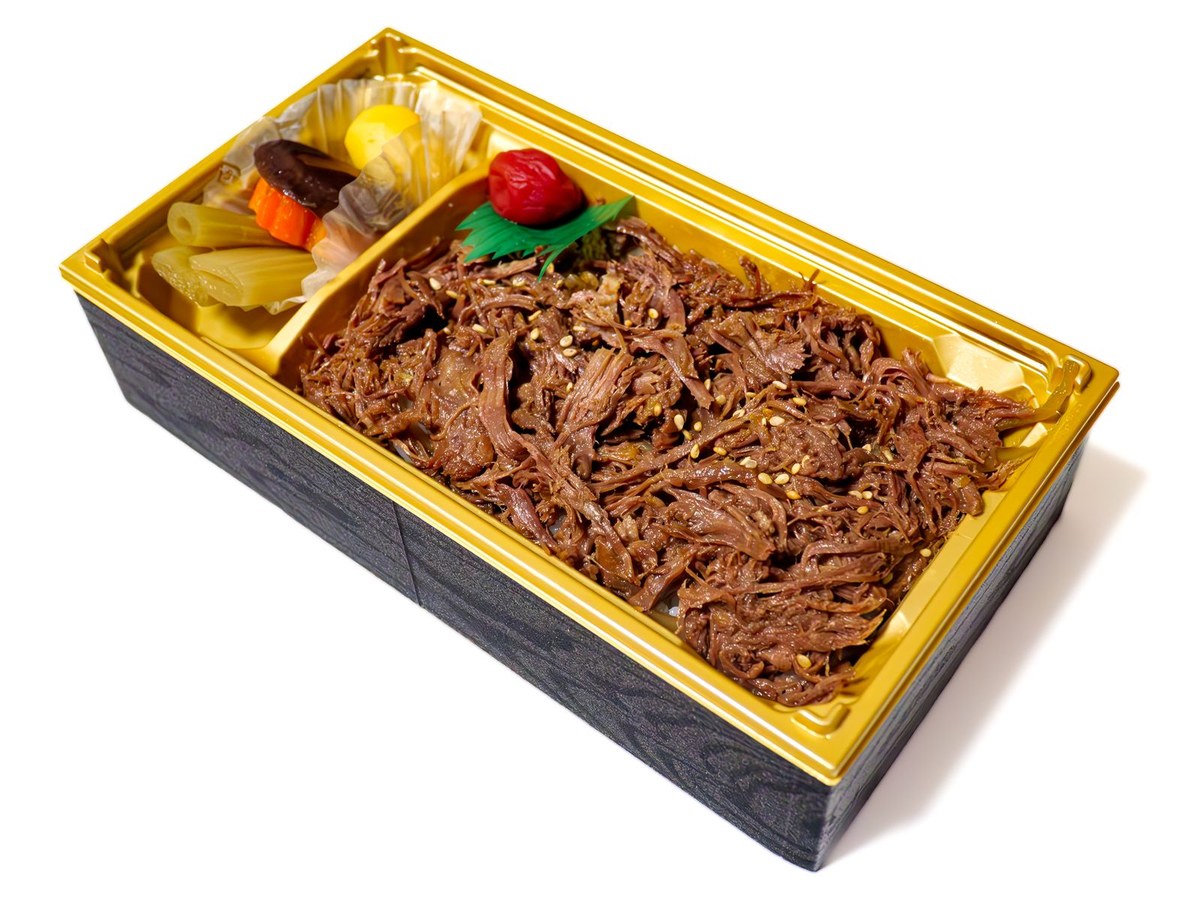
The humblest proof of the beef’s standing is in this article’s photographs: the yawaraka-ni bento of Niku no Fugane, a butcher in Iwate Town, heaps the shorthorn tender-simmered over rice — a station-bento style box so sought after that it is bought at a Shinjuku department-store food hall in Tokyo. A beef that began as mountain draught cattle now travels first class, simmered, in a wooden box.
Why tankaku belongs to Iwate
Japanese Shorthorn are raised in a handful of northern prefectures, and the breed alone is not the article. The article documented here is defined by a chain that exists in one prefecture only: the Nanbu-cow homeland, Japan’s largest shorthorn herd by far, the summer-mountain winter-village rearing method, and a regional collective trademark that reserves the Iwate Tankaku name to cattle fattened in Iwate. The definition is the address.
It is also a deliberate counter-philosophy. In a market that grades beef by marbling, Iwate kept the breed that refuses to marble, grazed it on mountainsides, and trademarked the result. Tankaku is what wagyu looks like when a prefecture decides flavour matters more than fat.
Sources — checked 13 November 2026
- Wikipedia — Iwate Tankaku Wagyu (trademark, production and the summer-mountain method)
- ROJI Nihonbashi (Maruyoshi Shoji) — Shorthorn shoulder sukiyaki 500 g, Hokkaido/Iwate
- Iwate gourmet guide — Tankaku beef restaurants and prices (updated November 2026)
Checked 13 November 2026 (stored links re-fetched and judged per product): reserved where the page says so, with an editorial review note kept per product. Press, PR and travel use stays outside the grant.
Editorial review 2026-11-13