Romen is the noodle Ina invented to solve a storage problem: thick Chinese noodles steamed so they would keep, then stir-fried with mutton and cabbage in a sauce each shop keeps to itself. It is neither ramen nor yakisoba, the eater finishes the seasoning at the table, and outside the Ina valley almost nobody has heard of it — inside the valley it is school lunch, festival food and civic pride at once.
A steamed noodle, finished at the table
A romen starts with the noodle. It is a medium-thick Chinese noodle of wheat flour, kansui and vitamin B2 for colour, made deliberately low in moisture and then steamed — usually by Hattori Seimenjo, the Ina mill whose steamed noodles most shops use. Steaming browns the noodle and firms it well beyond an ordinary yakisoba mushi-men, and that chew is the dish’s foundation.
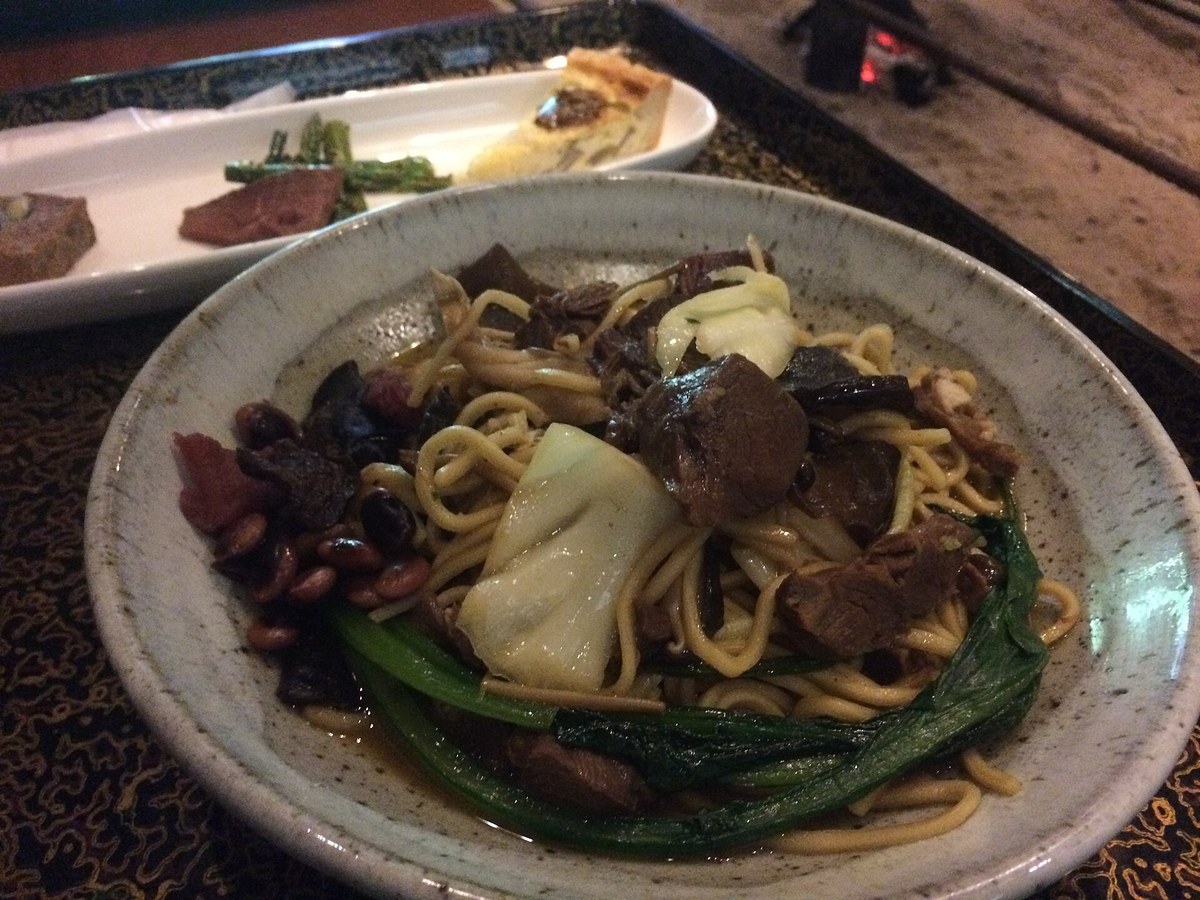
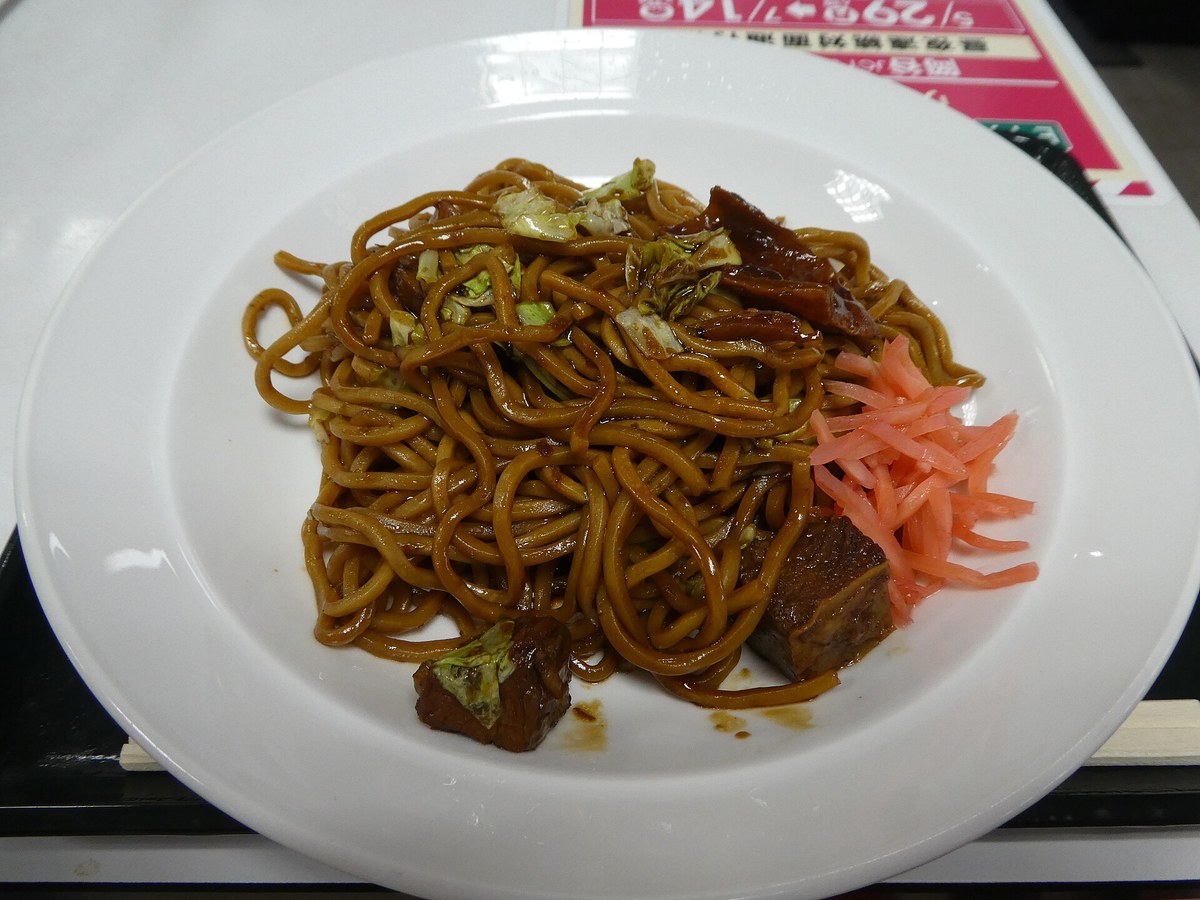
Onto it go mutton, cabbage and kikurage mushrooms, stir-fried with garlic in the shop’s own seasoning — a soup, a Worcestershire-style sauce, a house tare — and the plate lands unfinished on purpose. The encyclopedia record is explicit that the diner completes the flavour: ichimi or shichimi chilli, sauce, vinegar, sesame oil, chilli oil, grated garlic. Our two photographs are the family’s range: a deer-meat romen at an inn in Hase, Ina, and a beef-suji romen at a motorway service area.
Banri, 1955: a noodle that would keep
Romen was created in 1955 by Ito Waichi, master of the Ina Chinese restaurant Banri, working with Hattori Yukio of the noodle mill. Ito had trained in Tokyo and Yokohama and come home to a small restaurant in an age when iceboxes were still the norm and fresh noodles would not survive to the next day. Steaming the noodles so they kept was his answer — and then he built a dish on the steamed noodle’s peculiar flavour.
The fillings were what Ina had. Mutton was the by-product of the sheep the district kept for wool, salted so it kept too; cabbage was the local crop. The dish was first sold as charomen — fried-meat noodles — and lost its first syllable as it spread. Ito deliberately left the romen name free for anyone to use, so the dish walked out of Banri into rival shops, home kitchens and school lunches.
The valley that adopted a noodle
Ina City formally took romen up as a town-promotion dish in 1994, founding the committee that is now the Ina Romen’s Club, and a monument marking the dish’s birthplace went up near Banri in 2004. The valley keeps a Romen Day — 4 June, a pun on mushi, “steamed” — when shops discount the bowl, and the club’s spring festival serves the dish by the thousand.
The forms have multiplied under the one name: soup romen half-drowned like ramen, dry romen like sauce yakisoba, curry romen, chilled romen. Mutton stays the reference, but pork and beef versions exist under their own names — ton-romen and the rest — and the deer romen in our photograph, made with locally hunted venison and local flour at a Hase inn, shows how far the valley’s cooks take the local brief. The Agency for Cultural Affairs has certified romen as a 100-Year Food.
Eat it in Ina, season it yourself
Romen is an Ina dish: the shops cluster in the city and the valley, and the honest price record is the club’s own — at the Ina Romen spring festival the bowl was served at ¥700 for adults, with school-age children eating free, from a run of two thousand bowls. Everyday shop prices vary with size and topping, and most shops let you choose the noodle quantity.
To cook it at home the valley sells the kit: souvenir and home sets of the noodles (frozen versions included), the seasoning and in some cases the mutton are on sale at Ina supermarkets, souvenir shops, the bus terminal and parking areas, and locals more simply buy Hattori’s mushi-yakisoba noodles and season their own. There is even a romen-man, a Chinese bun filled with dry romen.
Sources — checked 14 November 2026
- Romen — encyclopedia record (the steamed noodle, the 1955 Banri origin, the free name)
- Ina Romen spring festival — NBS Nagano Broadcasting report (the ¥700 bowl, the 100-Year Food certification)
Checked 14 November 2026 (stored links re-fetched and judged per product): reserved where the page says so, with an editorial review note kept per product. Press, PR and travel use stays outside the grant.
Editorial review 2026-11-14