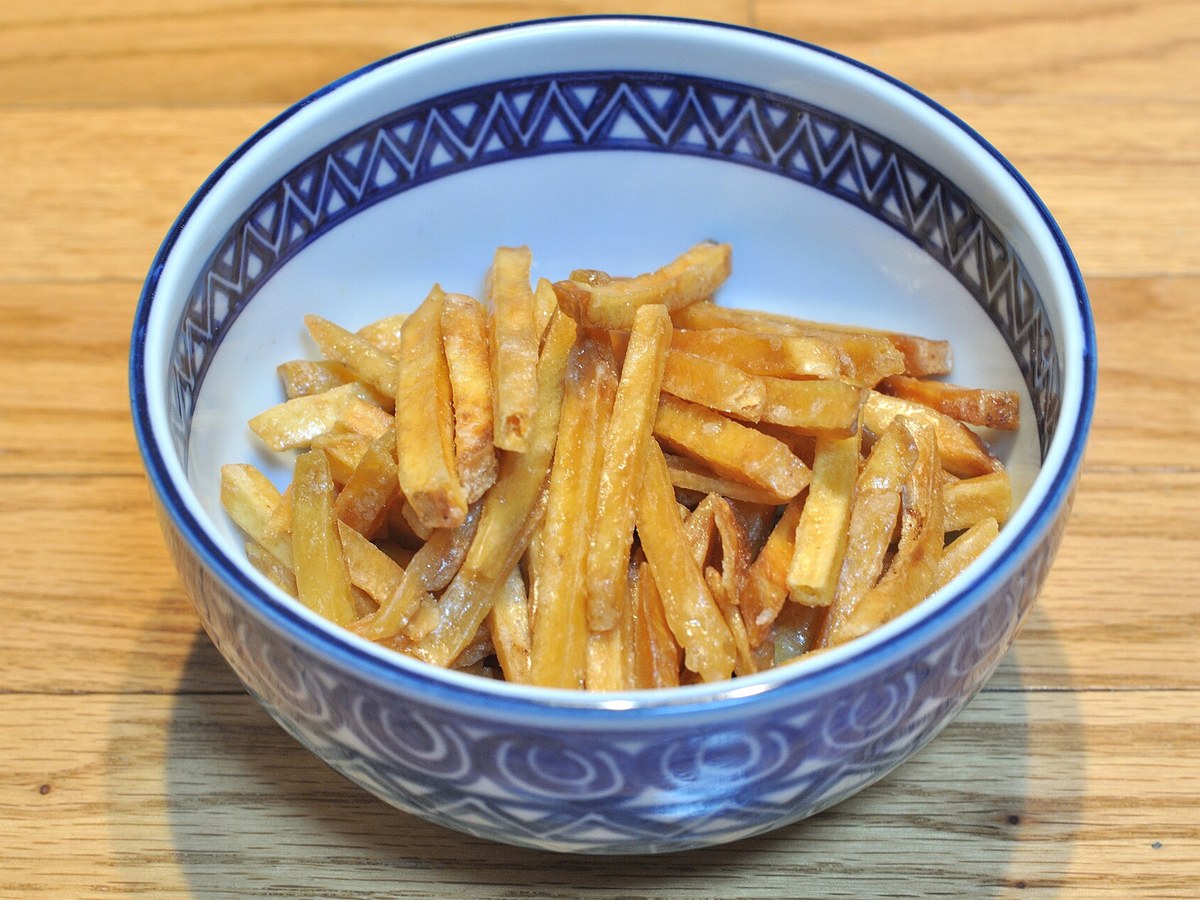
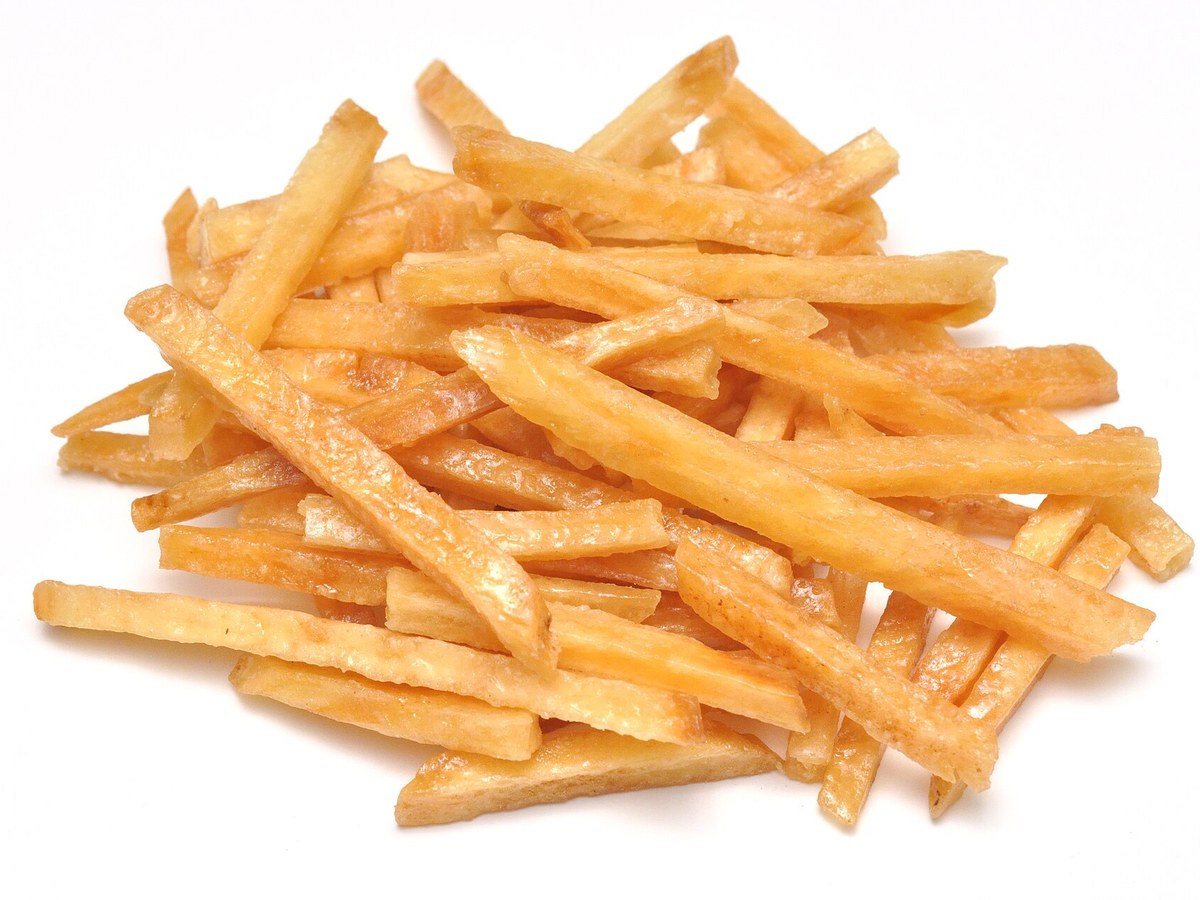
The sticks rattle in the bag like dry twigs, and they bite back: sweet potato cut thin, fried hard, and lacquered with a whisper of sugar syrup. Imo kenpi is Kochi's everyday miracle — a three-ingredient snack (potato, oil, sugar) whose name reaches back to a confection written down in the tenth-century Tosa Diary, and whose modern form was built by one Hidaka village seller from 1952. In Kochi it is teatime sweet, bar snack and souvenir at once, and the specialist shops still fry it in front of you.
Three ingredients and a thousand-year-old name
Imo kenpi is a traditional snack of Kochi Prefecture — old Tosa, on Shikoku — made by cutting sweet potato into thin sticks, frying them until crisp and coating them with sugar syrup (Food in Japan, updated 9 November 2026). The glaze is thin and dry rather than sticky, so the potato does most of the talking: roasted sweet-potato flavour first, then a light caramel edge, in a stick hard enough that you crunch it slowly. The national food database lists the category at 465 kcal per 100 g — this is confectionery, not a health food, and Kochi loves it anyway.
The name is older than the snack. Kenpi was an earlier Tosa confection of wheat flour and sugar, rolled thin, cut into strips and baked, and Japan's agriculture ministry notes that it appears in the tenth-century Tosa Diary. The fried potato sticks simply looked like kenpi, so they reportedly took its name: imo kenpi, potato kenpi.
From Satsuma potatoes to a Hidaka village shop
Sweet potatoes reached Tosa from Satsuma in the middle of the Edo period and suited the typhoon-battered coast: they grew where other crops failed (Food in Japan, sourced to MAFF). Cut thin, fried and dusted with then-expensive sugar, the sticks began as a treat for special days. The traditional potato is the white-fleshed Koganesengan, and the ministry records that Aki City — which grew Koganesengan in quantity for starch — was the first place imo kenpi was sold (MAFF).
The modern packaged snack owes much to one man. In 1952 Kinjiro Shibuya began selling imo kenpi in Hidaka village, reviving, by his firm's own account, a snack he remembered his grandmother making when postwar wheat was scarce. His company, Shibuya Foods, later opened the specialist shop Imoya Kinjiro in 2005, and Kochi makers now vary the theme with salt, black sesame, black sugar, ginger and yuzu versions.
Where to buy it, with prices
In Kochi the ministry points buyers to farm-direct markets and supermarkets, and souvenir shops, roadside stations and the airport all stock it (Food in Japan). For the full experience go to a specialist shop with an on-site fryer: Imoya Kinjiro fries at its workshop stores and advises eating those batches the same day. Dated price examples from the maker's official pages, checked in October 2026: plain imo kenpi costs 350 yen for a 100 g bag and 550 yen for 200 g in the online shop, while freshly fried imo kenpi is 500 yen for 120 g at the Hidaka main shop in Kochi — the olive-oil-blend fresh batch is 600 yen at the Nihonbashi shop in Tokyo.
Sealed bags keep for weeks and travel well, which is why the snack works as a souvenir far beyond Shikoku; the maker prints a best-before of about 60 days on its plain bag. Buy one bag for the train and one for home, and eat the freshly fried one first — warm, it is a different and better thing.
Why imo kenpi belongs to Kochi
Fried sweet-potato sticks are made in many places now, and mass-market bags line supermarket shelves across Japan. The documented tradition, though, is Kochi's end to end: the ministry's traditional-foods encyclopedia gives the region of inheritance as the whole of Kochi Prefecture, the name descends from a Tosa confection in a tenth-century diary, the first sales were in Aki City, and the modern industry was built from Hidaka village by the Shibuya firm from 1952.
It also fits the prefecture that made it: a storm-facing coast that turned a survival crop into its favourite sweet, sold at produce stands and supermarkets as an everyday household snack — fame without ever becoming precious about it.
Sources — checked 13 November 2026
- Food in Japan — Imo Kenpi: Kochi's Crispy Sweet Potato Snack (updated 9 November 2026)
- MAFF — Nippon Traditional Foods Encyclopedia: Imokenpi
Checked 13 November 2026 (stored links re-fetched and judged per product): reserved where the page says so, with an editorial review note kept per product. Press, PR and travel use stays outside the grant.
Editorial review 2026-11-13