Some papers are stationery. Tosa washi is infrastructure: for a thousand years it has been offerings paper, money paper, doll paper and typewriter paper, and it is still being formed sheet by sheet in the mill towns of Ino and Tosa City in Kochi. It is one of Japan's three great washi, and by range — some 300 types still in production — it is the most various paper in the country.
An offering in the Engishiki
The name is old enough to be liturgical. Tosa washi appears in the Engishiki, the Heian court's great book of regulations compiled in the tenth century, listed among the offerings a province sent to the capital — which means Kochi's paper was already a named, graded product a thousand years ago. Through the Edo period it stayed a tribute good, presented to the shogunate and protected by the Tosa clan, who understood that a famous paper is a province's letterhead to the world.
The industrial chapter is the surprising one. As Japan mechanised, Tosa's mills mechanised with it: from around 1887 to the beginning of the Showa period, the checked account records, Tosa was the largest washi-producing region in Japan, exporting typewriter paper and copying paper abroad. The craft survived its own factory age — and when the factories faded, the hand-forming that had never entirely stopped was still there, in the same towns, on the same rivers.
Long fibres, clear rivers
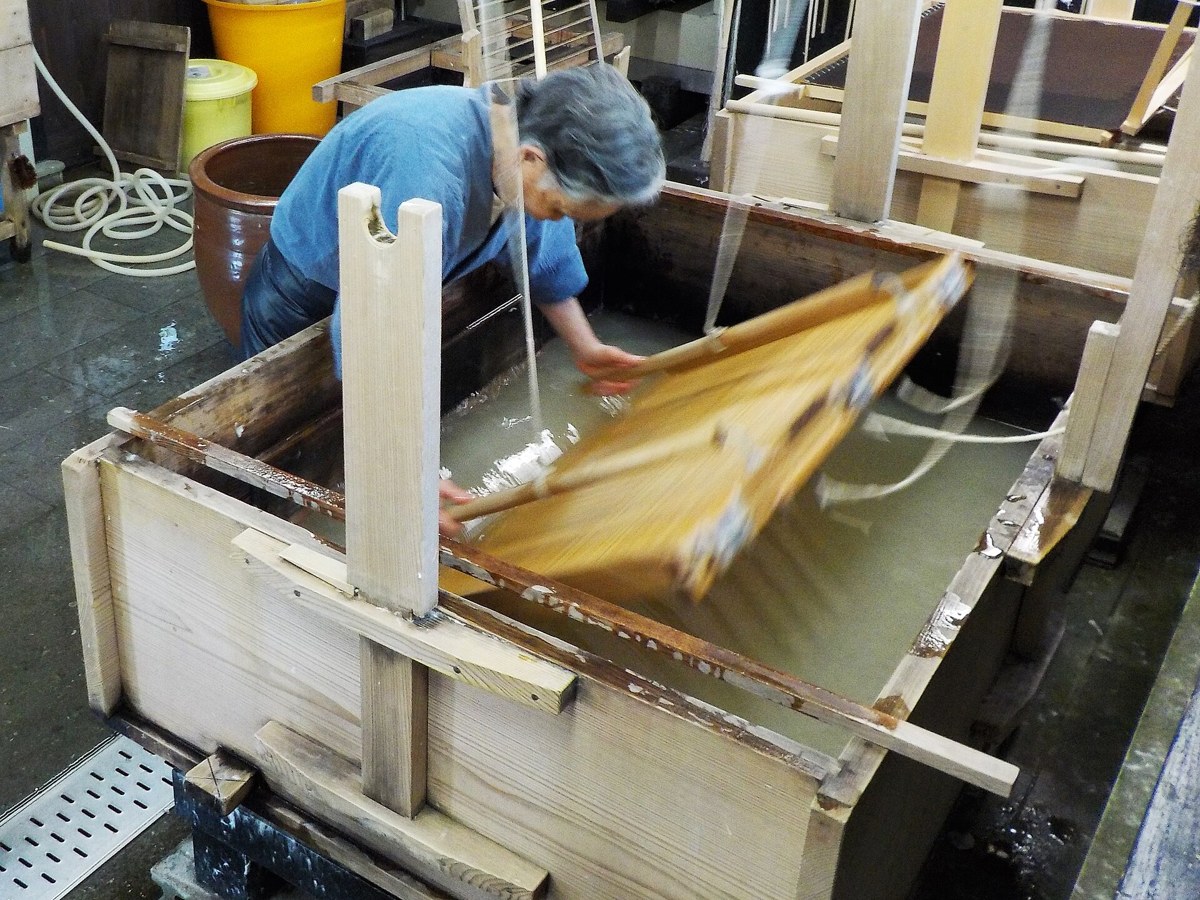
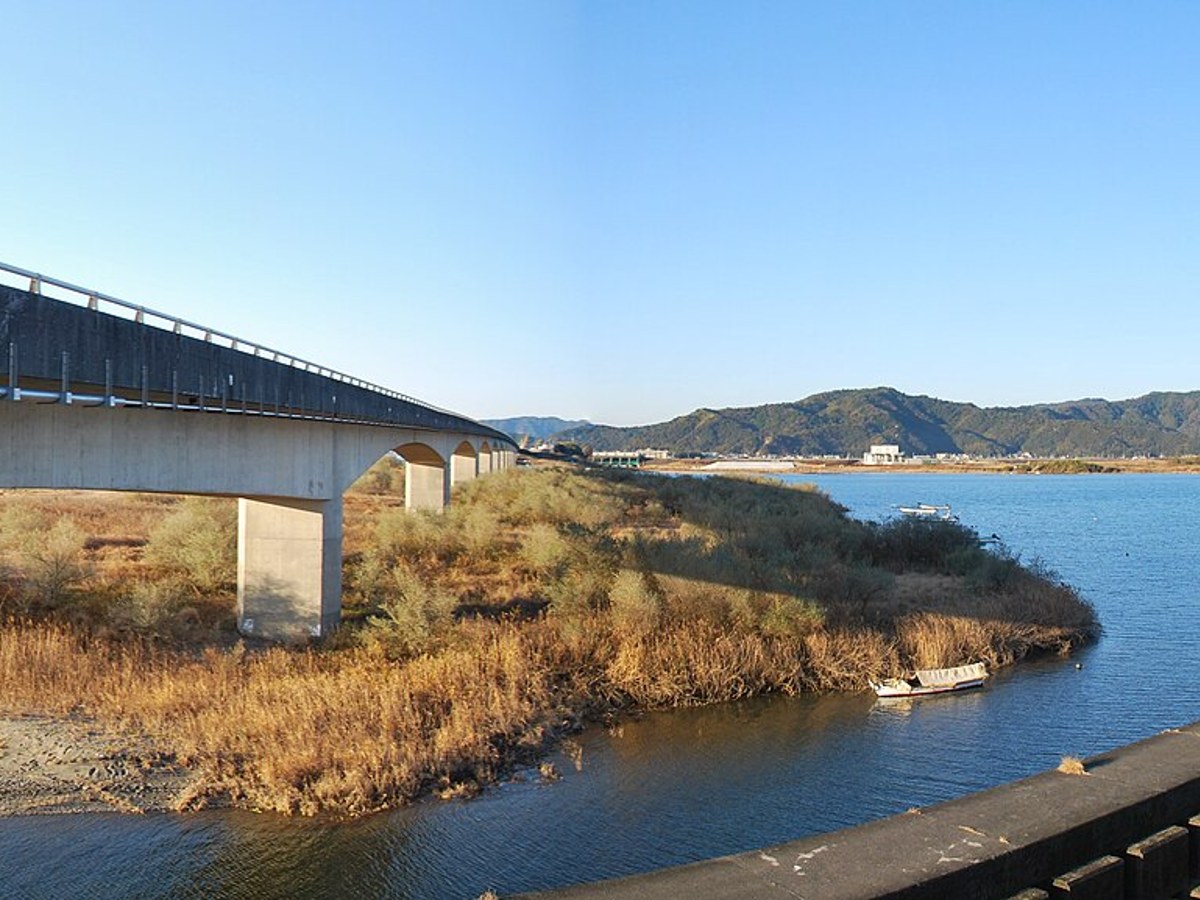
Two local facts make the paper. The first is the plant: Kochi's mountains grow kozo, the paper mulberry, whose bark fibres are long and intertwine readily, so a sheet can be formed astonishingly thin and still hold. The second is the water: the Niyodo and Shimanto rivers are both renowned for purity, and washi forming is mostly water — the fibre is suspended in it, drained through the screen, and left as a sheet whose strength is the fibres' own weave.
The variety follows from that control. Morisa, the Kochi maker whose collection anchors this page, still works forms like rakusui — water dropped onto the wet sheet so it opens into lace-like patterns, a technique balanced between machine speed and a craftsman's gram-by-gram judgement of the mixture — and sukiawase, in which a second sheet is backed onto the first to make a duplex paper. Three hundred types is not marketing: it is what a mill town produces when it has answered a thousand years of different orders.
What it costs to touch it
The honest way to price a craft paper is at the place it is taught. The Ino-cho Paper Museum, in the mill town of Ino at 110-1 Saiwai-cho, charges ¥500 admission and ¥900 for the paper-making lesson in the checked guide's listing: you form your own sheet by the nagashizuki method, wait while it dries, and take home postcard-size paper you made from Kochi fibre and Kochi water. The museum opens 9:00 to 17:00 and closes on Mondays. For a deeper bench session, a Tosa City studio with over 120 years of history offers a two-hour private washi-making experience from ¥16,000.
Finished Tosa washi goods run from origami sets and placemats upward, in the Morisa line and the mills' own shops. Kochi's standing stories in this collection are a village yuzu drink and straw-seared bonito — both things you consume. Tosa washi is the prefecture's third kind of fame: the thing it makes that outlasts everything written on it.
Kochi's shelf, given a surface
Set the paper beside Kochi's two standing stories and the prefecture finally has a surface as well as flavours. The yuzu drink is Umaji village in a bottle and the tataki is Kochi City at the grill; Tosa washi is the valley craft underneath both — the paper the region's letters, labels and offerings have ridden on since the Heian court itemised it.
Start at the museum in Ino, form a sheet, and hold it against the light before it dries: the long kozo fibres show as a faint cloud in the sheet. That cloud is the whole argument of Tosa — local plant, local water, a thousand years of not stopping.
Sources — checked 10 November 2026
- Musubi Kiln: Tosa Washi Paper (Morisa collection page)
- Japan Travel: Paper-making in Kochi City (Ino-cho Paper Museum listing)
- Attractive JAPAN: Tosa washi making at Tosawashi Inoue Tesuki Kobo
Original prose and official links only; no source text or maker media reproduced. Photos are credited Creative Commons works, not product photographs.
Editorial review 2026-11-10