Nara's brushes, already in this collection, are Japan's oldest. Kumano's are Japan's most: one Hiroshima mountain town of about 24,000 people produces roughly eighty percent of every brush made in the country — calligraphy, painting and the cosmetic brushes behind luxury counters from Paris to New York — some fifteen million a year, each shaped without ever cutting the tips of the hair.
A town that lives by the brush
Kumano sits in a mountain basin in Aki district, twenty minutes from Hiroshima City, with almost no flat farmland. Brush-making began here in the late Edo period, when local men who had learned the craft away from home brought it back down the valley; in one account the Hiroshima domain registered Kumano production in 1846 and ordered its school brushes from the town. Formal education did the rest — every schoolchild in Japan needed a brush, and most of them came from Kumano.
The numbers still startle: about 80 percent of Japan's brushes, around 15 million a year, from a single town. Kumano fude was designated a national Traditional Craft in 1975, and the town certifies its own master craftsmen. When demand for calligraphy brushes fell, the same hands moved into cosmetic brushes — which is why the world's premium make-up brushes so often trace back to this valley.
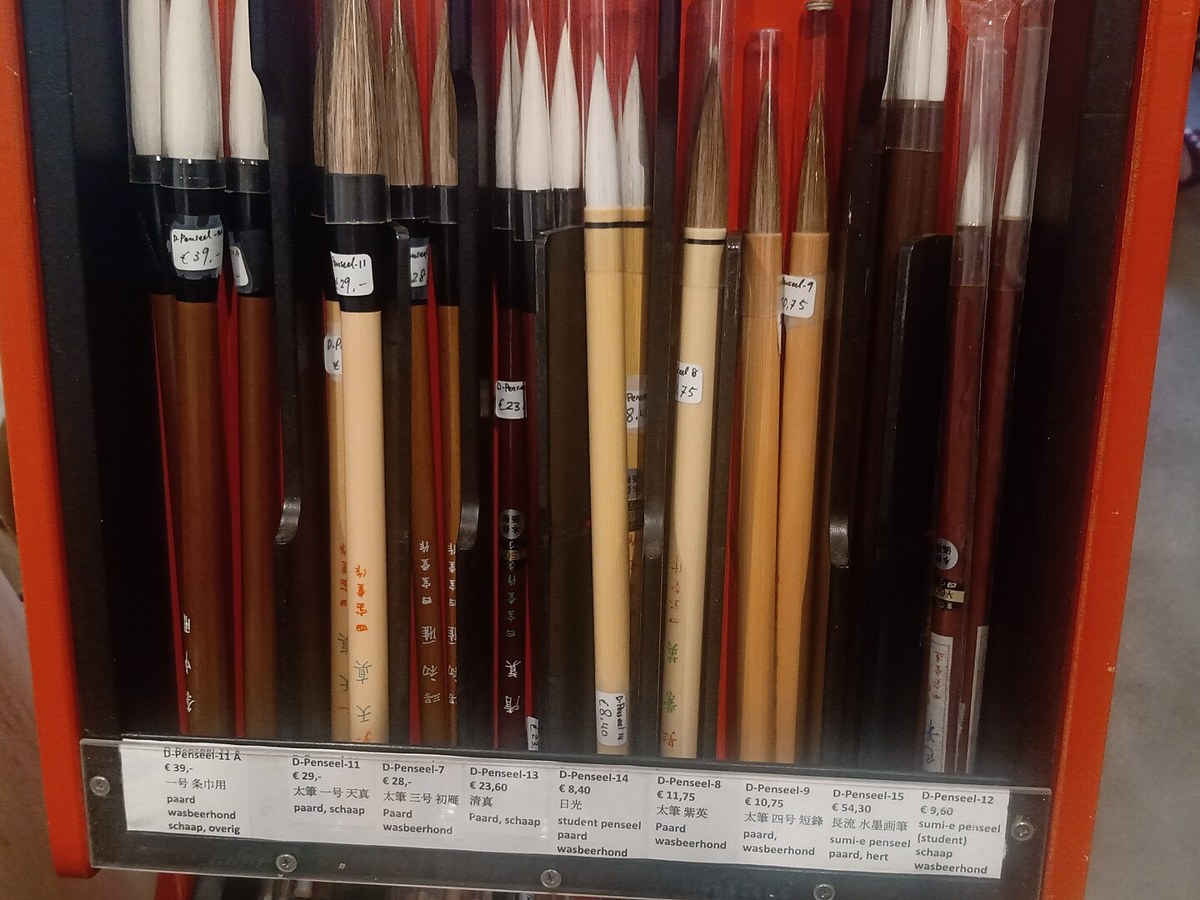
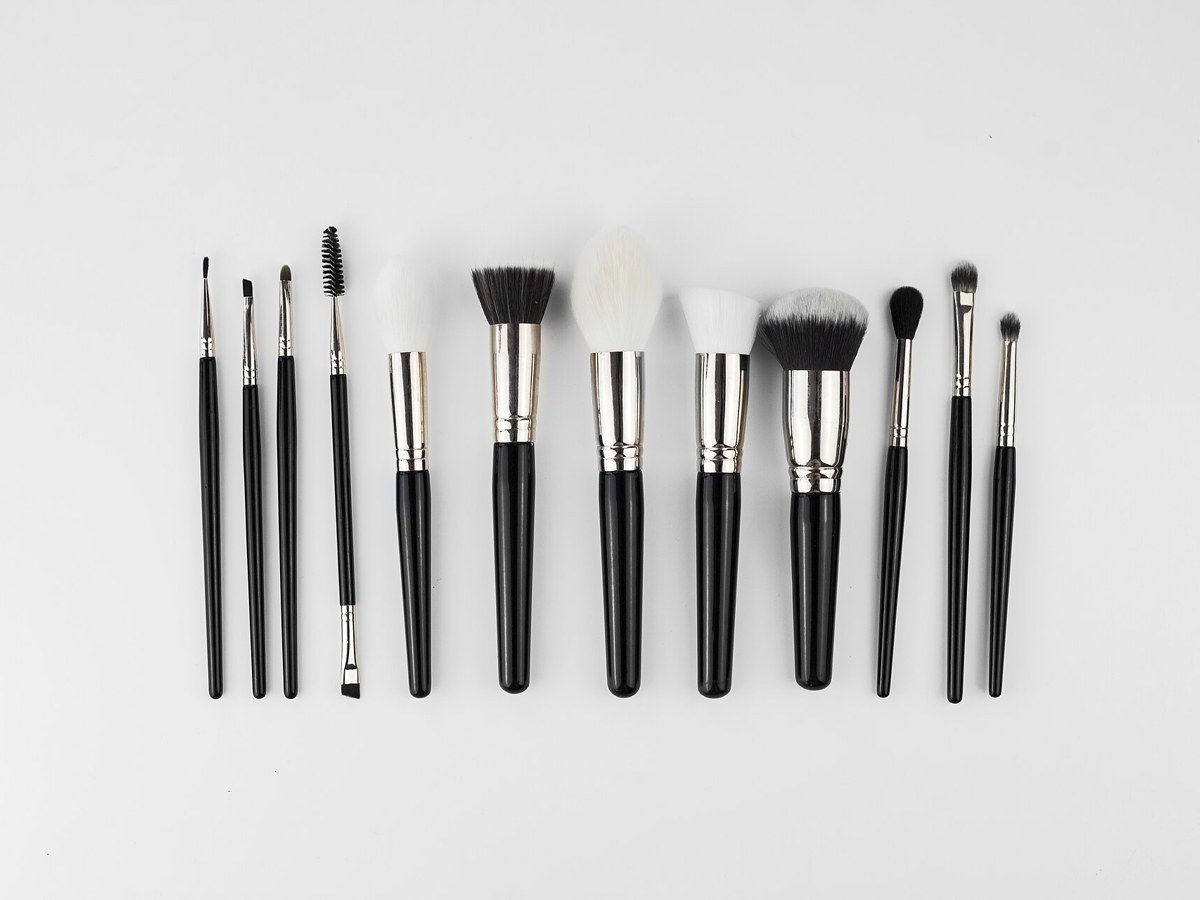
The tip is never cut
The technique that makes a Kumano brush is a refusal: the hair is never cut at the tip. Machine-shaped brushes are trimmed into form, which leaves blunt ends; a Kumano maker sorts, aligns and bundles animal hair so the natural fine tips — the part that touches ink, paint or skin — survive into the finished brush. The result is the softness and pick-up the town is famous for, in a writing brush and a powder brush alike.
The makers' names travel further than the town's. Hakuhodo, Chikuhodo, Koyudo and Tanseido are Kumano houses, and Kumano workshops manufacture brushes sold under premium global cosmetics brands. What you are buying, at any price level, is the uncut tip and the hand that arranged it.
Practical details: prices and where to buy
Entry is cheaper than the reputation suggests. A hand-made five-piece cosmetic starter set from Kumano maker Cosmedo — face, cheek, eye, lip and brow brushes with a case — is ¥7,800, and a single decent cosmetic brush starts around ¥3,000. At the top of the writing-brush shelf, Ikkyuen's three-brush calligraphy set, made by three of its master craftsmen, is listed by the City of Hiroshima at ¥25,300 including tax.
Between those anchors sits Tanseido's Grace five-brush cosmetic set at ¥17,600 including tax, sold at the Fude-no-Sato Kobo brush museum-workshop in Kumano itself, Hiroshima Brand Shop TAU and other Hiroshima retailers. In Kumano, the Fude-no-Sato Kobo is the natural first stop: brushes, makers and the town's story under one roof.
Two brush towns, two claims
This collection now holds both of Japan's brush capitals, and they do not compete so much as divide the honours. Nara keeps the origin — the oldest tradition, the ten-hair blend, the imperial story. Kumano keeps the present: four of every five brushes in the country, and the make-up bags of half the world.
There is something satisfying in the pairing. The craft that began as a farmer's side income in a land-poor valley now finishes the faces of people who have never heard the town's name. Kumano's brushes are the rare regional edition whose region is a single town and whose market is everywhere.
Scope: what 'limited' means here
The claim is manufacture, not retail geography: a Kumano fude is a brush made in Kumano by its designated tradition, wherever it is later sold — including under another brand's name. Brushes made elsewhere are not Kumano fude, and the town's certification and its 1975 designation are what this page's claim rests on.
Sources — checked 9 November 2026
- Japan Mono: Kumano Fude makeup brush 5-piece starter set by Cosmedo — buyer's guide
- Japan Mono: Kumano Fude calligraphy brush — buyer's guide
- Port of Japan: Kumano brushes in Hiroshima — culture and history
- City of Hiroshima (Hiroshima Brand): Tanseido Grace Set, Kumano cosmetic brushes
- City of Hiroshima (Hiroshima Brand): Kumano calligraphy brushes, Ikkyuen
Original prose and official links only; no source text or maker media reproduced. Photos are credited Creative Commons works, not product photographs.
Editorial review 2026-11-09