Most udon is cut. Himi udon is spun. In the port city of Himi on Toyama Bay, the dough is kneaded, trodden underfoot, cut into a single spiral rope and then twisted and stretched by hand — without a drop of the oil every somen maker uses — until it hangs over its poles like thread. The result is a noodle that is fine yet fiercely chewy, part hand-cut udon and part hand-stretched somen, and it has been made this way since a Wajima technique crossed the mountains in 1751.
Spun, not cut: the no-oil stretch
The Ministry of Agriculture’s traditional-foods record for Himi describes a method unlike any other Japanese noodle. Flour, water and salt are kneaded hard, rested, then trodden by foot to drive the gluten together. The rested dough is rolled flat and cut from the outside inward, in a spiral, so it becomes one long rope; the maker then twists that rope by hand as it is stretched — the gesture that named the original form ito udon, thread udon, because the dough looks spun. Loop the strands figure-eight over two rods, let them mature, stretch again, and hang them on poles to dry.
The defining refusal is oil. Somen makers coat their strands in plant oil to stretch them; Himi’s makers use none at all, which the ministry record credits for the noodle’s clean gloss and bite. What you eat is therefore both things at once: the kneaded, foot-trodden body of a hand-made udon and the drawn fineness of a hand-stretched somen — fine strands with a chew that survives the broth.
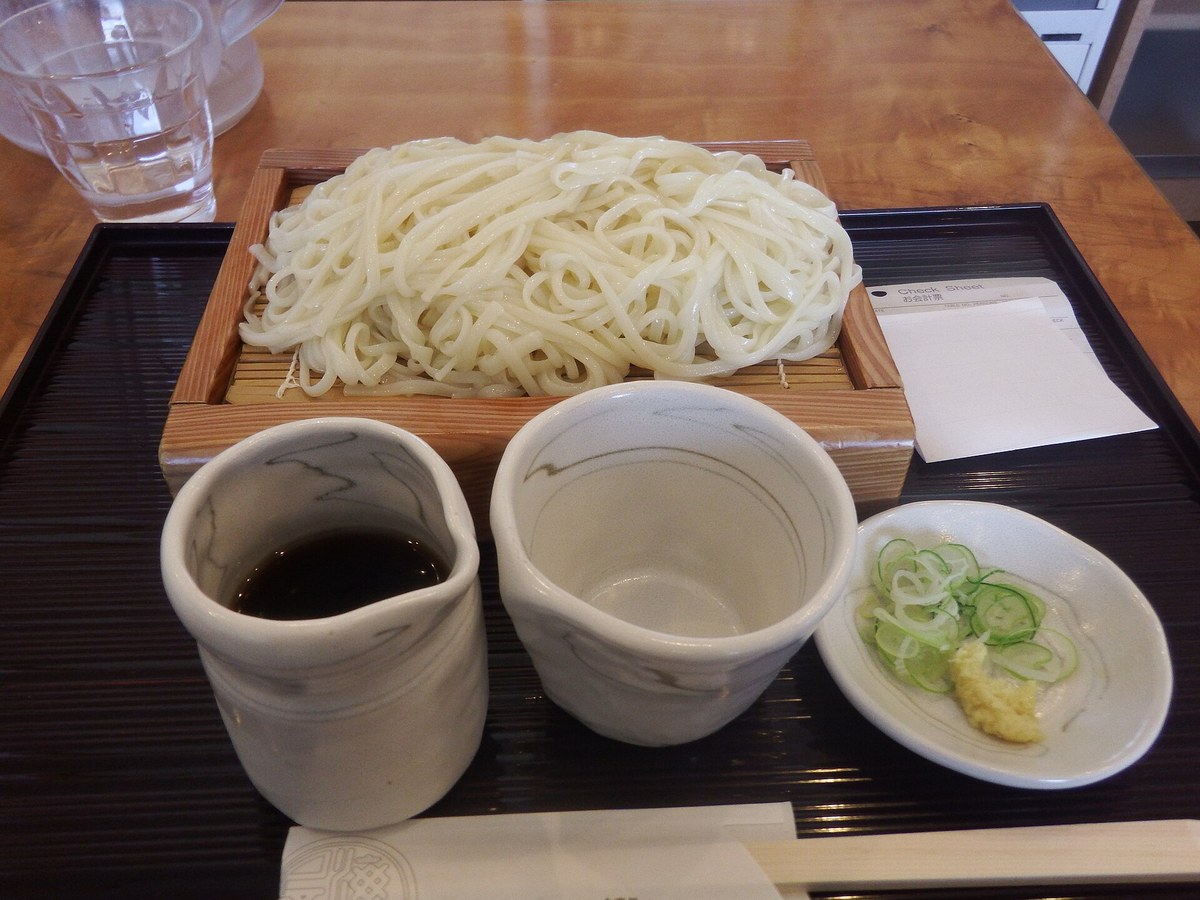
A purveyor’s noodle from Wajima
The technique is an import that became an heirloom. In the mid-Edo period, noodle knowledge from Noto — the udon of Sojiji temple and Wajima’s Shiraga somen, a purveyor to the Kaga domain — reached Himi and was reworked into a local method. The founding date usually given is 1751, when the house of Takaokaya brought the Wajima craft to Himi; its udon was presented to the Kaga lords, a goyo udon, and Takaokaya still sells its traditional thread udon under the name Isshi Densho, the single-thread inheritance.
The name itself became valuable enough to fight over. The modern trademark in Himi Udon is held by an affiliate of Kaizuya, the other great Himi house, founded in 1975; when Takaokaya once sold udon made in Okayama under the Himi name, Kaizuya sued under the Unfair Competition Prevention Act and won. Two houses, one town, one name — and the ministry record treats the noodle, not either firm, as the tradition: Himi City’s own.
How Himi eats it
The ministry record lists the toppings that make the bowl Toyama’s own: tororo kelp shaved over the top, rolled kamaboko, fried surimi cakes and kakiage of the bay’s white shrimp. The noodles come dry and half-dry, in several thicknesses, and take heat both ways — served cold for the full chew, or hot, with the strands first rinsed in cold water to tighten them even in a winter broth. Nothing is wasted: the U-shaped ends trimmed where the noodles hung over their drying poles are sold as fushi-men, short offcuts for salads, soups and even baby food.
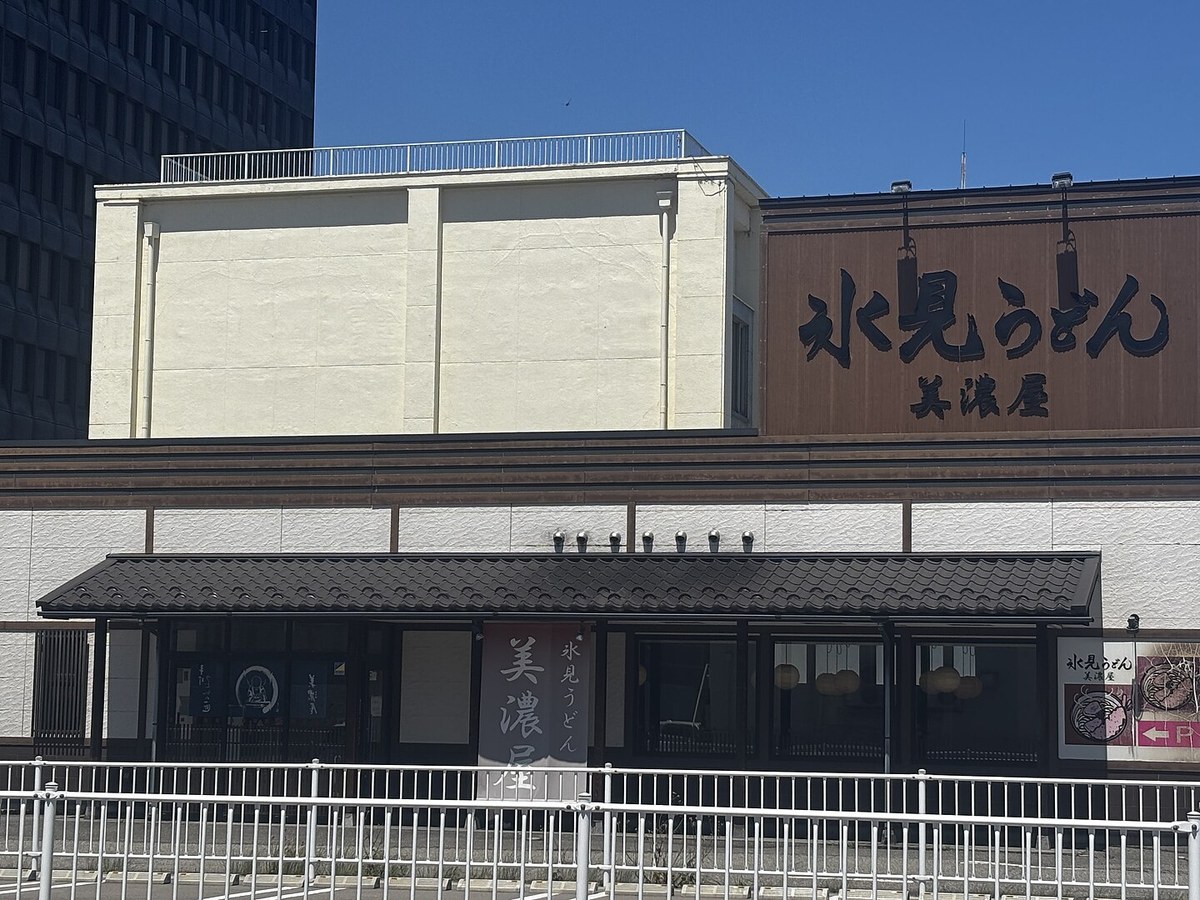
This is a working food, not a ceremony. Himi udon is on supermarket shelves in the city, in the school-lunch soups of Himi’s children, and on the menus of the town’s many udon restaurants, old houses and new branches alike — Minoya, whose Hirokoji branch is this story’s place photograph, among them. Makers from the town exhibit overseas, but the noodle’s centre of gravity stays where the poles and rods are: Himi.
Buying it, and what it costs
Kaizuya is the easiest house to buy from at a distance. Its Himi Udon Set — the fine hand-stretched noodles as a gift box — sells through the Japan Post online shop at 3,780 yen including tax and shipping, listed in stock for the 2026 year-end gift season with delivery across November and December. For the pantry rather than the gift table, the same maker’s 200 g bag of fine noodles, made with 100 percent domestic wheat, lists at 486 yen including tax at Yodobashi.
In Himi itself, expect the bowl at the town’s udon restaurants, the dried and half-dried noodles at the makers’ own counters, and the fushi-men offcuts beside them. Buy the thickness for the dish: the fine thread strands for cold trays and summer broth, the stouter cuts for hot pots — the makers sell both because the town cooks both.
Sources — checked 13 November 2026
- MAFF, Nippon Traditional Foods Atlas — Himi no Udon (Toyama)
- Wikipedia — Himi Udon (founding, houses and trademark)
- Japan Post online shop — Kaizuya Himi Udon Set
Checked 13 November 2026 (stored links re-fetched and judged per product): reserved where the page says so, with an editorial review note kept per product. Press, PR and travel use stays outside the grant.
Editorial review 2026-11-13