Winter thunder over Toyama Bay has a nickname: buri-okoshi, the yellowtail rouser. It announces the arrival of the fattest fish in Japan — adult yellowtail that have gorged themselves in the cold northern sea and run south into the bay's fixed nets. The best of them, landed at Himi port and heavy enough to pass the brand's test, become Himi buri: a trademarked winter catch that fetches more than three times the price of yellowtail landed anywhere else, and that Toyama waits for all year.
A fish that is only itself in winter
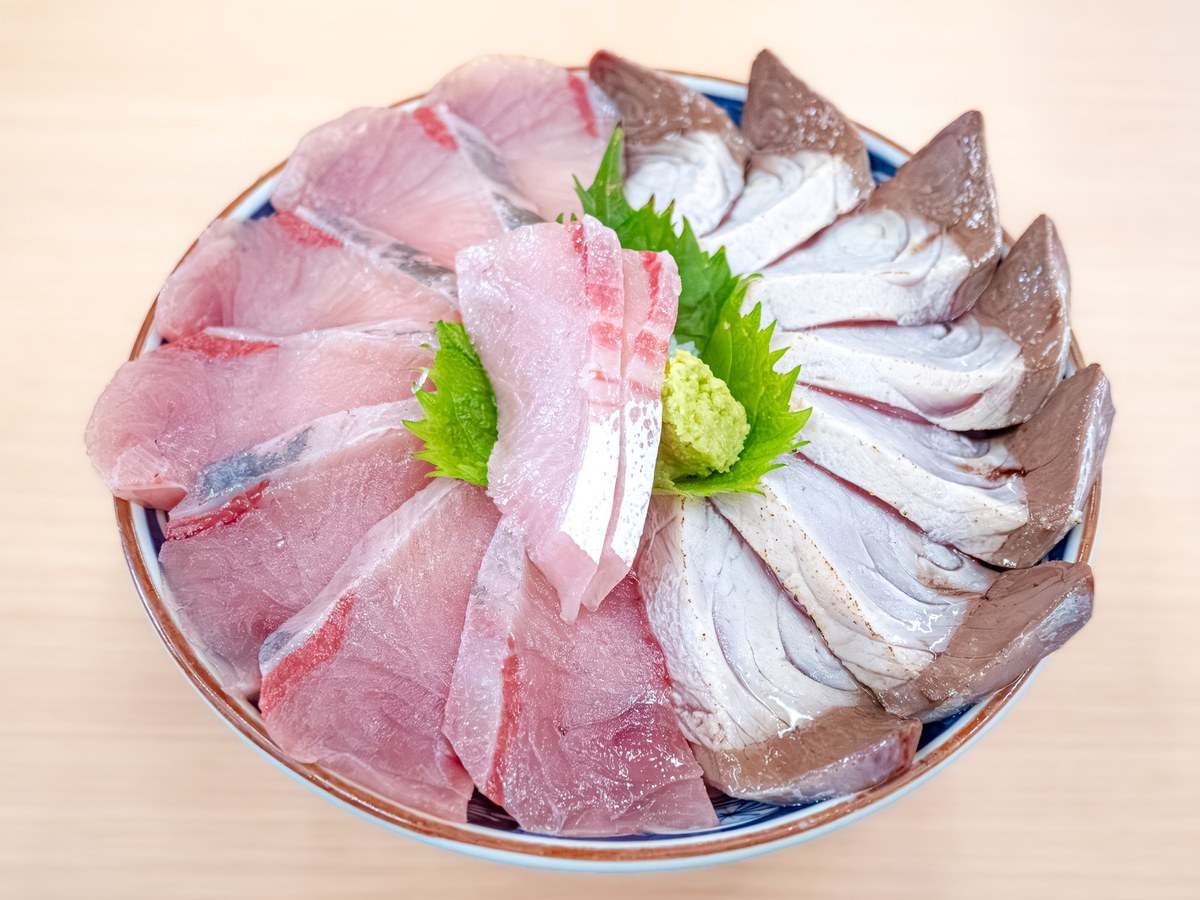
Kanburi literally means cold-season buri. It is the same yellowtail species sold all year, but caught in its fattened winter state — typically December through February — when the flesh turns dense, pale and rich enough that soy sauce beads on its surface (Japan Trove, 28 October 2026). The fish fatten in the northern sea and migrate south to spawn, and Toyama's official tourism account holds that they are at their fattest when they reach Toyama Bay.
Within kanburi, one name stands at the summit. Himi Buri refers to a specific, trademarked catch: yellowtail landed at Himi fishing port in Toyama Prefecture, taken in the bay's traditional fixed nets — teichiami, set nets that wait for the fish rather than chasing them — and sold at auction at the port. A fish that misses the standard is simply buri; a fish that makes it carries the port's name across Japan.
Eight kilograms, a blue box and a declaration
The brand is run like a vintage. To qualify as Himi kanburi, a fish must be caught in Toyama Bay's fixed nets, auctioned at Himi port and clear a minimum weight — eight kilograms and up, a threshold raised from seven kilograms for the 2025–26 season (Shoku Noren, verified August 2026). Certified fish ship in a blue box with a certificate, so a buyer in Tokyo can prove the fish on the counter is the real winter article.
The season itself has an official starting gun. A judging committee of fishermen and brokers watches the early catches and issues the "Himi kanburi declaration" when the run has properly begun — usually in late November — and closes the brand when the fish thin out, often in February. A whole branded fish can fetch tens of thousands of yen at market, and the Government of Japan's Highlighting Japan reports that Himi kan-buri fetch more than three times the price of yellowtail landed elsewhere in the same season.
How Toyama eats it, and what it costs
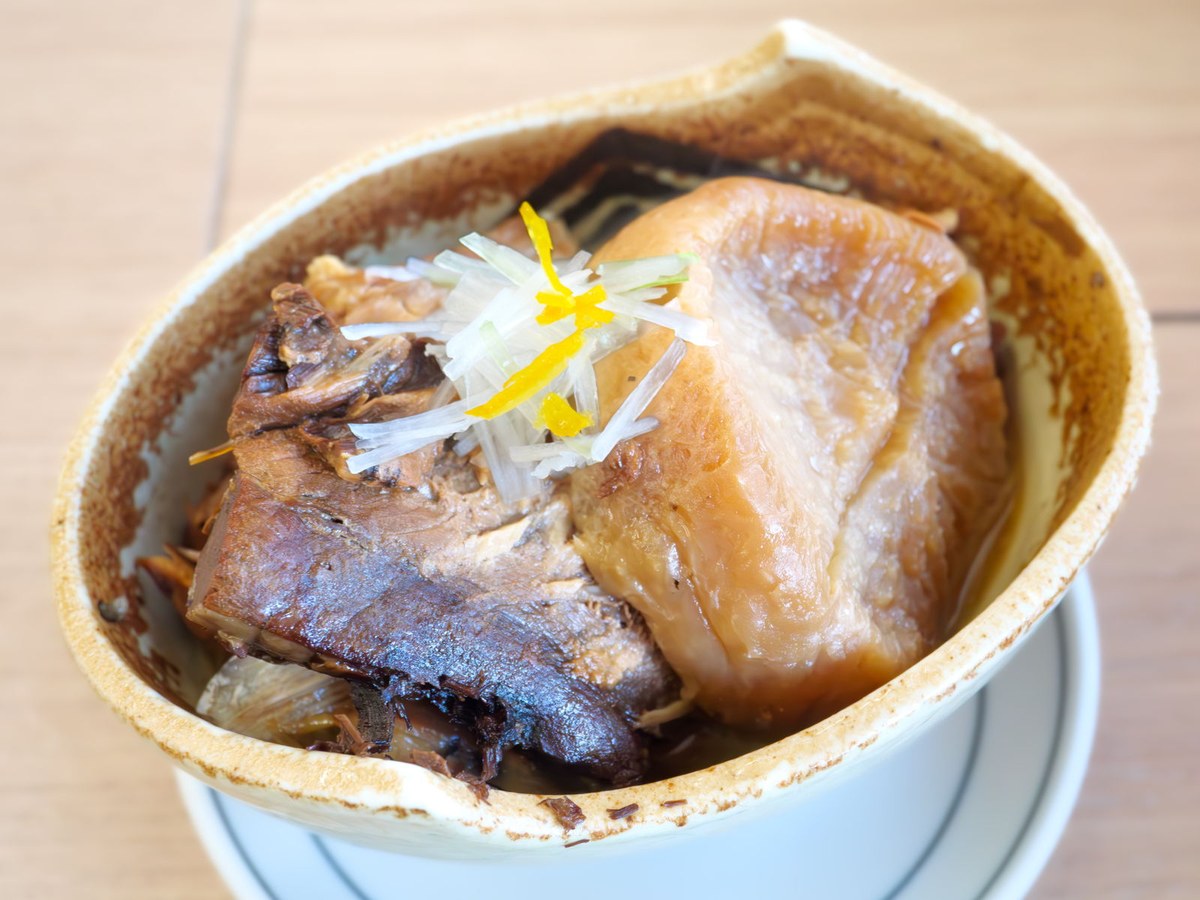
Raw is the first language: sashimi and sushi, where the winter fat shows best, and buritoro — the belly cut — as nigiri. Cooked, the classics are buri-shabu, thin slices swished briefly through hot broth, and buri-daikon, the collar and offcuts simmered with radish until both turn sweet and dark (Shoku Noren). The easiest place to eat it near the source is Himi itself: the Himi Banya Gai market complex beside the port, and the fish-market canteen above the auction floor, whose winter menu is built around the day's buri.
Eating it is more accessible than the auction prices suggest. Expect a kaisen-don with kanburi sashimi for roughly 1,500 to 3,000 yen, a more substantial sashimi or shabu-shabu course for 4,000 to 8,000 yen, and kanburi nigiri at the prefecture's conveyor-belt sushi chains for roughly 150 to 500 yen a plate (Japan Trove). Catches depend on weather, so no restaurant can promise kanburi on a specific date — rough seas keep the nets empty and the menus honest.
Why Himi buri belongs to one port
Winter yellowtail is caught all along the Sea of Japan coast, but the certified article is defined by a chain that exists in one place only: Toyama Bay's fixed nets, Himi port's auction, the eight-kilogram threshold, the committee's declaration and the blue box. Take any link away and the fish is excellent buri — it is just not Himi buri, and the market prices it accordingly, at less than a third of the branded fish.
It is also a fish with a soundtrack. The winter thunder that rolls off the Tateyama mountains is called buri-okoshi because generations of Himi families heard it as the starting bell of the season — the sound of the sea turning cold enough to make a yellowtail worth three times its weight anywhere else.
Sources — checked 13 November 2026
- Japan Trove — Kanburi: Toyama's Prized Winter Yellowtail and Where to Eat It (published 28 October 2026)
- Shoku Noren — Kanburi: Winter Yellowtail and Where to Find It (facts verified August 2026)
Checked 13 November 2026 (stored links re-fetched and judged per product): reserved where the page says so, with an editorial review note kept per product. Press, PR and travel use stays outside the grant.
Editorial review 2026-11-13