The firefly squid is a deep-water animal, five centimetres of squid carrying rows of light organs that flash blue in the dark. For most of the year it stays hundreds of metres down. But each spring in Toyama Bay, the females rise to spawn along the shore at Namerikawa — in such numbers that the surf itself can glow, a phenomenon so singular that the sea area where they shoal is designated a Special Natural Monument. Toyama eats the spectacle: hotaruika is the bay's spring taste, boiled, pickled and shabu-shabu'd within hours of the nets.
The bay that brings the deep to the beach
Firefly squid live throughout the Sea of Japan; what Toyama Bay alone offers is the meeting. The bay's seafloor drops off so steeply close to shore — a submarine canyon running in toward Namerikawa — that squid which elsewhere spawn in deep water here come into the shallows, into fixed nets set just offshore and sometimes onto the beach itself in the famous 'beachings' (mi-nage), when the waterline glitters blue. The stretch of sea where they gather has been protected as a Special Natural Monument since the 1920s — the Hotaruika Gunyu Kaimen, the firefly-squid shoaling sea area.
The animal earns the protection. Watasenia scintillans, about three to seven centimetres long, carries photophores — light organs — across its arms, belly and around its eyes, flashing a cool blue for mating and defence. Hauled up in a net at 3 a.m., a catch of thousands lights the water like a spilled galaxy, which is why Namerikawa's pre-dawn sightseeing boats, running in season from the port, sell out a fishing haul as theatre.
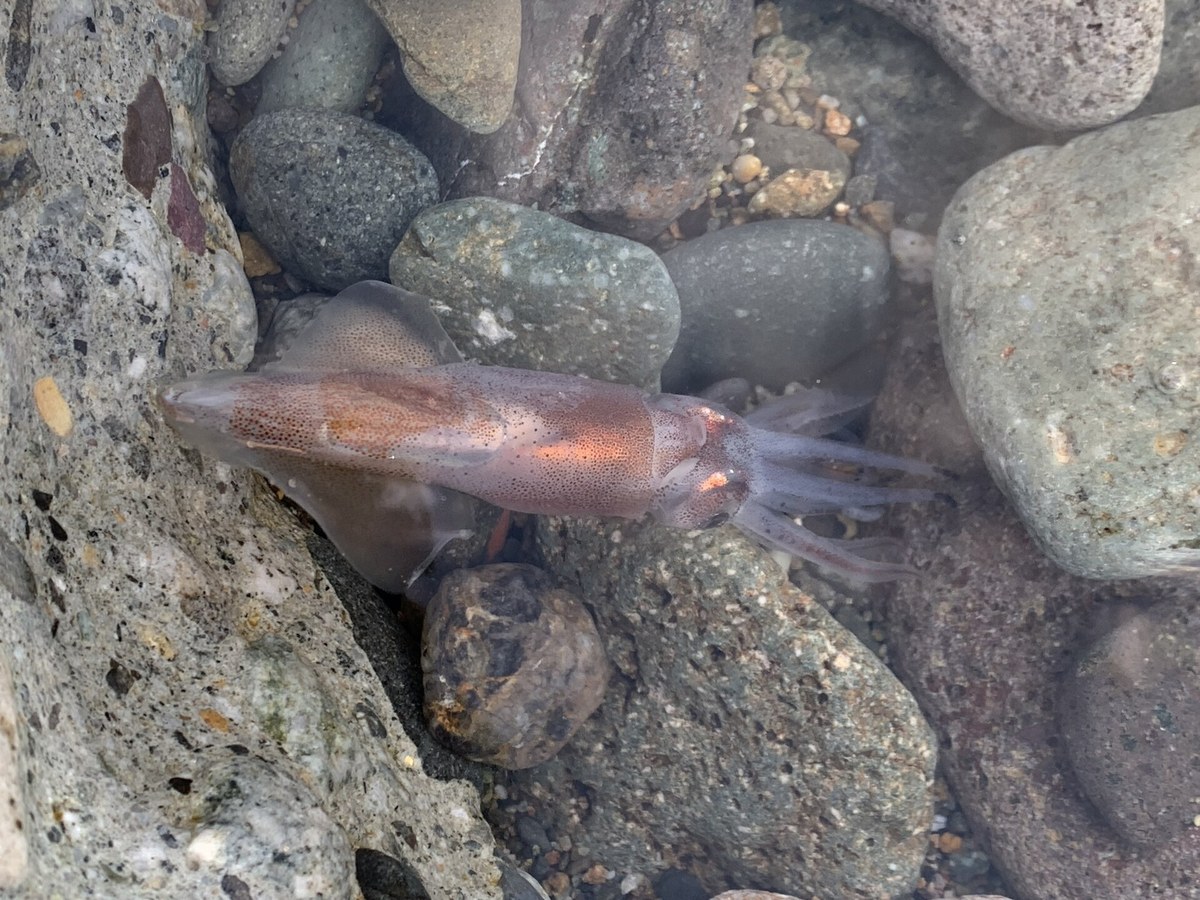
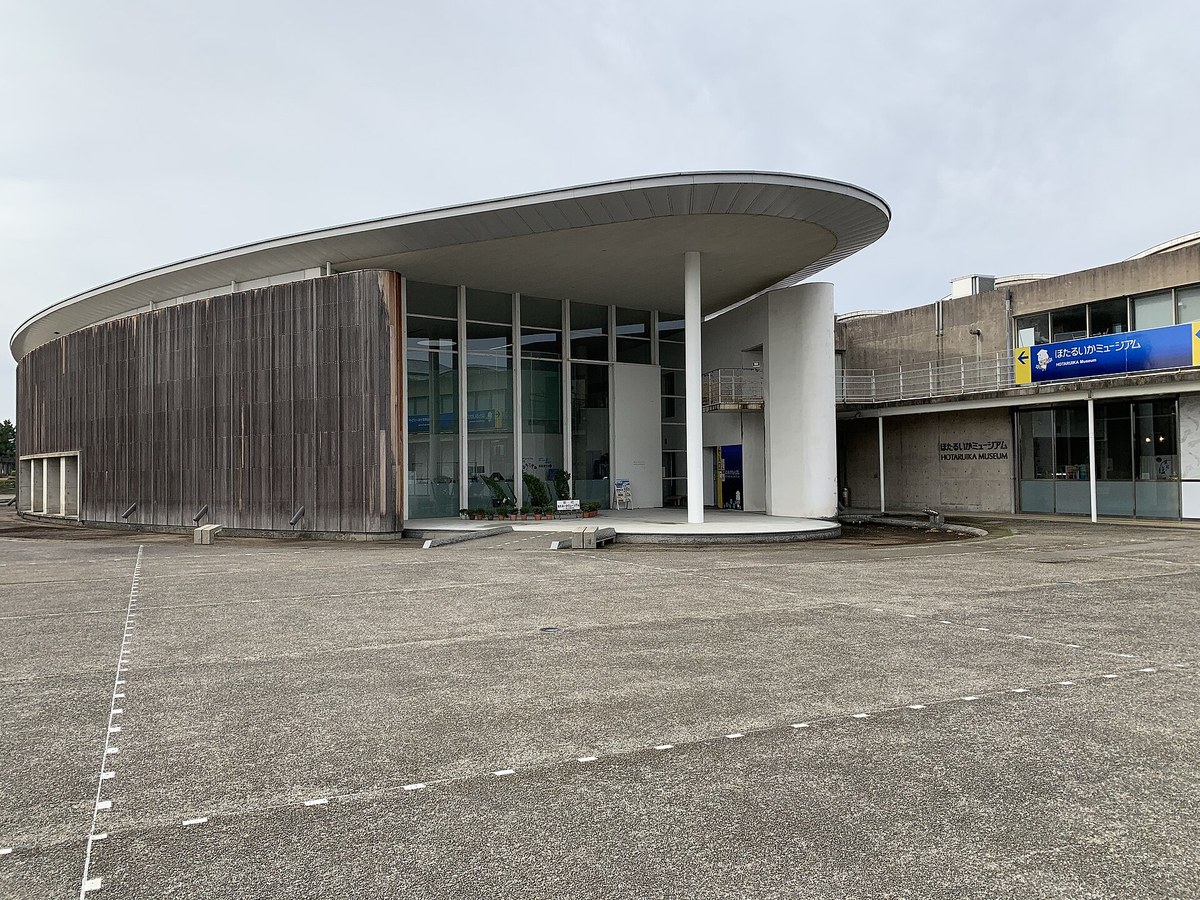
The world's only firefly squid museum
Namerikawa built the institution to match: the Hotaruika Museum on the town's waterfront — described in the records as the world's only museum dedicated to the firefly squid. Its Live Theater is the reliable way to see the glow without a boat: a film on the squid's ecology, then darkness, and a tank of living firefly squid pulsing blue — real squid from 20 March to the end of May, netted fresh before dawn; outside the season the show runs on bioluminescent plankton instead. The museum's sightseeing boat leaves the harbour in front of it before sunrise in April and early May to watch the fixed nets come up glowing.
The season is short and lunar: roughly mid-March to May, best in April, the great beachings on dark, new-moon nights when warm southern winds push the spawning squid ashore. Everything about hotaruika — seeing it, catching it, eating it — is compressed into those weeks.
Eating the glow
On the table the squid is eaten whole — innards and all, which only an animal this small allows. The Namerikawa canon runs: kettle-boiled (kama-age) with vinegar miso; okizuke, marinated in soy and mirin; dried as a snack; and, at the port, shabu-shabu — raw squid swished for seconds in hot broth until it turns melting, a texture neither raw nor boiled gives. The local television record from a Namerikawa shop prices the morning's catch plainly: a pack of 21 raw morning-caught squid at ¥1,800, the boiled at ¥2,500, and a shabu-shabu set of about 21 squid for two, stove included, at ¥2,300.
The caution travels with the flavour: firefly squid spoil fast and raw ones need proper freezing or heating — the local records say so outright, and the shipped products below are frozen within hours for exactly that reason.
Buying Toyama Bay hotaruika
The checked product record is the Japan Post mail-order listing on JRE Mall: raw hotaruika landed in Toyama Bay, flash-frozen within twelve hours of landing to seal the season, twelve squid to a pack and two packs to the order, origin Toyama Prefecture, at ¥3,350 including tax with shipping included. In Namerikawa in season, the museum shop and the port's own counters sell the same morning's squid without the freezer's help.
What to check on any listing: Toyama Bay landing and the season — a 'Toyama hotaruika' shipped in autumn is a frozen spring animal, which is legitimate and should be stated. The squid's name for the bay, not for the species, is the claim this story makes.
Sources — checked 12 November 2026
- Japan Trove — Firefly squid season in Toyama: hotaru ika and where to try it
- JRE Mall (Japan Post mail-order service) — Raw hotaruika landed in Toyama Bay, frozen (checked 12 November 2026)
- Tulip TV via TBS News DIG — Namerikawa hotaruika landing and shop record
- Japan for Kids — Hotaruika Museum, Namerikawa
- Voyapon — A taste of glowing firefly squid in Namerikawa
Original prose and official links only; no source text or maker media reproduced. Photos are credited Creative Commons works, not product photographs.
Editorial review 2026-11-12