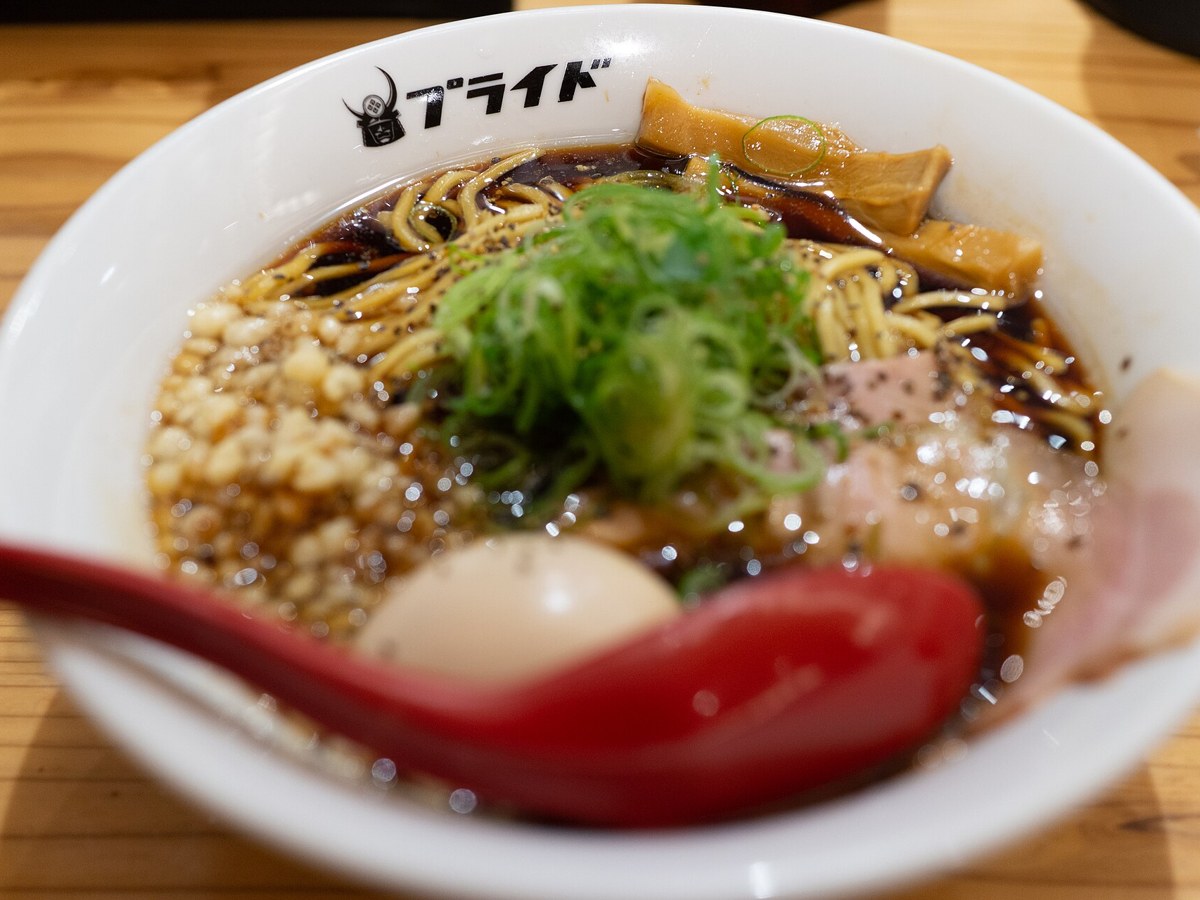
The soup is black — not brown, black — and the first sip is a salt hit you feel behind the eyes. Toyama black ramen was not seasoned for delicacy. It was seasoned in 1947 for men rebuilding a bombed city, who needed the salt they had sweated out put back, and it was served with a bowl of plain rice because the ramen was the seasoning for the rice. Toyama City has kept the recipe's nerve for nearly eighty years, and this is Toyama Prefecture's third story.
1947: salt for the rebuilders
Toyama City's official tourism site tells the origin without romance. In the late 1940s, in the reconstruction after the war, a Toyama restaurant began serving ramen in a rich soy-sauce broth made deliberately salty — a way for manual labourers to replenish the salt lost to sweat — and designed the bowl to be eaten with white rice or rice balls. The prefectural tourism guide names the shop and the year: Daiki, in the Nishimachi district, first served the dish in 1947. The blackness is the soy sauce itself, concentrated until the broth turns jet.
The name came later, and from outside. The government's magazine Highlighting Japan records that around 2000 a Tokyo television reporter introduced the bowl as Toyama Black, and the name — and then the dish — spread nationally: ramen theme parks, product exhibitions, and a Traditions Association, chaired by a Daiki-line restaurateur, formed to promote the bowl as a local brand and to press for its official recognition as a prefectural recommended brand. A workers' salt supplement became, half a century on, a city's flag.
Pepper, onions and the rice rule
The bowl's anatomy is fixed by the city's account: the dark soy broth, a generous tangle of green onions, and coarsely ground black pepper as the key accents, over noodles that shops vary from medium to thick. At Nishimachi Daiki — the originator's main store at 1-1-7 Otaguchi-dori, open 11:00 to 20:00 and closed Wednesdays — the salty bamboo shoots carry the seasoning as much as the soup does, and the house instruction is to mix noodles and toppings vigorously through the broth, which mellows the salt into balance. Daiki now runs six branches across the prefecture, including one inside Toyama Station.
And the rice is not optional garnish; it is the other half of the dish. The broth was built as a side dish for rice — locals order both as a matter of course — and the pepper, the government magazine notes, was in the chaotic postwar years sprinkled at the table partly to keep it from being stolen. Order the rice. The bowl will make sense in a way it cannot on its own.
What a bowl costs
Black ramen remains a working lunch in price as well as in seasoning: the Toyama Tourism Organization's guide puts a bowl at about ¥650 to ¥1,000 depending on the restaurant, and a second tourism guide gives ¥650–900. Within that range sit both the founding house and the style's national champion: Menya Iroha, the shop the city credits as the driving force behind the style's nationwide spread, holds the record of five top-selling titles at the Tokyo Ramen Show, Japan's largest ramen festival, and its station-front CiC store serves the black bowl a three-minute walk from Toyama Station's south exit.
Choose your intensity honestly. The original-strength bowls are a genuine salt event, best met with rice and without plans to drink the soup to the bottom; shops such as Marutakaya — a 1952 food stall grown to five city stores — and the milder modern versions exist for the curious. Toyama's standing stories here are trout pressed sushi and white-shrimp crackers from its bay; black ramen gives the prefecture its inland, working, city bowl — the one its own city hall tells you, in so many words, you absolutely must try.
Toyama's shelf, darkened
Toyama's two standing stories both come from its bay — trout pressed into sushi and white shrimp pressed into crackers, pale, delicate, gift-wrapped foods. Black ramen is the prefecture's other self: inland, urban, working, and eaten standing at a counter with a rice bowl in the other hand. A collection that held only the bay would have missed the city that the bay feeds.
Start at the originator if the queue allows, with rice, and work outward to Iroha's fish-sauce depth and the milder modern bowls. The city's own tourism site lists ten houses precisely so visitors compare — the black, it turns out, comes in shades.
Sources — checked 10 November 2026
- Toyama City Official Tourism: Top 10 Toyama Black Ramen Restaurants
- Visit Toyama (prefectural tourism): Toyama Black Ramen and Where to Eat It
- Highlighting Japan (Government of Japan), November 2024: Toyama Black Ramen
- FUN Japan (Toyama Tourism Organization): 5 Must-eat Dishes at Restaurants in Toyama
Original prose and official links only; no source text or maker media reproduced. Photos are credited Creative Commons works, not product photographs.
Editorial review 2026-11-10