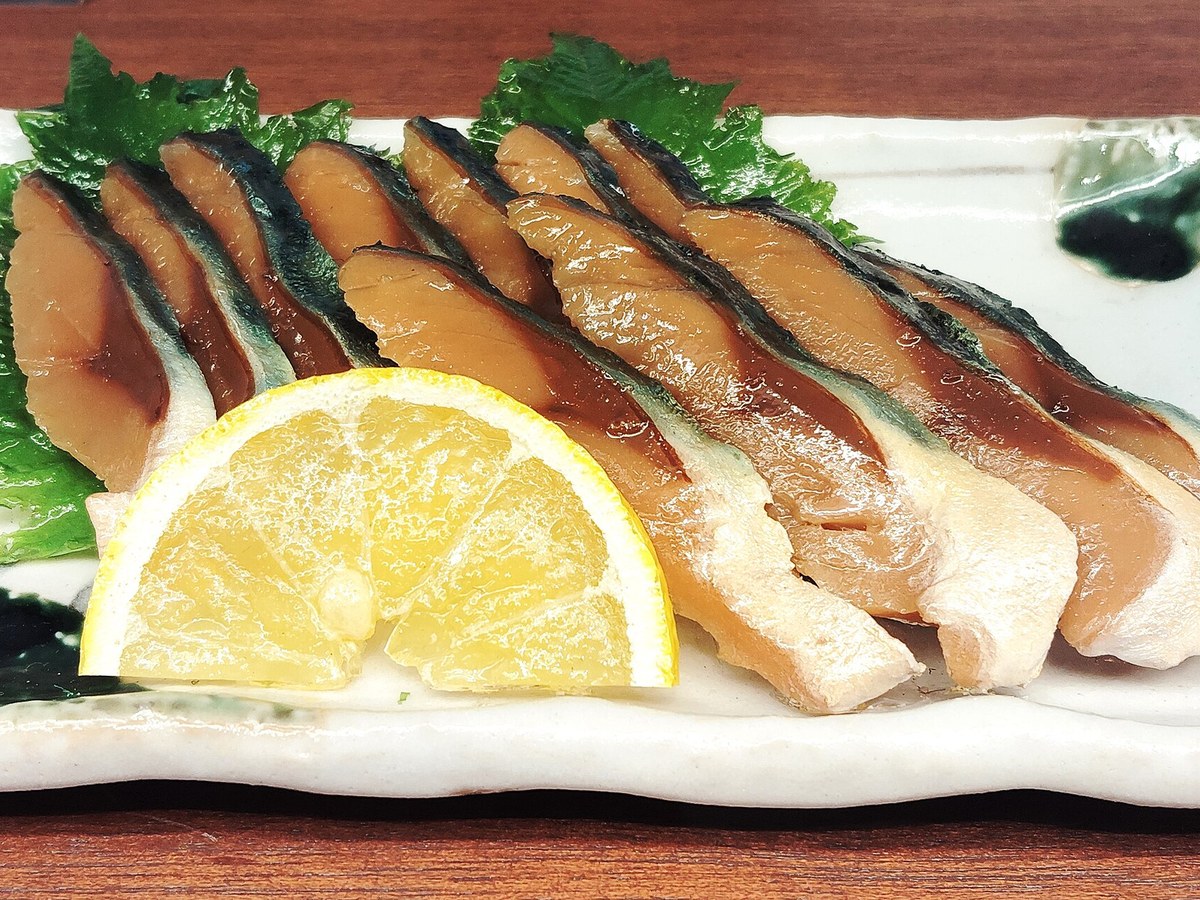
Heshiko is mackerel twice-preserved: salted, then pressed down into rice bran and left to ferment until the flesh turns the colour of strong tea and the flavour turns enormous. It is the winter store of Fukui’s Wakasa coast — eaten grilled, raw as sashimi, or in tea over rice — and one small town, Mihama, loved it so much it trademarked itself “the Town of Heshiko”.
Pressed into the barrel
The name, on the most repeated account, is a verb worn down: heshikomu, to press something down hard — what the fisher families did to the fish as they packed them into the barrel. The making is two preservations in sequence. The mackerel is split, cleaned and salted for ten days to a fortnight, until its own liquor — the shie the makers prize — runs out; then the fish is rinsed in that liquor, laid in barrels over rice bran mixed with salt, weighted down exactly as its name says, and left for the better part of a year.
House seasonings divide the makers in the second stage: soy sauce, mirin, chilli and the family’s own proportions go into the pressing liquor, which is why no two Wakasa heshiko taste quite alike — and why the record insists the flavour is each maker’s own.
A winter store that fed four times
Heshiko exists because of the Wakasa winter. On the Sea of Japan coast the snow season closed both halves of the food year at once: farmers idle, fishing boats storm-bound. A fish that could be caught fat in season, salted and bran-packed, and still be food in the hungriest month was not a delicacy — it was the margin. Mihama’s town history records that farming households as well as fishing ones kept it all year.
The town’s saying for it is a whole food economy in one line: heshiko is eaten four times — once by its smell, once by its bran, once by its flesh, and once by its bones, the bran toasted with sesame into furikake and the bones drawn into soup stock. Nothing in the barrel is wasted because nothing could be.
The town that trademarked itself
Mihama chose heshiko deliberately. Facing falling beach tourism, the town’s 1997–99 discussions on a signature food settled on the one product that was local, traditional and available all year; the innkeepers’ wives’ association — the Okami no Kai — became its engine, developing heshiko sandwiches, carpaccio, pasta and quiche alongside the classic grill. In 2005 the town registered “Heshiko no Machi” — the Town of Heshiko — as a trademark; Obama’s heshiko entered the Japan Heritage Saba Kaido listing in 2015, and “Mihama no Heshiko” took a regional collective trademark in 2019.
The honours around the fish are official as well as local: “saba no heshiko” was chosen in 2007 among the agriculture ministry’s 100 Selected Local Dishes of Rural Japan, and prefectural-university research in 2003 measured the fermented fish at two and a half times the amino acids and five times the blood-pressure-suppressing peptides of raw mackerel.
Grilled, raw, or in tea
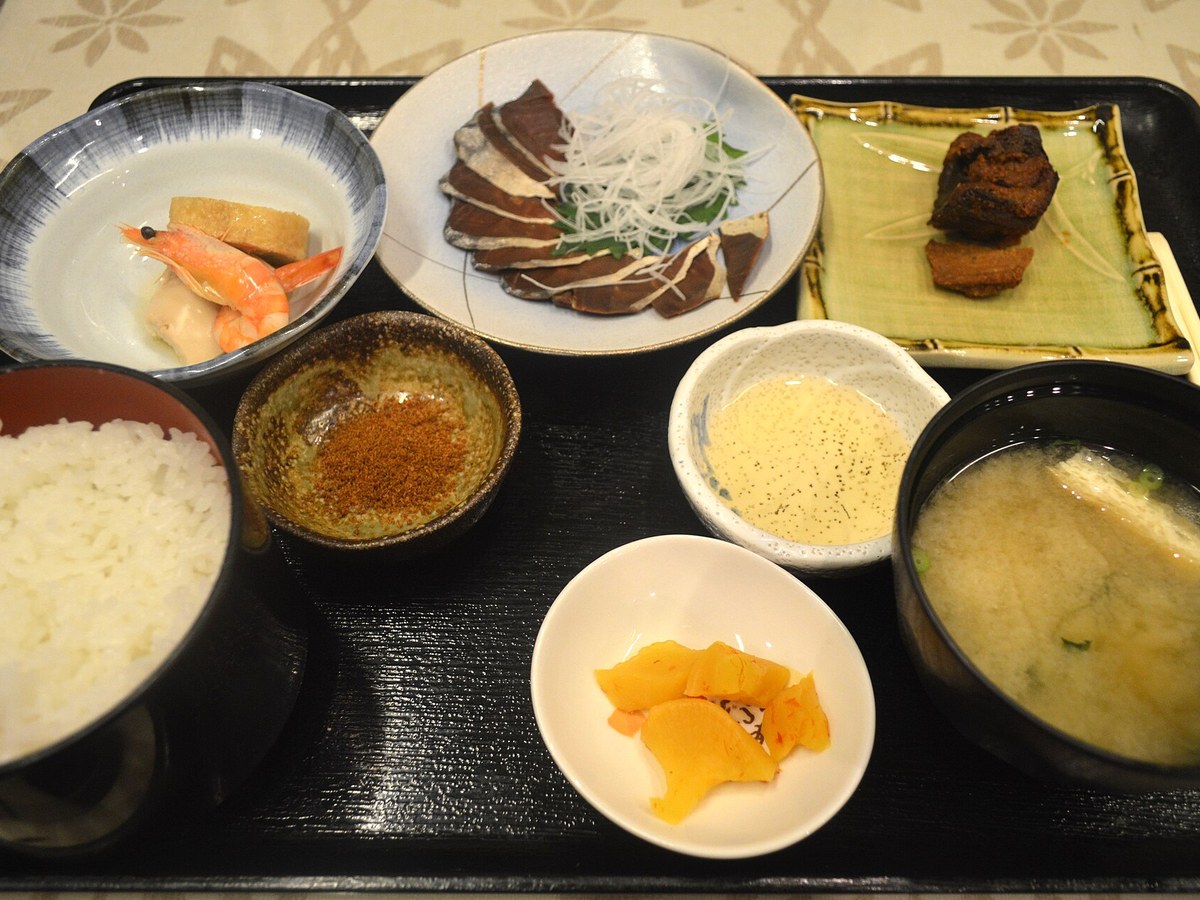
Knock the bran off first — and keep it, for the furikake. Grilled gently (bran scorches fast), heshiko is the classic accompaniment to rice and sake; fresher stock is sliced and eaten raw as sashimi, as the second photograph shows it served in a Wakasa set meal; and poured with hot tea over rice it becomes heshiko chazuke, the fisherman’s finish. A little goes a long way: the salt is serious.
Buy it from a named maker. On the maker records compiled in the 2026 Wakasa guide read for this story, Tamura-cho of Obama — a maker whose Uchitomi line holds to domestic mackerel, no additives and a year’s pressing — sells its domestic heshiko at ¥2,484 including tax for half a fish and ¥4,320 for the whole fish, chilled, with a 150-day shelf life: a winter store that now keeps in a modern fridge.
Sources — checked 14 November 2026
- Heshiko — encyclopedia record (the two-stage pressing, Mihama’s town-making, the honours)
- Wakasa heshiko guide (2026) — the makers’ eating and buying records (Tamura-cho, Obama)
Checked 14 November 2026 (stored links re-fetched and judged per product): reserved where the page says so, with an editorial review note kept per product. Press, PR and travel use stays outside the grant.
Editorial review 2026-11-14