Fujinomiya’s yakisoba looks like every other town’s until the last ten seconds, when the cook shakes a grey powder over the plate that no other yakisoba in Japan carries. The powder is dashiko — sardine and mackerel flakes ground fine — and it is one of the dish’s three legal marks, alongside the city’s own steamed noodles and niku-kasu, pork fat fried to a crisp. In 2006 and 2007 those three marks won the B-1 Grand Prix twice running and made a lunch-counter plate into the symbol of Japan’s local-gourmet boom.
Three marks, and a society to keep them
The Fujinomiya Yakisoba Society, founded in 2000 by local volunteers, did something no lunch counter had done: it wrote down what the town’s everyday yakisoba actually was, named it, trademarked it, and promoted it as a single civic product. The definition it keeps has three marks. The noodles must be the designated steamed noodles of Fujinomiya’s own makers — the society designates Marumo Shokuhin, Sogamen, Kanoya and Sanomen — firm, chewy, low in water, made to stay springy on the iron griddle where ordinary yakisoba noodles go soft.
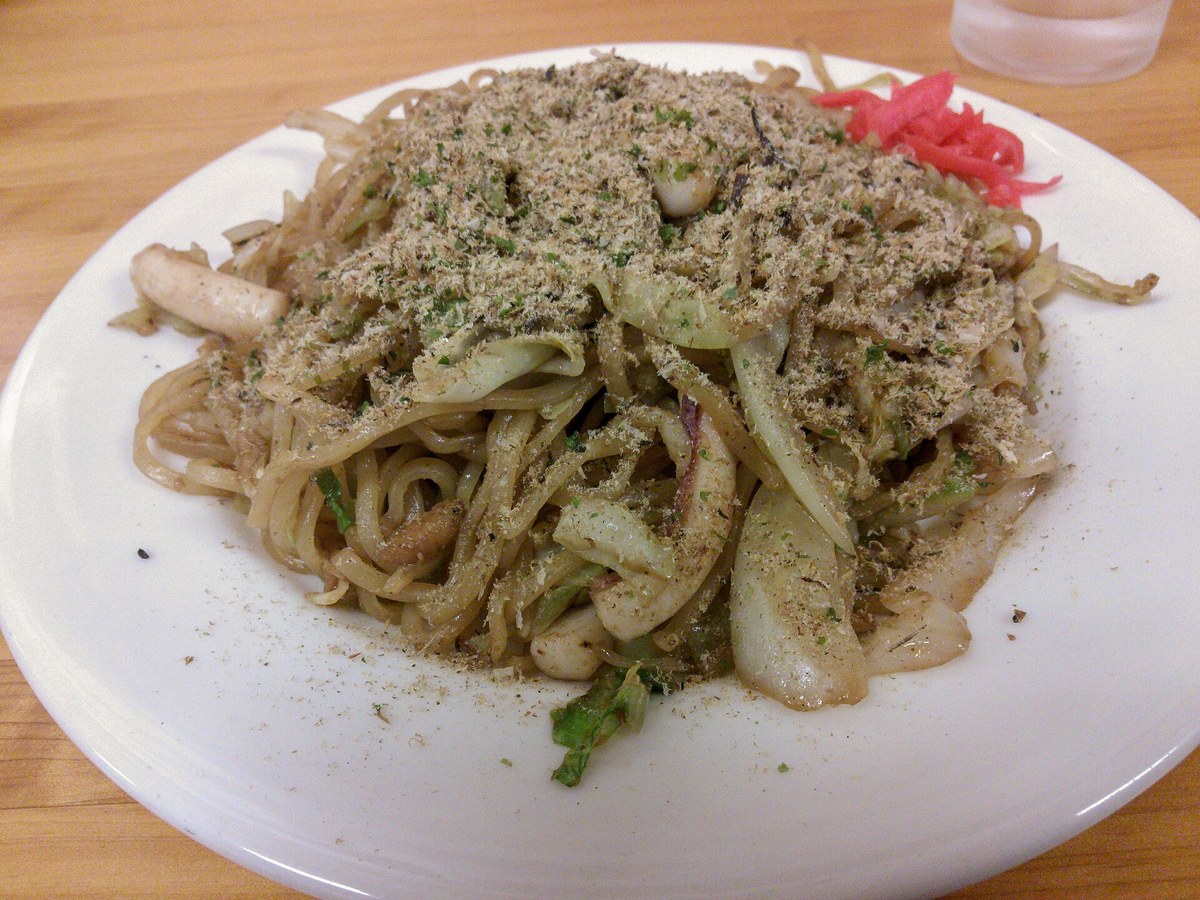
The second mark is niku-kasu, “meat scraps”: pork back fat rendered and fried until it crisps, scattered through the noodles for a deep, savoury crunch. Local tradition credits the Fujinomiya house Sanoman with proposing niku-kasu in place of the tenkasu other towns used. The third mark is the finish: dashiko, sardine and mackerel flakes ground to a powder, shaken over the plate at the end so the fish aroma rises with the steam. Cabbage and pork fill the plate; the three marks make it Fujinomiya’s.
The B-1 years: 2006 and 2007
The society’s stage was the B-1 Grand Prix, the national championship of B-grade local gourmet food, and Fujinomiya won it the way dynasties start: the first event, at Hachinohe in February 2006, and the second, on home ground in 2007 — consecutive championships, with a special prize at the third. The wins made Fujinomiya yakisoba the emblem of the gotchi-gourmet town-revival movement, studied as the model case of a town naming, ruling and branding a dish it had previously just eaten.
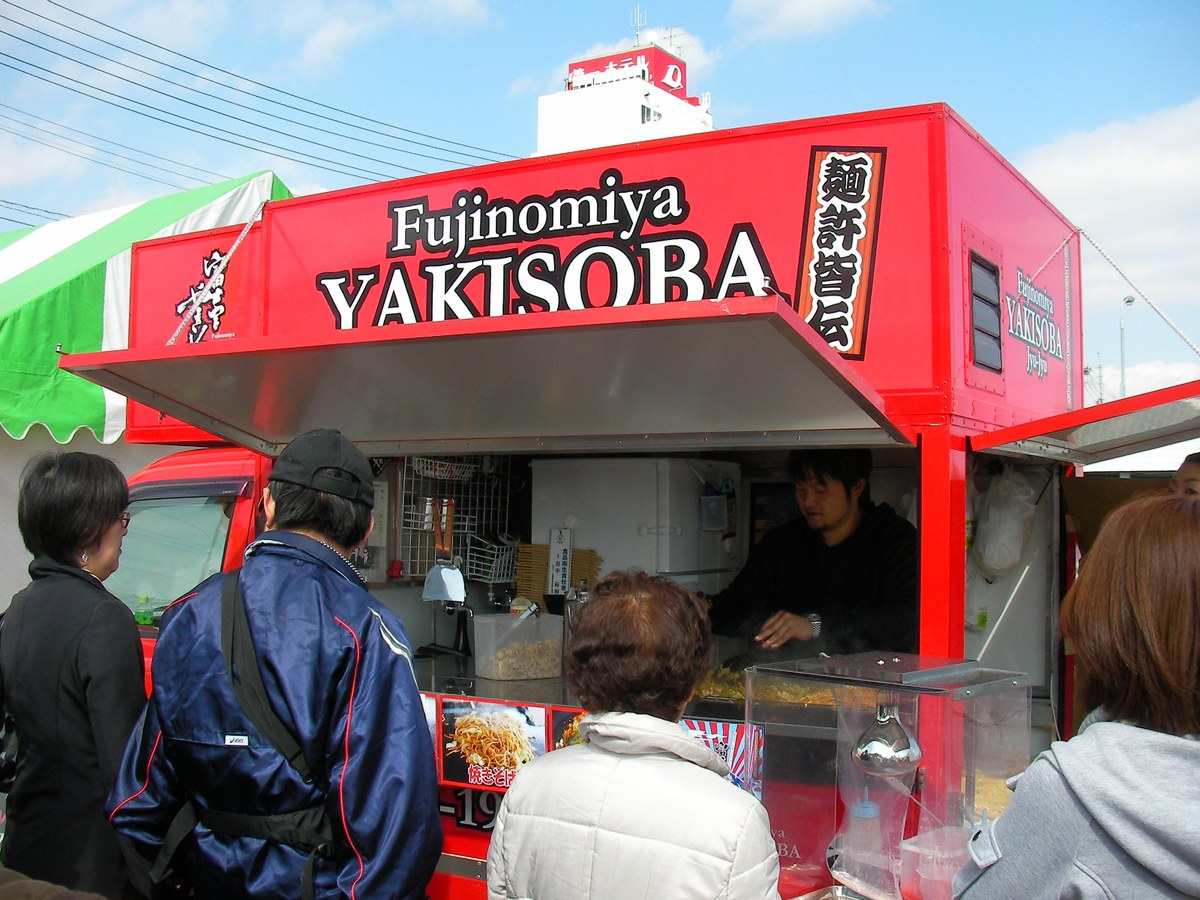
The machinery still runs. The society certifies shops and products, an antenna shop serves the plate by Fujinomiya’s shrine-town shopping street, and the dish’s licensed noodle houses run trucks to events across the country — this story’s second photograph is one of them, Menkyo Kaiden’s red Fujinomiya YAKISOBA truck with its queue. The trademark passed from the founding NPO to Prosumer Inc. in 2014; the rules did not change hands, only the paperwork did.
Firm noodles, crisp fat, fish dust
Eat it on the griddle’s terms. The noodles arrive drier than sauce yakisoba — Fujinomiya style fries them firm rather than soupy — with the niku-kasu crackling in the bite and the dashiko doing quiet, constant work: every mouthful smells faintly of the sardine flakes, the way aonori perfumes other plates, but deeper. A fried egg or an omelette wrap are the standing variations; beni shoga is the standing garnish; and the plate is a working lunch priced like one.
This story’s first photograph is the definition served: the grey dashiko dusting visible across the whole plate, the noodles pale and firm under it. If the powder is missing, it is not Fujinomiya yakisoba, whoever cooked it — that is the point of a definition with three marks, and the society has spent twenty-five years making sure the country knows it.
Sets, cups and the price of a plate
The home set is the souvenir standard: the Japan Post online shop sells the Fujinomiya Yakisoba Set at 3,110 yen including tax and shipping, in stock — designated-style noodles with the sauce, niku-kasu and dashiko the definition requires. At the everyday end, Yodobashi sells Maruchan’s “Nihon Umaimon Fujinomiya Yakisoba” cup at 322 yen including tax, its maker’s note keeping the mark of firm, square-cut noodles with real chew.
In Fujinomiya itself the standard plate runs about 600 to 800 yen, and the famous Uruoi-tei — the griddle house devotees call the dish’s holy ground — prices its signature Uruoi Yakisoba, with egg and niku-kasu, at about 1,000 to 1,280 yen. Go for the counter seats if you can: the dish is a griddle performance, and the dashiko is shaken on in front of you, last, like a signature.
Sources — checked 14 November 2026
- Fujinomiya yakisoba — the society definition and B-1 record (FUJIYAMA JAPAN Fujinomiya guide, compiled from the society’s materials)
- Japan Post online shop — Fujinomiya Yakisoba Set
- Yodobashi — Maruchan “Nihon Umaimon Fujinomiya Yakisoba” cup 165 g
Checked 14 November 2026 (stored links re-fetched and judged per product): reserved where the page says so, with an editorial review note kept per product. Press, PR and travel use stays outside the grant.
Editorial review 2026-11-14