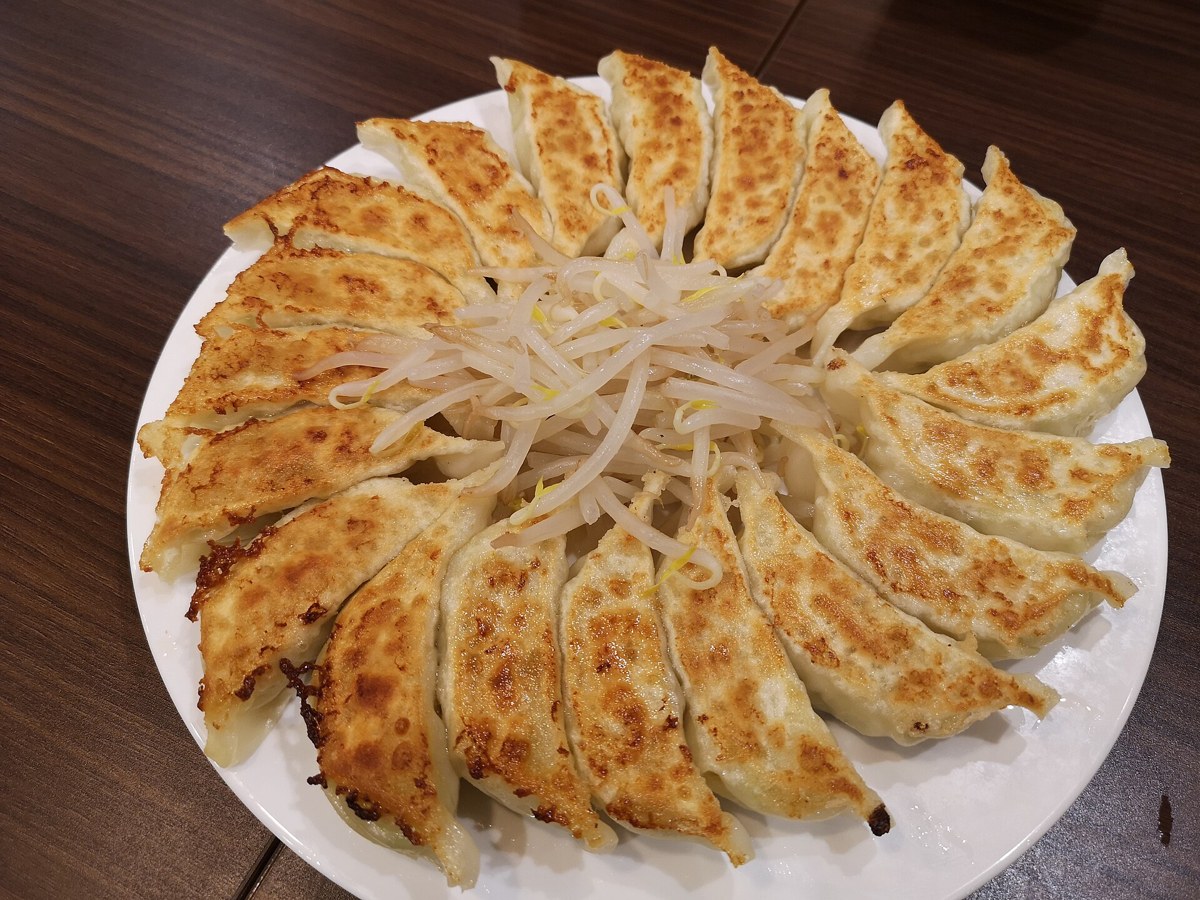
In Hamamatsu, gyoza do not arrive in a row. They arrive as a circle — a full ring of pan-fried dumplings flipped onto the plate in one piece, with a mound of boiled bean sprouts standing in the middle where the pan left a hole. It is the most recognisable plate in Shizuoka, and it gives the prefecture its third story in this collection.
Defined by place, not by recipe
Hamamatsu gyoza has something most local dishes never get: a written definition. The Hamamatsu Gyoza Gakkai, the citizens' promotion group, counts a shop as a Hamamatsu gyoza shop when it has existed in Hamamatsu for at least three years and makes its gyoza by hand inside the city. About eighty specialist shops fit that idea; count every izakaya and takeaway counter and the city has around three hundred places serving gyoza.
Fixing the maker instead of the recipe was the honest choice, because no two shops season alike. What the definition protects is the geography of the dish — and the eating public backs it: in the 2025 national household survey, Hamamatsu ranked first in Japan for gyoza purchases at ¥4,046 per household, ahead of its great rival Utsunomiya at ¥3,575.
Cabbage first, sprouts in the middle
Open one and the filling explains the city: cabbage in abundance — sixty to eighty percent of the filling in the agriculture ministry's account — with onion and a supporting measure of pork. Garlic chives, standard elsewhere, are left out on purpose: the Gakkai and Ishimatsu's third-generation owner explain that nira would overpower the cabbage's sweetness, which is the flavour the whole dish is built around. Hamamatsu and neighbouring Aichi grow the cabbage; the same sandy soil grows the onions; the pork was already there.
The circle and its centre are Ishimatsu's inheritance. The shop began as a stall near Hamamatsu Station in 1953, frying in a single round pan — a ring used every centimetre of it — and when rising prices hollowed out the middle of the plate, the cooks tried stir-fried cabbage and other fillings before settling on boiled bean sprouts dressed with sesame oil. The sprouts stayed, became the signature, and now perform a real job: a cool, clean crunch between rich dumplings.
How it differs from the gyoza you know
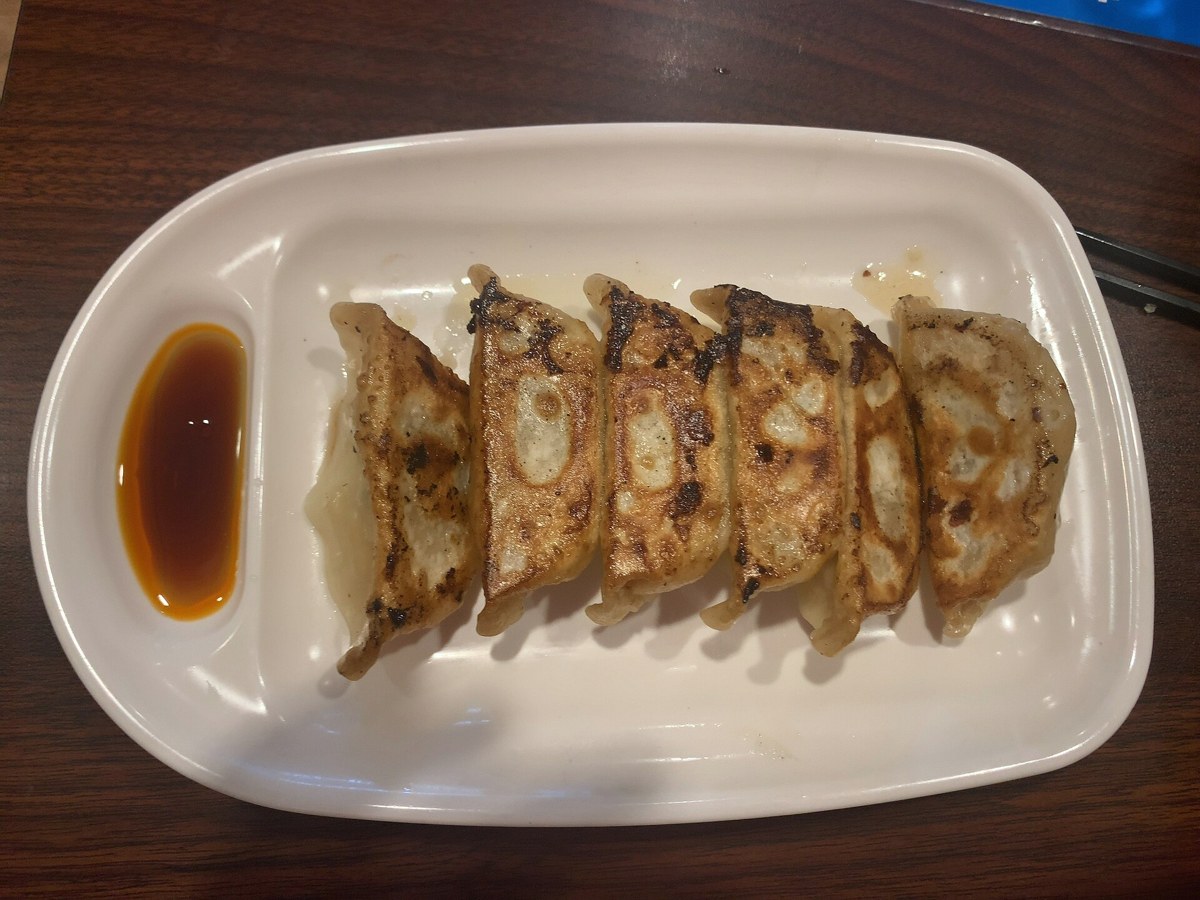
Three differences survive any shop's recipe. The plating: one circle per order, landed whole, against the straight row of six served almost everywhere else. The balance: sweet and vegetable-forward, with garlic kept low, against the chive-and-garlic punch of Utsunomiya's style. And the sprouts: no other gyoza city builds its garnish into the architecture of the dish. It is also, strictly, not hanetsuki gyoza — no starch wing is fused around the base; the ring holds because the pieces fry touching, edge to edge.
The dish grew from postwar stalls around the station and a manufacturing city's workforce that wanted cheap, filling, fast food to carry home — Hamamatsu households traditionally took gyoza back rather than eating out, which is why the takeaway counter is as much a part of the culture as the restaurant table.
Practical details: what a circle costs
From shop menus checked in August 2026: a plate of six to eight pieces runs about ¥400–¥700, a larger circle of twelve to twenty about ¥900–¥1,500, lunch sets with rice and soup about ¥990–¥1,300, and frozen ten-piece packs about ¥700–¥1,000 for the home pan. Few famous foods in Japan still feed two people for the price of a coffee-shop breakfast.
Start where the form started: Ishimatsu, the 1953 stall turned four-location house that the city's own tourism site calls the original Hamamatsu gyoza, fries the canonical circle with the sprouts it introduced. Order one circle per table rather than per person, eat from the outside in, and take a tangle of sprouts with every second dumpling — that rhythm is the dish as Hamamatsu designed it.
Sources — checked 10 November 2026
- Food in Japan: Hamamatsu Gyoza — Shizuoka's circle-style dumplings
- Ministry of Agriculture, Forestry and Fisheries (Google Arts & Culture): Hamamatsu Gyoza, a soul food that has supported local households
- Hamamatsu City tourism (Through Hamamatsu, Meet Japan): Ishimatsu Gyoza, the original since 1953
Original prose and official links only; no source text or maker media reproduced. Photos are credited Creative Commons works, not product photographs.
Editorial review 2026-11-10