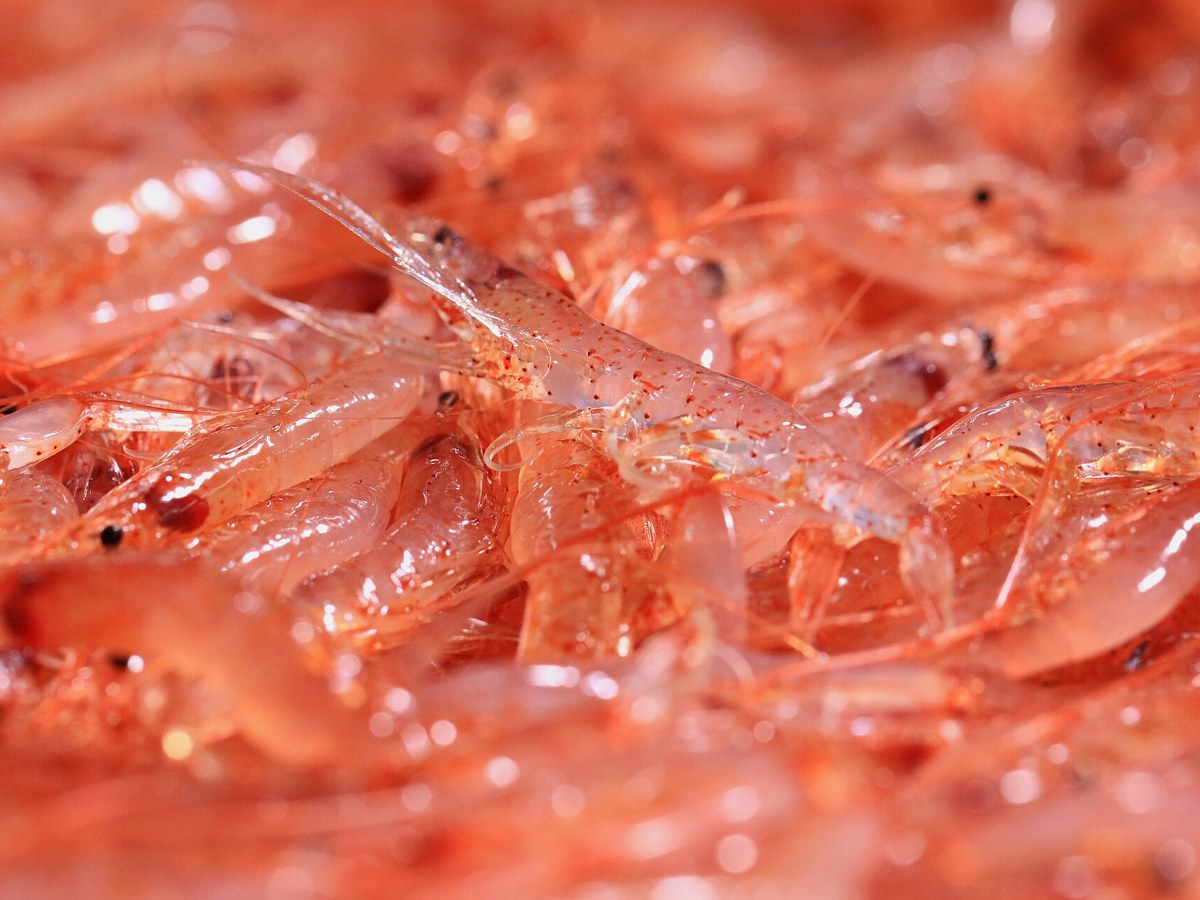
Unagi pie made Hamamatsu famous; Shizuoka's second story is rarer than any pie. Sakura ebi — 'cherry-blossom shrimp', four centimetres of translucent pink — lives in deep water all around Japan's Pacific side, but it is fished commercially in exactly one bay: Suruga, off Shizuoka, where 118 licensed boats land it at two ports in two short seasons. In autumn 2026 the season is running now. This is the jewel of Suruga Bay, and the cooperative that guards it fries it at the port for ¥600.
One bay, two ports, 118 boats
The exclusivity here is not a brand rule but a fishery. Sakura ebi spend the day at depths of 200 metres and more and rise toward the surface at night, when the pair-trawlers — two boats drawing one net between them — go out after them. Shizuoka City's statement, carried in the cooperative's season release, is precise: the species occurs in other waters, but Suruga Bay is the only place in Japan where it is a fishing target; the fleet is 118 boats in 59 pairs, all permitted by the prefectural governor; and the entire national catch comes ashore at Yui Port and Oigawa Port.
Yui, now part of Shimizu Ward in Shizuoka City, is where the fishery began in 1894 and where the cooperative's own canteen stands. The bay in front of it drops away faster than anywhere else in Japan — Suruga is the country's deepest bay — which is why a deep-water shrimp can be a port-side lunch here and nowhere else.
Two seasons and a protected bay
The shrimp is fished in two short windows: a spring season from late March to early June, and an autumn season from late October to 24 December. Prefectural rules close the fishery entirely from 11 June to 30 September, the spawning season, and the fishers add their own voluntary closure across January to March. The 2026 autumn season opened on 29 October and runs to 24 December; the first auctions of the season were held at Yui Port on the morning of 9 November 2026.
The restraint is recent and deliberate. After record poor catches, the prefectural sakura ebi federation set a protected zone in the inner bay in 2018 — the main spawning ground — and added voluntary limits on boats and hauls. Landings have since recovered from about 128 tonnes in 2020 to about 500 tonnes in 2023, figures the city gives in the cooperative's release. The kakiage on your plate is priced by that recovery as much as by the market.
Practical details: the cooperative's own canteen
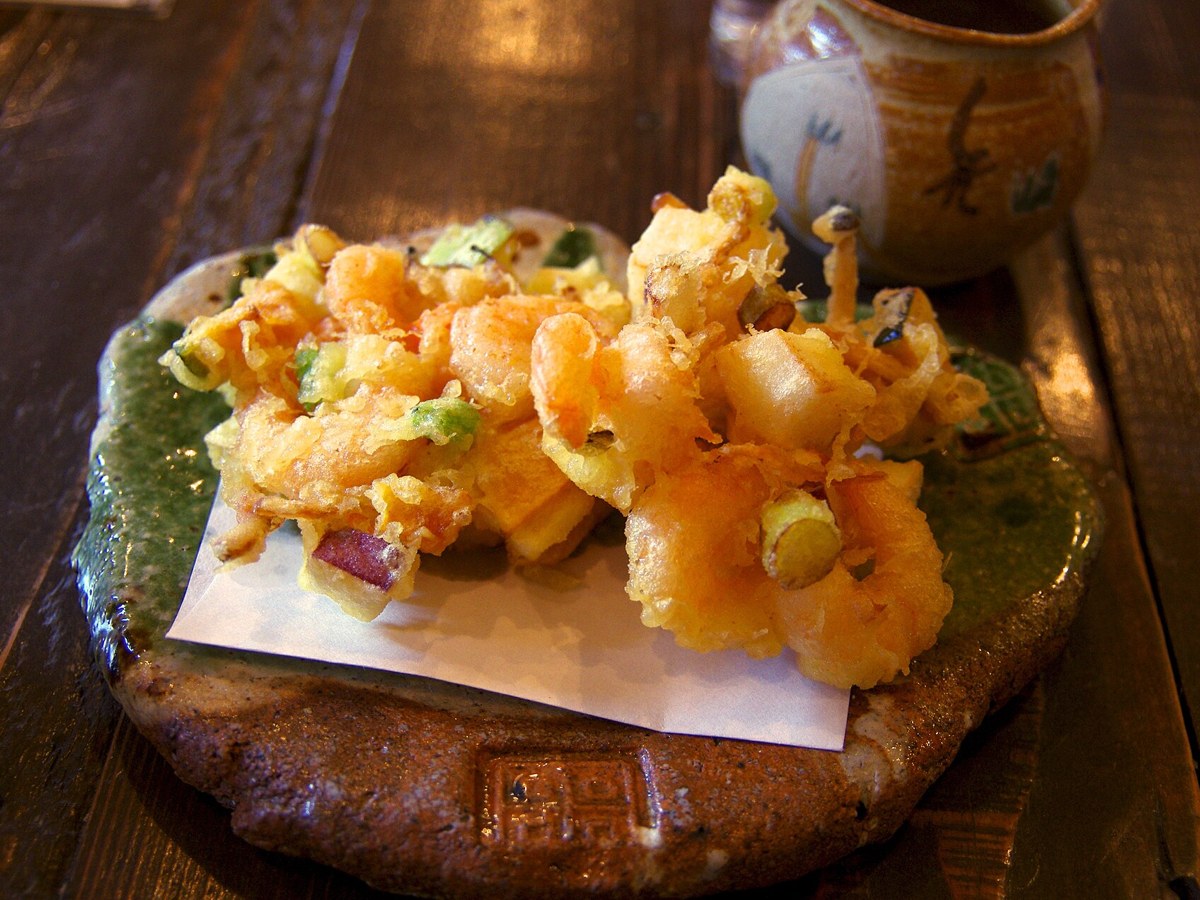
Eat it at Hama no Kakiageya, the Yui Port Fisheries Cooperative's own canteen inside the port (open Friday to Sunday and holidays only, 10:00-14:00, cash only; expect a queue at weekends). The menu from the cooperative's 2025 autumn release: a raw sakura ebi bowl, the shrimp at their most translucent, ¥1,100 (no takeaway); a kakiage bowl at ¥1,100; the Yui bowl — kamaage sakura ebi with the port's shirasu — at ¥1,100; and a single great kakiage, shrimp and spring onion in a whisper of batter, for ¥600.
To take the bay home, the cooperative's direct shop at the port sells the catch itself — frozen raw sakura ebi, 200 g, at ¥1,450 online, and sun-dried sakura ebi, 30 g, at ¥850 online — and its online shop ships both. A canned kamaage sakura ebi (40 g, ¥864 tax included) carries the same shrimp anywhere, any month.
Kakiage, the dish the ministry registers
Japan's agriculture ministry lists sakura ebi no kakiage among Shizuoka's registered regional dishes: raw shrimp and chopped green onion bound in the least possible batter and fried to a crisp, lacy disc more than ten centimetres across. Eaten plain as a snack, laid over rice as the port's kakiage bowl, or crumbled over soba and udon in the town's shops, it is the form in which most people first meet the shrimp — the raw bowl is the connoisseur's order, the kakiage is the people's.
The port town supports the point. Around Yui's old Tokaido post-station streets the restaurants specialise in the one ingredient — raw bowls in season, kamaage (boiled) shrimp out of it — and in May the town holds its sakura ebi festival. One bay, one shrimp, one town's whole menu.
Planning around a season
Timing is the whole game. Raw sakura ebi exists only inside the two seasons, and the canteen fries on weekends and holidays within them; outside the seasons you are eating frozen, dried or canned shrimp — all honestly labelled as such by the cooperative's own shop, and all still Suruga Bay shrimp, because there is no other source to mix in. That is the quiet luxury of a one-bay fishery: provenance is never in doubt.
If you come in season, come at the season's rhythm: boats fish at night, auctions run at dawn, and the canteen opens at 10:00. The shrimp you eat at lunch was in 200 metres of black water the previous afternoon.
Sources — checked 10 November 2026
- Yui Port Fisheries Cooperative — 2025 autumn season release (via Mapion/PR TIMES)
- NHK World — First autumn sakura shrimp auctions held in central Japan (9 November 2026)
- MAFF, Our Regional Cuisines — Sakura ebi no kakiage (Shizuoka)
Original prose and official links only; no source text or maker media reproduced. Photos are credited Creative Commons works, not product photographs.
Editorial review 2026-11-10