Fish katsu is the cutlet that is not a cutlet: no fish fillet, no batter — just seasoned fish surimi wearing breadcrumbs, fried crisp and tasting of curry. In eastern Tokushima the word "katsu" on its own means this, pork has to say tonkatsu, and the prefecture fries some six hundred tonnes of it a year.
A kamaboko that dresses as a cutlet
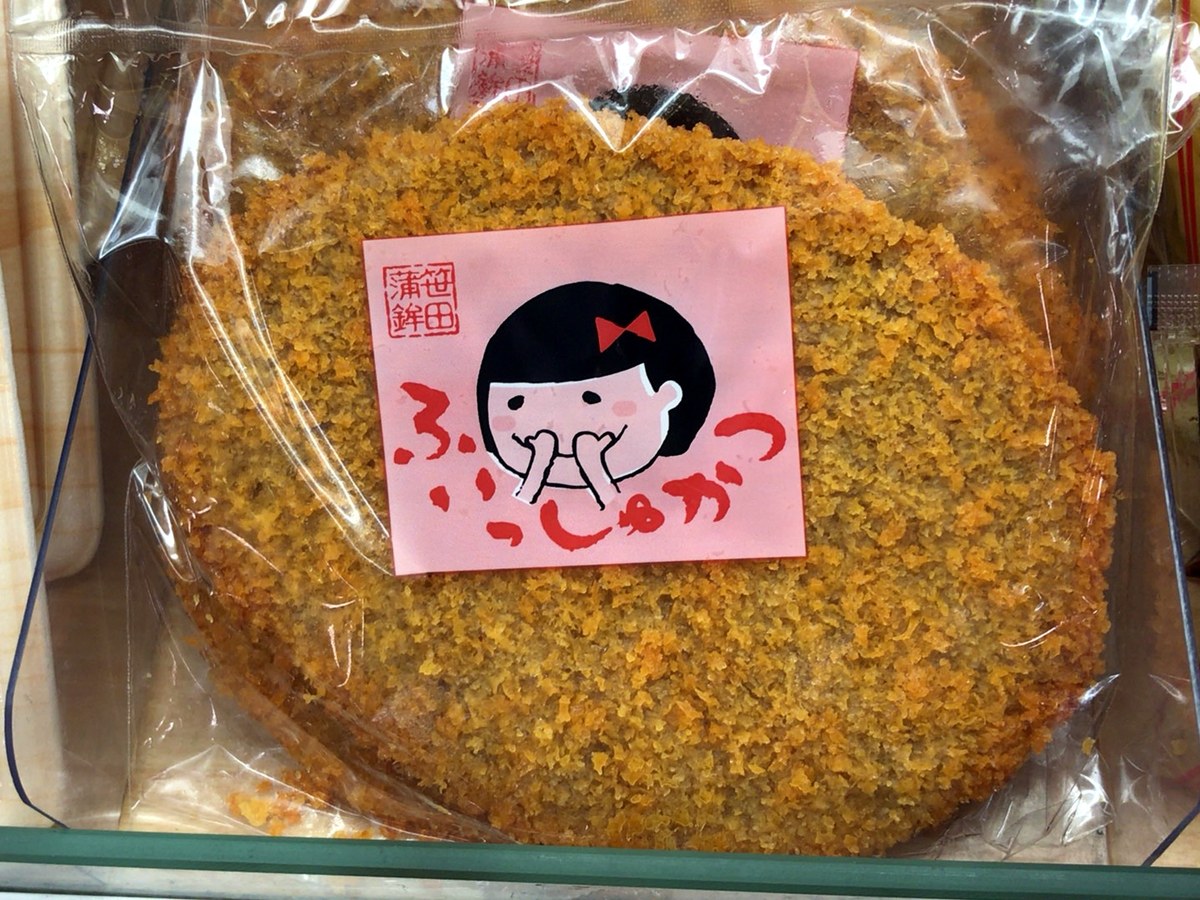
A fish katsu begins as kamaboko, not as fish. White fish — cutlassfish, lizardfish and croaker from the near sea in the early days, today mainly frozen Alaska-pollock surimi blended with other fish — is ground, salted and seasoned with curry powder and chilli, then coated with breadcrumbs directly, with no batter coat in between, and fried. The fisheries record is precise on the point: this is a fried nerimono, a fish-paste product, and the curry is there as much to quiet the fish’s smell as to flavour it.
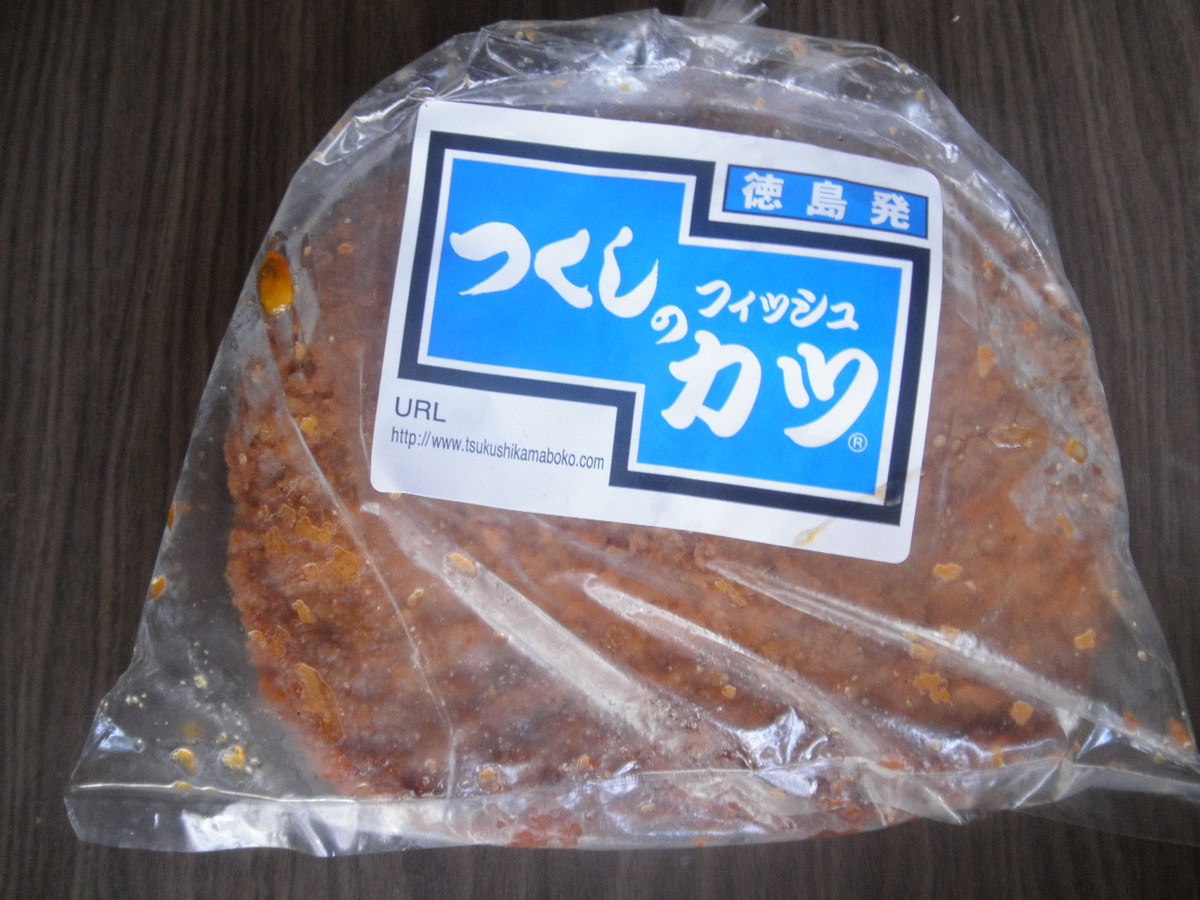
The result eats like a cutlet and keeps like a kamaboko: a crisp crumb shell over a springy, gently hot centre. Our two photographs are the form as Tokushima buys it — a round packaged katsu under its pink shop label, and the blue-labelled pack of Tsukushi Kamaboko, the house the origin stories name.
Just after the war, in Komatsushima
The leading account, carried by the encyclopedia record, names Tsukushi Kamaboko of Komatsushima as the first seller, just after the Second World War; the prefectural food-technology record dates the start of manufacture to about 1955 in Tokushima City and counts the prefecture’s output today at roughly six hundred tonnes a year and rising. Makers multiplied across the east of the prefecture — Shinomiya and Ikezoe in Tokushima City among them — and the katsu settled into supermarkets and convenience stores as an everyday side dish.
Success renamed the neighbours. In eastern Tokushima, "katsu" unqualified means the fish one, and a pork cutlet has to introduce itself as tonkatsu. The surimi sandwich went airborne in 2021, when JAL served an Awa fish-katsu sandwich — the katsu in indigo-marbled bread — as a regional airport bento at Tokushima Awaodori Airport.
How Tokushima eats it
The plain way is as it comes, with a squeeze of sudachi — Tokushima’s own citrus — or soy sauce, Worcestershire sauce or mayonnaise. After that the katsu wanders: laid over curry rice, tucked into sandwiches, and set on okonomiyaki, where it becomes katsu-tama, or katsu-mame-tama with beans. Warmed in a pan or toaster the crumb crisps again and the curry perfume comes back up.
The makers keep their own edges. Tsukushi of Komatsushima remains the name on the origin story and on our second photograph. Shinomiya, an Edo-period house, makes its fish katsu without preservatives, chemical seasoning or egg, on Hokkaido pollock and local small fish. Ikezoe’s second-generation master Tokujiro is recorded as the deviser of that house’s fish katsu, which now also rolls into a katsu-mayo ball.
Buying it
Inside Tokushima this is supermarket food, sold chilled by the pack across the prefecture’s east. Outside, the measured route this run is mail order: the Kauche listing for Tsukushi’s fish katsu and tempura set — five fish katsu with squid, octopus and kakiage tempura — stood at ¥2,907 when read, and Shinomiya’s single fish katsu was ¥540 tax included on the maker’s event-sale flyer. Frozen ten-packs of Tsukushi’s katsu also travel as Komatsushima’s hometown-tax return gift.
Buy the curry note, not just the crumb: a fish katsu whose spice has gone quiet is only a fried kamaboko, and the Tokushima form is defined by the warmth in the paste. Eaten fresh from the fryer at a maker’s counter, it needs nothing but sudachi.
Sources — checked 15 November 2026
- Fish katsu — encyclopedia record (the definition, the Tsukushi origin account, the eastern-Tokushima name rule)
- Fish katsu — fisheries products encyclopedia, Tokushima Industrial Technology Center (the direct-crumb method, the 1955 dating, the 600-tonne output)
- Tsukushi fish katsu set — Kauche listing, and Shinomiya Kamaboko event-sale flyer (the ¥2,907 set, the ¥540 single)
Checked 15 November 2026 (stored links re-fetched and judged per product): reserved where the page says so, with an editorial review note kept per product. Press, PR and travel use stays outside the grant.
Editorial review 2026-11-15