The number on a Dassai bottle is not a strength, a year or a grade. It is what is left of the rice. Dassai 23 is brewed from Yamada Nishiki grains polished until only 23 percent of each grain remains — more than three-quarters milled away before brewing begins. The sake that taught the world to read polishing ratios comes from one brewery in the mountains of Iwakuni, Yamaguchi, which makes nothing but Junmai Daiginjo, and which in 2025 renamed itself after its own bottle: DASSAI Inc.
One brewery, one grade, one rice
Dassai is a brand, not a style: the Junmai Daiginjo sake of one brewery in Osogoe, a mountain district of Shuto-cho in Iwakuni, Yamaguchi Prefecture. The brewery was founded in the 1770s and traded for most of its life as Asahi Shuzo; on 1 June 2025 it renamed itself DASSAI Inc., after the sake (Food in Japan record, accessed October 2026). It brews a single grade — Junmai Daiginjo, made only from rice, rice koji and water — from a single rice, Yamada Nishiki, the king of sake rice.
Everything else about the famous bottles is one variable. The core range is Dassai 45, Dassai 39 and Dassai 23, and the number is the seimaibuai — the polishing ratio, the percentage of each grain that remains after milling. Dassai 45 keeps 45 percent of the grain; Dassai 39 keeps 39; Dassai 23 keeps 23, among the most extreme polishings in the industry, achieved over about seven days of milling when the bottle launched in 1992 as the first sake ever polished to 23 percent.
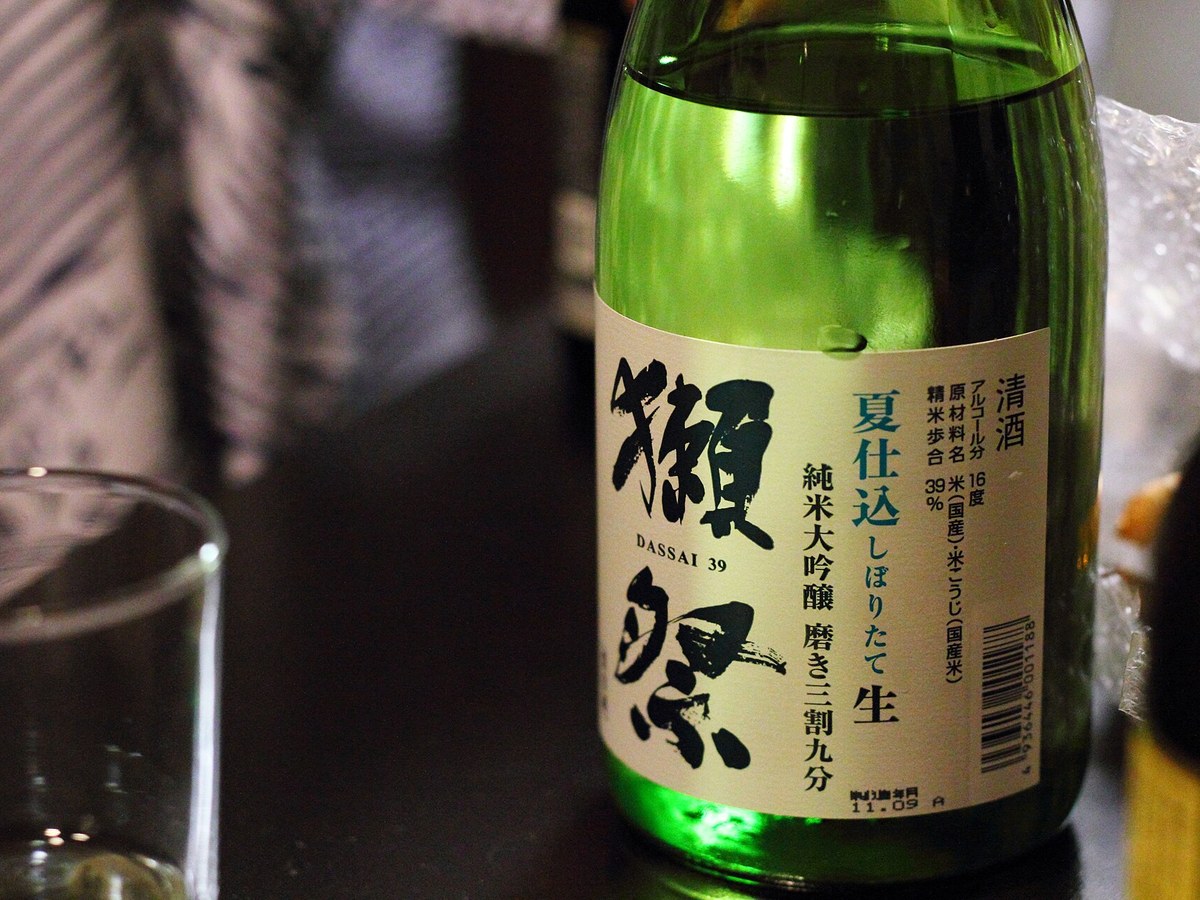
What the polishing buys
The outer layers of a rice grain carry the fats and proteins that cloud a sake's aroma. Mill them away and what remains is the starchy heart, which ferments into the clear, fragrant, honey-noted style Dassai is known for: the producer describes the 45 as delicately sweet and the 23 as honey-like and long (Food in Japan). The cost is arithmetic — a bottle of Dassai 23 begins as roughly four bottles' worth of rice — and the brewery has never hidden it: the number on the label is the recipe and the price explained at once.
The approach rewrote the premium end of the sake market. Rather than a ladder of grades with poetic names, Dassai offers one rice, one grade and three numbers, so a drinker anywhere in the world can compare bottles without a glossary. It is now loved in over thirty countries (Takashimaya record), and the brewery receives visitors at Osogoe with weekday tours and a paid tasting — a mountain hamlet in Yamaguchi operating as a world address for sake.
What the bottles cost
At the brewery's official prices, as listed in November 2026: Dassai 45 costs 2,475 yen for 720 ml including tax, with 180 ml at 616 yen, 300 ml at 1,012 yen and 1800 ml at 4,950 yen. Dassai 39, polished to 39 percent, costs 3,080 yen for 720 ml including tax (180 ml 781 yen; 300 ml 1,276 yen; 1800 ml 6,160 yen). The 23's price varies with bottle size and box — it is the gift bottle of the range, sold in wooden-box presentations at department stores and duty-free shops.
The neatest way to taste the argument is the brewery's own comparison format: Takashimaya lists a Dassai trial set of 180 ml each of the 23, the 39 and the 45 for 3,630 yen including tax — three polishings of the same rice, side by side, for less than a single full bottle of the flagship. Start with the 45 if you are buying one bottle: it is the standard the other two are measured against, and at 2,475 yen it is priced like a weeknight sake, not a trophy.
Why Dassai is Yamaguchi-only
Dassai is exported around the world, but it is made in exactly one place: the Osogoe brewery in the mountains of Iwakuni, from Yamada Nishiki and the district's water, by a company that stakes its whole name — since 2025, literally — on this single brand. A sister brewery project overseas brews under a different name; the Dassai label itself has never left Yamaguchi.
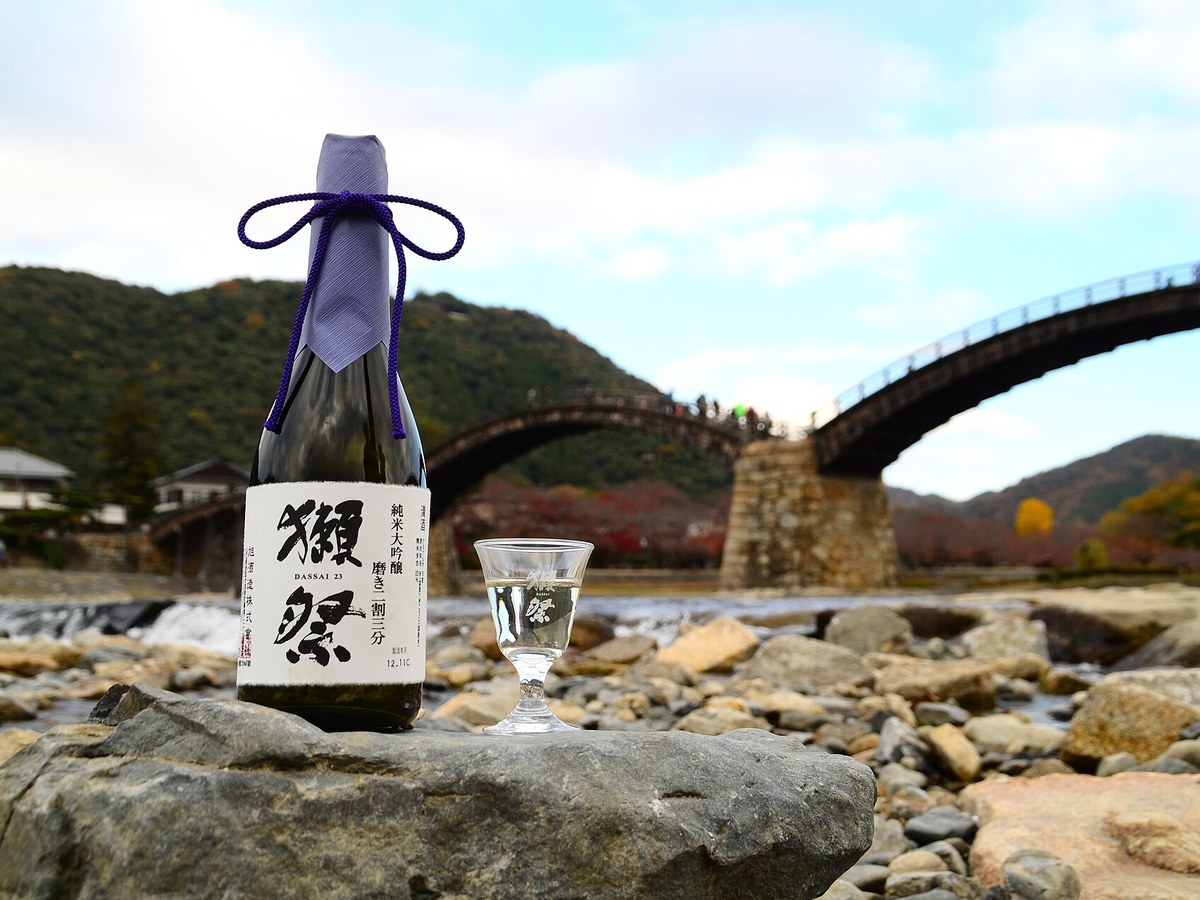
The bottle in our second photograph stands where the brewery would want it: on the rocks below the Kintaikyo, Iwakuni's five-arched wooden bridge — the city's emblem since 1673. Yamaguchi's most famous drink and its most famous view are neighbours, and both are reasons the prefecture's name is read in wine shops on every continent.
Sources — checked 13 November 2026
- Food in Japan — Dassai Sake (accessed October 2026)
- Fukumusume — Junmai Daiginjo guide, Dassai brewery prices (brewery official site prices as of November 2026)
- Takashimaya — Dassai Trial Set (23 / 39 / 45, 180 ml each)
- Nihon Spirits Guide — Dassai 23 vs 39 (prices confirmed 6 November 2026)
Checked 13 November 2026 (stored links re-fetched and judged per product): reserved where the page says so, with an editorial review note kept per product. Press, PR and travel use stays outside the grant.
Editorial review 2026-11-13