Boshi-pan is Kochi's hat bread: a round bun capped with castella dough that bakes out into a brim. It began around 1955 as a rescue — a baker who had forgotten the biscuit topping on a melon pan reached for leftover castella instead — and customers renamed the accident after the hat it looked like.
A bun wearing a castella hat
The construction is two doughs. A round, soft bread bun — koppe-style, fluffy in the middle — is covered with castella dough before baking, and in the oven the cap spreads past the bun and sets into a thin, sweet, lightly browned brim. The crown eats soft, the brim eats crisp and sugary: one bread, two textures, and a silhouette no one mistakes.
The plain form is the standard, and around it Kochi's bakers have built cream, whipped-cream, an and chocolate versions, oversized hats, and even a brim-only product for people who only ever wanted the edge. Our two photographs are two different makers' hats on two different plates — the form is a prefecture's, not one shop's.
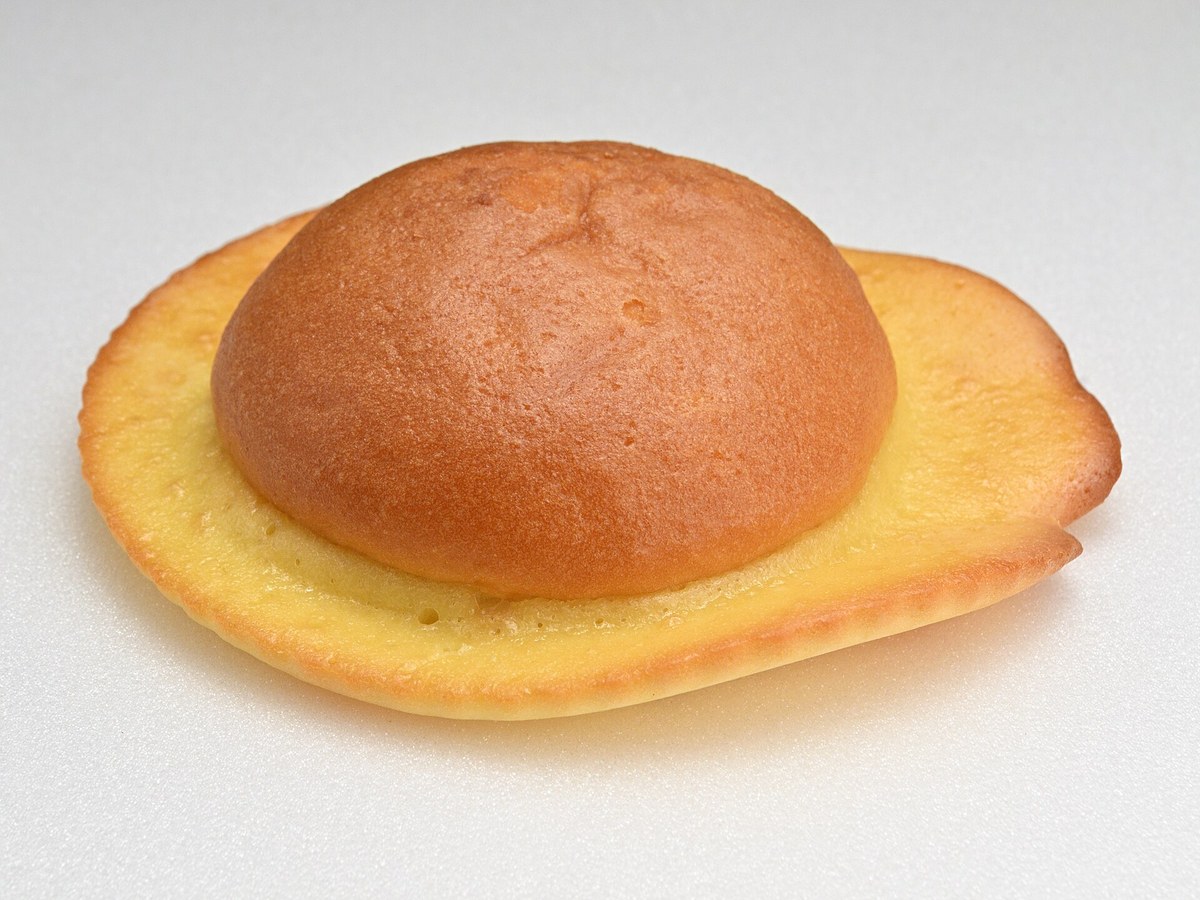
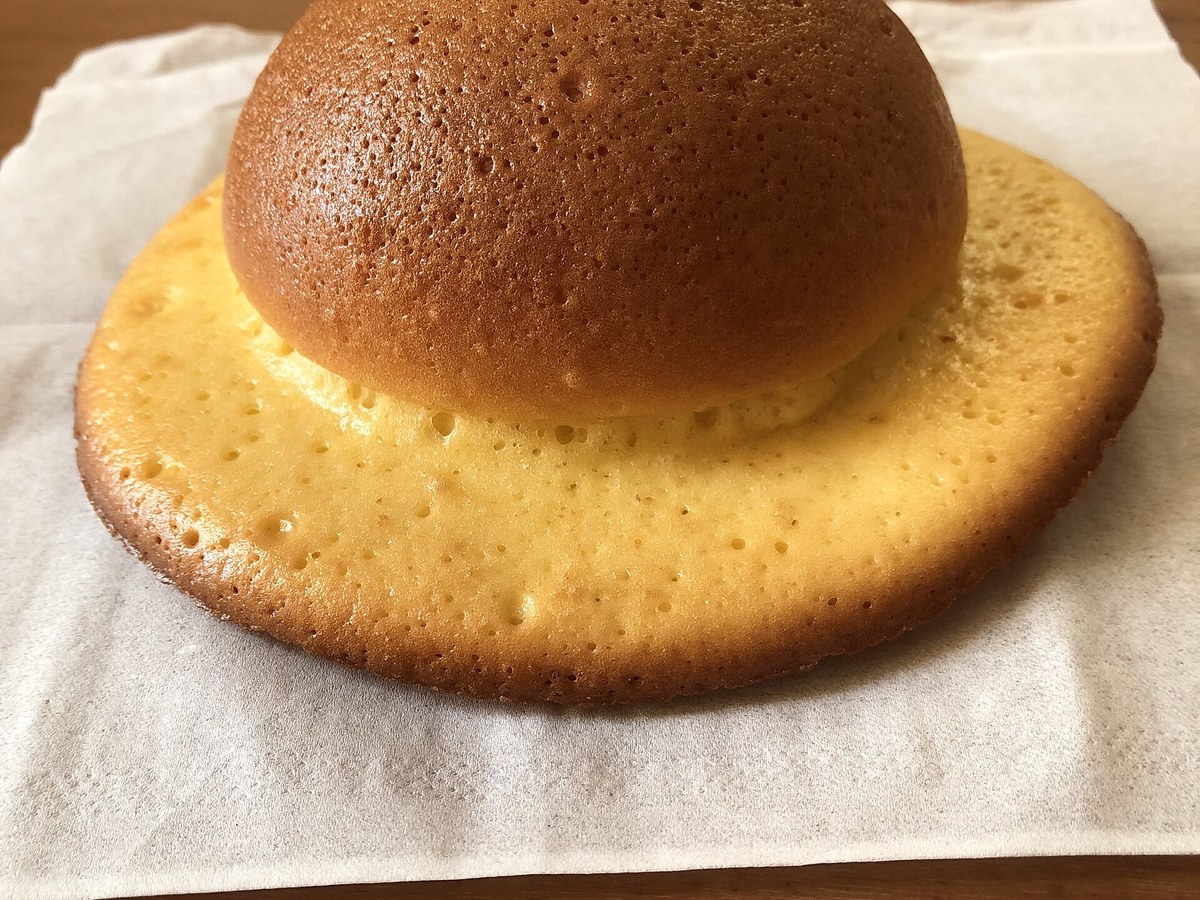
1955: the forgotten biscuit dough
The birthplace is Nagano Kyokudo Honten of Kochi City, a bakery founded in 1927. Around 1955, making melon pan, a baker forgot to lay the biscuit dough over one batch; the dough had already risen, so leftover castella dough went over it instead — and came out of the oven wearing a brim. Improved and put on sale as "castella pan", it was the customers who renamed it boshi-pan, hat bread, and the name stuck.
Other Kochi bakers came to learn the method at Nagano Kyokudo, and the hat spread across the prefecture shop by shop. It now stands as one of Kochi's representative local breads, drawn on packages across the prefecture by Boshi-pan-kun, a character designed by Kochi-born manga artist Yanase Takashi for the prefectural bakers' association.
The hat today
Most Kochi bakeries make a boshi-pan, and the variations keep coming: chocolate and matcha hats, jam worked into the dough, giant sizes, and the brim sold alone. In 2025 the inventor's own house, Nagano Kyokudo, developed a melon boshi-pan with Nishijima Engei Danchi of Nankoku, using the garden's melons — one at ¥300, or ¥350 with an inside — sold at the garden and bound for Kochi Ryoma Airport.
Outside the prefecture the hat travels carefully: versions for shipping wear a smaller, thicker brim so it does not snap. At Marugoto Kochi, the prefecture's Tokyo antenna shop, Yamate Pan's boshi-pan was the shop's number-one seller by units when it opened.
Buying it
In Kochi it is everyday bakery and supermarket food. By mail order, the measured route this run is JR West's WESTER Mall: Komi Bakery's boshi-pan six-pack at ¥3,000 tax included, shipping included, sent frozen for keeping. The 2025 melon version at Nishijima Engei Danchi — ¥300, ¥350 with an — is the single-hat price to hold in mind.
Judge a boshi-pan by its brim: it should be thin, set and sweet all the way to the edge, not a soggy skirt. The crown is the vehicle; the hat is the point.
Sources — checked 15 November 2026
- Boshi-pan — encyclopedia record (the castella cap, the c.1955 Nagano Kyokudo origin, the Yanase character)
- Komi Bakery boshi-pan six-pack — WESTER Mall listing, and the melon boshi-pan record (the ¥3,000 pack, the ¥300 melon hat)
Checked 15 November 2026 (stored links re-fetched and judged per product): reserved where the page says so, with an editorial review note kept per product. Press, PR and travel use stays outside the grant.
Editorial review 2026-11-15